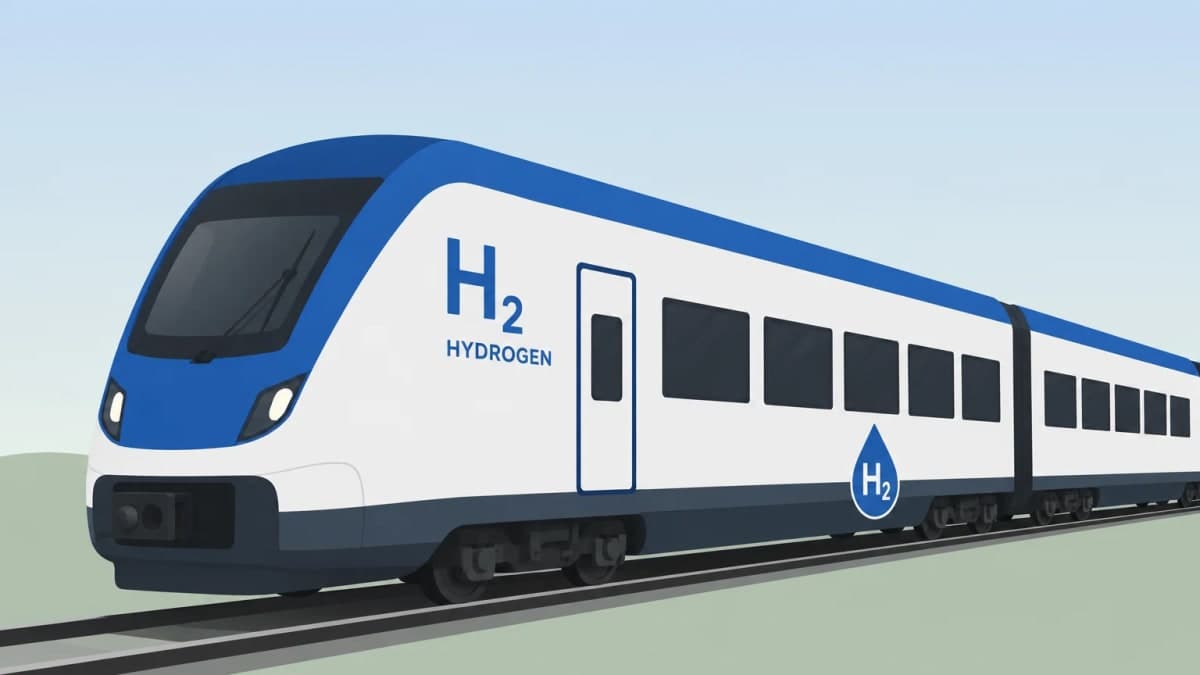
India has taken a major step toward sustainable transportation by introducing its first hydrogen-powered train, showcasing a cleaner alternative to conventional diesel locomotives. A common question is how the train operates without overhead electric wires. The answer lies in hydrogen fuel cell technology. The train carries hydrogen in specially designed high-pressure storage tanks. Inside the train, hydrogen combines with oxygen from the air in fuel cells through an electrochemical process that generates electricity. This electricity powers the train's electric traction motors while charging onboard batteries, which provide additional power during acceleration and store excess energy produced through regenerative braking.
Unlike diesel engines that burn fossil fuels, hydrogen fuel cells produce electricity without combustion. The only direct emissions from the process are water vapor and heat, making the train a zero-tailpipe-emission mode of transport. This significantly reduces air pollution, greenhouse gas emissions, and noise levels compared to traditional diesel trains.
Hydrogen-powered trains are particularly useful on railway routes that are not yet electrified, where installing overhead electric infrastructure may be expensive or impractical. They offer the environmental benefits of electric trains without requiring continuous external power supply, making them an efficient solution for remote and regional rail networks.
The launch of India's first hydrogen train is part of Indian Railways' broader strategy to adopt clean energy technologies, reduce dependence on imported fossil fuels, and move closer to its long-term goal of becoming a net-zero carbon emitter. As hydrogen production and fueling infrastructure expand, this technology has the potential to play a significant role in transforming rail transportation into a more sustainable and environmentally friendly system.