Sonam Wangchuk's Wife Objects to Treatment Without Consent, Raises Concerns Over Hospitalisation
A new development has emerged in the ongoing hunger strike of activist and engineer Sonam Wangchuk after his wife, Gitanjali J. Angmo, expressed concern over his treatment following his transfer to Safdarjung Hospital in New Delhi. Wangchuk was shifted from the Jantar Mantar protest site after health officials advised immediate medical supervision due to the effects of his prolonged fast.
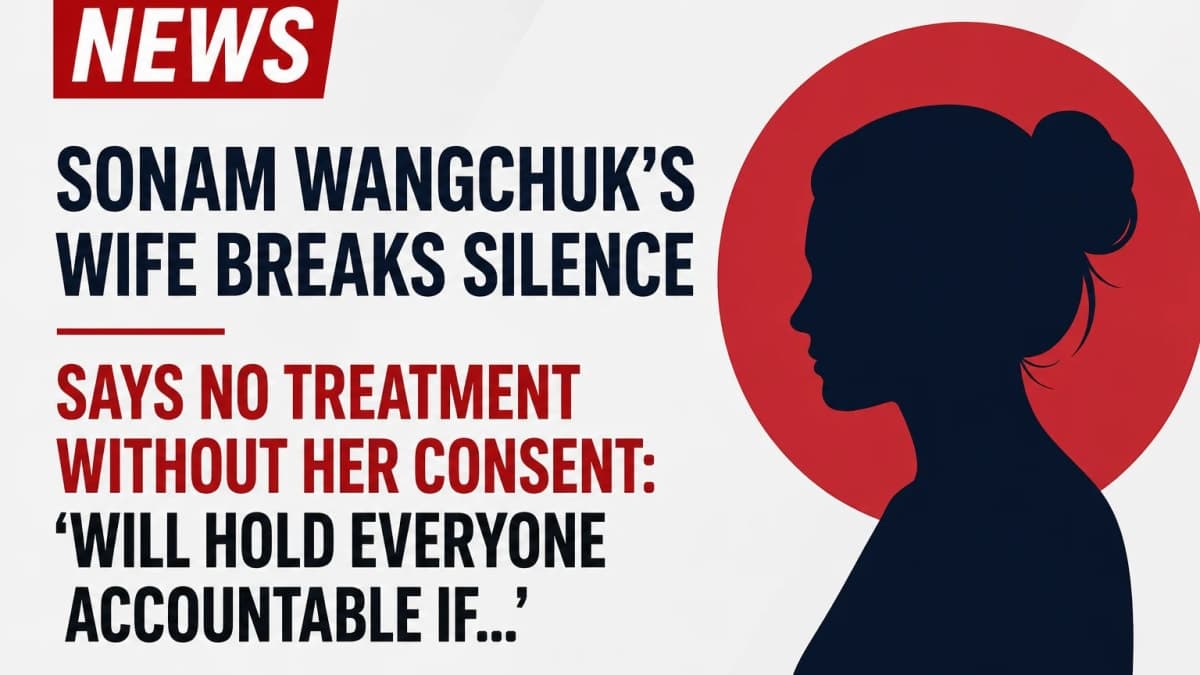
Speaking after the hospitalisation, Angmo stated that no medical treatment should be administered to Sonam Wangchuk without her consent and consultation with the doctors who had been monitoring his health during the hunger strike. She also said that if any untoward incident occurs, she would hold everyone responsible accountable, emphasising the family's concern over the manner in which the situation has been handled.
According to Delhi Police, Wangchuk was moved to the hospital after medical experts recommended immediate care, and the transfer was carried out in compliance with directions issued by the Delhi High Court. Officials have maintained that the decision was taken solely to safeguard his health following an extended period of fasting.
Hospital authorities have reported that Wangchuk is currently stable but remains under continuous medical observation because of the physical effects associated with prolonged fasting. Doctors are monitoring his condition while ensuring that appropriate medical protocols are followed.
The incident has drawn widespread public attention, with supporters continuing demonstrations and raising questions about patient consent and the handling of high-profile protests. Authorities, however, have reiterated that the hospitalisation was intended to ensure Wangchuk receives necessary medical attention while his health is closely monitored.
As discussions continue, the developments have sparked broader conversations on medical ethics, patient autonomy, and the balance between healthcare intervention and individual consent during prolonged public protests.