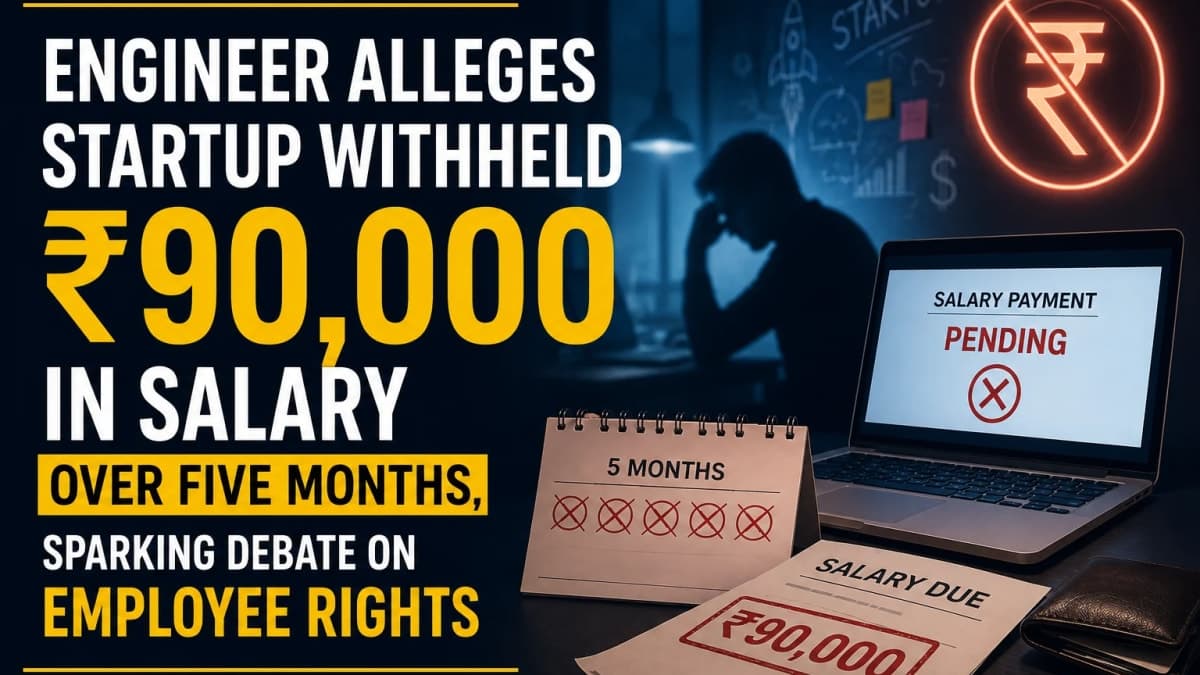
Engineer Claims Startup Owes ₹90,000 After Months of Partial Salary Payments
An engineer has alleged that a startup failed to pay his full salary for nearly five months, leaving him with outstanding dues of approximately ₹90,000. The claim has drawn attention online, with many professionals discussing the financial and emotional impact of delayed salary payments in young companies.
According to the employee's account, the startup allegedly continued operations while repeatedly delaying or partially releasing salary payments, eventually resulting in significant unpaid wages. The allegation has triggered wider conversations about workplace ethics, financial transparency, and employer responsibility within India's startup ecosystem.
At the time of the claim, the allegation represents the employee's version of events, and any response from the company should be considered before drawing conclusions.
Salary Delays Can Have Serious Consequences
For most employees, regular salary payments are essential for managing rent, household expenses, loan repayments, insurance premiums, and daily living costs.
When salaries are delayed over several months, workers may face financial stress, increased debt, and uncertainty regarding their professional future. Such situations can also affect employee morale and productivity while creating trust issues between employers and staff.
The engineer's allegation has therefore resonated with many professionals who have experienced similar challenges in financially constrained organizations.
Startups Often Balance Growth With Financial Constraints
Many startups operate under limited cash reserves while investing heavily in product development, hiring, customer acquisition, and business expansion.
During periods of funding shortages or delayed investments, some startups face liquidity pressures that may affect payroll management. However, labour experts generally emphasize that employee salaries remain among the most critical financial obligations for any employer.
Transparent communication with employees during financial difficulties is often viewed as essential for maintaining workplace trust.
Employee Rights Remain an Important Discussion
Labour laws and employment agreements generally outline employer responsibilities regarding timely wage payments. While legal remedies may vary depending on employment contracts and applicable regulations, delayed salary disputes frequently become matters of concern for both employees and regulatory authorities.
Professionals increasingly expect startups to maintain the same standards of financial accountability as larger organizations, especially as India's startup ecosystem continues to mature.
Growing Importance of Workplace Transparency
The incident has once again highlighted the importance of transparency in employer-employee relationships.
Many industry observers believe companies should communicate openly about financial challenges instead of leaving employees uncertain about payment timelines. Clear communication, realistic expectations, and documented commitments can help reduce disputes while preserving organizational credibility during difficult periods.
Why This Matters
India's startup ecosystem has become one of the world's largest, creating thousands of jobs across technology, fintech, artificial intelligence, logistics, healthcare, and other sectors.
As the ecosystem expands, discussions around employee welfare, payroll discipline, workplace governance, and ethical business practices are becoming increasingly significant. Allegations involving delayed salaries can affect employee confidence, company reputation, hiring capabilities, and investor perception.
Balanced Analysis
While startups often face genuine funding and cash flow challenges, employees depend on predictable income for financial stability. Sustainable startup growth requires balancing innovation with responsible financial management and transparent communication. Since the reported salary dispute reflects an allegation by the employee, any assessment should also consider the company's explanation or response before reaching definitive conclusions.