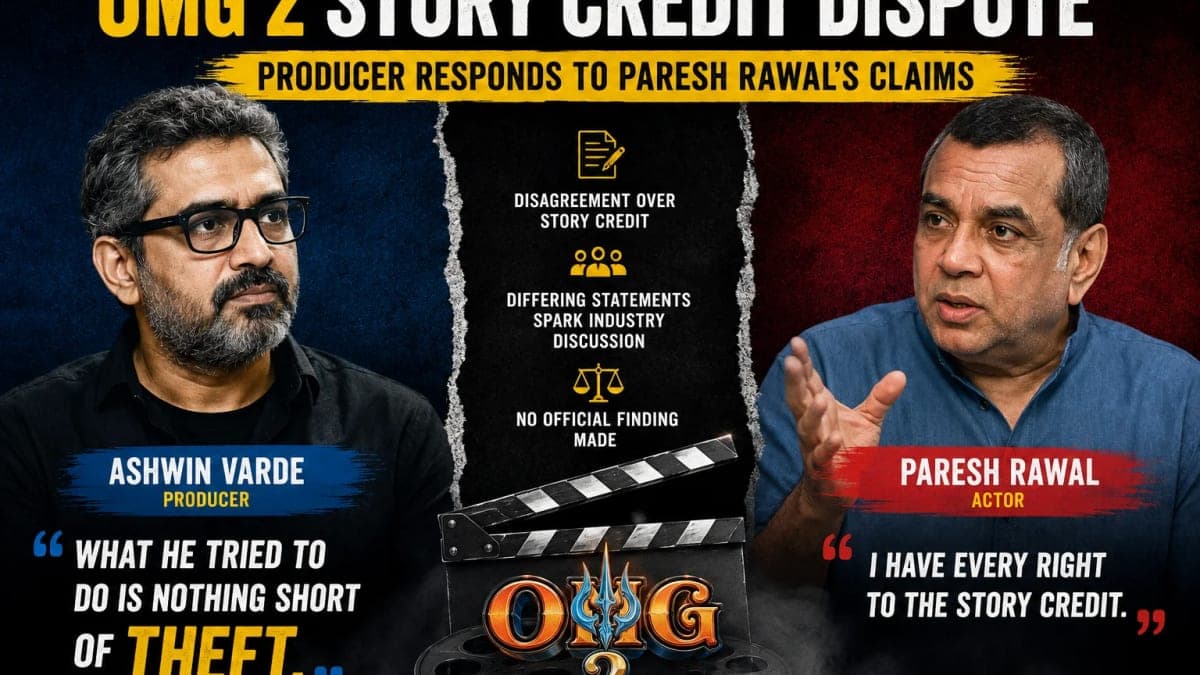
A debate over story credits connected to the film OMG 2 has become a topic of discussion after producer Ashwin Varde publicly addressed comments reportedly made by actor Paresh Rawal regarding creative recognition. The exchange has generated interest among industry observers and fans, bringing renewed attention to how story development and credit attribution are handled in film production.
According to publicly reported statements, Ashwin Varde strongly disagreed with the claims concerning story credit and defended the production team's position. His response emphasized the importance of respecting established crediting practices within the filmmaking process and maintaining transparency regarding creative contributions.
The producer's remarks have fueled wider conversations about intellectual property, screenplay development, and the recognition of writers and creative professionals in the entertainment industry. Questions surrounding authorship and creative ownership occasionally arise in film production, particularly when multiple individuals contribute to the evolution of a project's storyline.
At the same time, the comments attributed to Paresh Rawal reflect his reported perspective on the matter. As with many public disagreements involving creative works, differing accounts can emerge, and such issues are often clarified through dialogue, contractual documentation, or established industry processes where necessary.
Industry experts note that story credits are generally determined through agreements, documented contributions, and professional standards followed during film production. Proper acknowledgment of writers, creators, and contributors is considered an important aspect of maintaining fairness and protecting creative rights.
The discussion has also highlighted the broader issue of how intellectual property disputes can influence public perception of film projects long after their release. Such debates often attract significant media attention, particularly when they involve well-known actors, producers, or successful films.
Neither side's public statements should be interpreted as a final determination regarding ownership or entitlement unless supported by official documentation or legal findings. The matter remains part of an ongoing public exchange between those involved.
As conversations continue, many observers believe the situation underscores the importance of clear agreements, transparent communication, and proper documentation throughout the filmmaking process. These measures help reduce misunderstandings and ensure that creative professionals receive recognition consistent with their contributions.