Government Extends Electric Two-Wheeler Support Under PM E-DRIVE
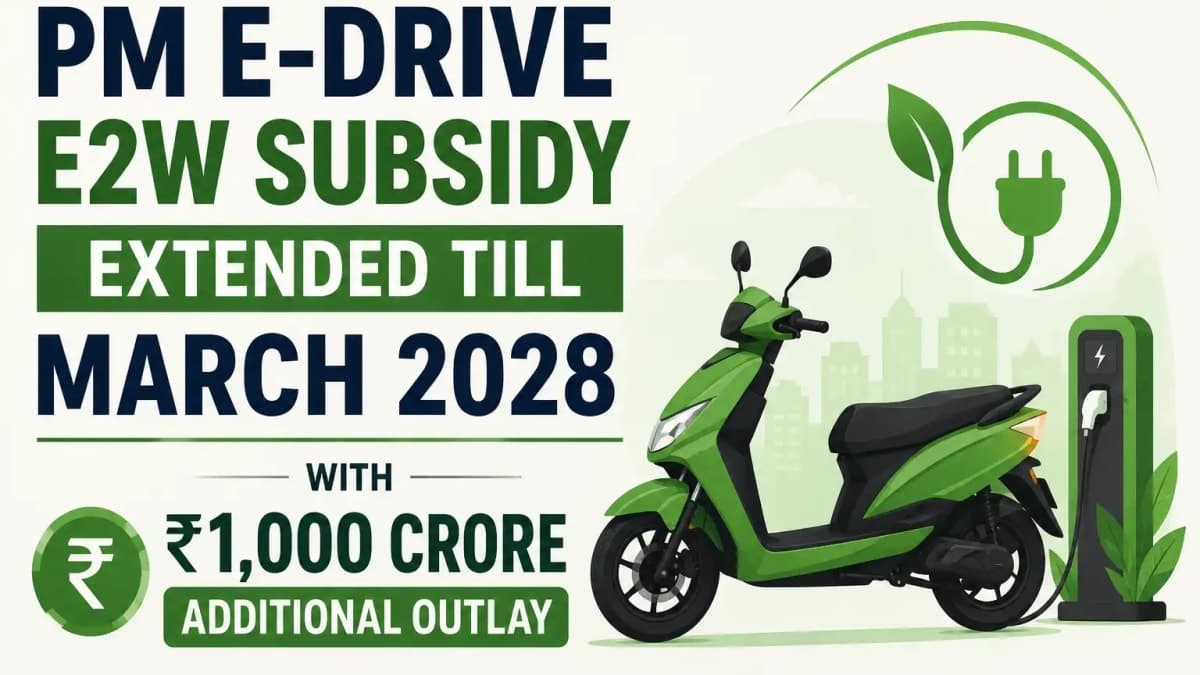
India's push toward electric mobility has received another boost, with the government extending the electric two-wheeler subsidy component of the PM Electric Drive Revolution in Innovative Vehicle Enhancement (PM E-DRIVE) scheme until March 31, 2028.
The extension is accompanied by an additional allocation of ₹1,000 crore for electric two-wheelers, or E2Ws.
The decision gives the country's electric scooter and motorcycle market a longer period of policy support as manufacturers work to increase adoption and consumers gradually shift away from conventional internal-combustion-engine vehicles.
For India's rapidly evolving EV industry, the extension is significant because two-wheelers account for a major share of personal mobility in the country and represent one of the largest opportunities for large-scale electrification.
What Is the PM E-DRIVE Scheme?
PM E-DRIVE is a central government programme designed to accelerate India's transition toward cleaner transportation.
The scheme supports different categories of electric vehicles while also focusing on the broader ecosystem required to make electric mobility practical at scale.
Its objectives extend beyond encouraging consumers to purchase EVs. The programme is also intended to support charging infrastructure and strengthen the development of a sustainable electric-mobility ecosystem.
Electric two-wheelers occupy a particularly important position within this strategy because scooters and motorcycles are among the most widely used vehicles in India.
Making electric alternatives more accessible could therefore have a substantial effect on fuel consumption and urban transport emissions over the long term.
₹1,000 Crore Additional Outlay for E2Ws
Alongside extending the timeline until March 2028, the government has provided an additional ₹1,000 crore allocation for electric two-wheelers.
The extra funding provides greater room for incentives to continue as EV adoption expands.
Demand incentives can reduce the effective cost difference between electric vehicles and comparable petrol-powered models, an issue that remains important for price-sensitive consumers.
Electric vehicles can potentially offer lower running costs, but their higher upfront prices have historically been one of the barriers preventing some consumers from making the switch.
The additional allocation is therefore expected to help maintain demand while the industry continues working toward lower battery costs, greater manufacturing scale and improved product economics.
Why Electric Two-Wheelers Matter for India's EV Transition
India's two-wheeler market is enormous.
Millions of people depend on scooters and motorcycles for daily commuting, business activities and short-distance transportation. That makes the segment strategically important for India's transition away from fossil-fuel-powered road transport.
Electric two-wheelers are also particularly suited to electrification because many are used for relatively predictable daily journeys.
Charging requirements for electric scooters can be easier to accommodate than those of larger commercial vehicles, while lower operating costs can make them attractive to high-mileage users.
The segment has consequently become one of the most competitive areas of India's EV industry, drawing established automobile manufacturers as well as newer electric-mobility companies.
Extension Provides Greater Certainty to EV Manufacturers
Policy predictability is important for manufacturers making long-term investments in electric vehicles.
An extension until March 2028 provides companies with additional visibility when planning manufacturing capacity, supply chains, new models and investments in technology.
It can also benefit companies involved in batteries, components, charging systems and other parts of the EV supply chain.
Manufacturers ultimately need electric vehicles to become commercially competitive without depending indefinitely on government incentives.
However, a longer transition period can help companies achieve greater manufacturing scale while battery technology and domestic supply chains continue to develop.
Consumers Could Benefit From Longer Policy Support
For buyers, the extension means government support for eligible electric two-wheelers will continue for a longer period.
Price remains one of the most important considerations for Indian two-wheeler customers.
Although electric scooters may offer savings through lower fuel and maintenance expenses, consumers often compare the initial purchase price directly with petrol-powered alternatives.
Incentives can narrow that upfront gap.
The extension may therefore help electric two-wheelers reach consumers who are interested in switching to EVs but remain sensitive to purchase costs.
The Bigger Challenge: Building an EV Market Beyond Subsidies
Government incentives can accelerate adoption, but subsidies alone cannot determine the long-term success of India's electric two-wheeler industry.
Consumers also evaluate practical factors such as battery durability, real-world range, charging convenience, service availability, resale value and reliability.
Manufacturers will therefore need to continue improving their products even while incentives remain available.
Charging infrastructure is another important consideration. While many electric scooters can be charged at homes or workplaces, greater availability of reliable public charging infrastructure would make EV ownership more practical for consumers without dedicated parking or charging facilities.
Domestic Manufacturing Remains Important
India's electric-mobility strategy is also closely connected with the country's broader manufacturing ambitions.
As EV demand grows, domestic production of batteries, motors, electronics and other critical components could reduce reliance on imported technology and strengthen India's automotive supply chain.
Greater local manufacturing could eventually help lower vehicle costs.
That would be particularly important once government incentives are reduced or withdrawn, because electric vehicles will ultimately need to compete with conventional vehicles largely on their own economic and technological merits.
Why the Extension Matters
The extension of E2W support until March 2028 sends a signal that the government continues to view electric two-wheelers as an important component of India's clean-mobility transition.
The additional ₹1,000 crore also gives the segment more financial support at a time when competition among EV manufacturers is increasing.
For manufacturers, the decision provides additional time to expand scale and improve cost structures.
For consumers, continued incentives can help make electric models financially more attractive.
And for policymakers, the extension provides another opportunity to accelerate EV adoption while India's charging, battery and manufacturing ecosystems mature.
Balanced Analysis
Extending subsidies can support India's transition toward electric transportation, particularly in a highly price-sensitive market.
The policy may encourage additional consumers to consider electric scooters and give manufacturers more time to reach economies of scale.
However, sustained dependence on subsidies carries risks.
If demand is driven primarily by government incentives rather than product competitiveness, sales could weaken once financial support is eventually reduced. Policymakers must therefore balance short-term incentives with investments in charging infrastructure, battery technology, safety standards and domestic manufacturing.
Manufacturers also have a responsibility to use the additional policy runway to improve quality, reliability and affordability.
The strongest measure of success will not simply be the number of subsidised electric two-wheelers sold before March 2028. It will be whether the industry can eventually sustain strong demand without requiring substantial purchase incentives.
Conclusion
The extension of the PM E-DRIVE electric two-wheeler subsidy until March 31, 2028, backed by an additional ₹1,000 crore allocation, provides India's EV industry with a longer window to expand adoption.
Given the enormous role of scooters and motorcycles in Indian transportation, accelerating their electrification could have significant implications for fuel consumption, urban emissions and the country's emerging clean-technology manufacturing industry.
The next two years will be important for determining whether manufacturers can translate continued government support into a larger, more competitive and increasingly self-sustaining electric two-wheeler market.
This article is based on reporting published by Inc42.