Salman Khan Appeals to Sonam Wangchuk to End Hunger Strike, Calls for Constructive Resolution
Introduction
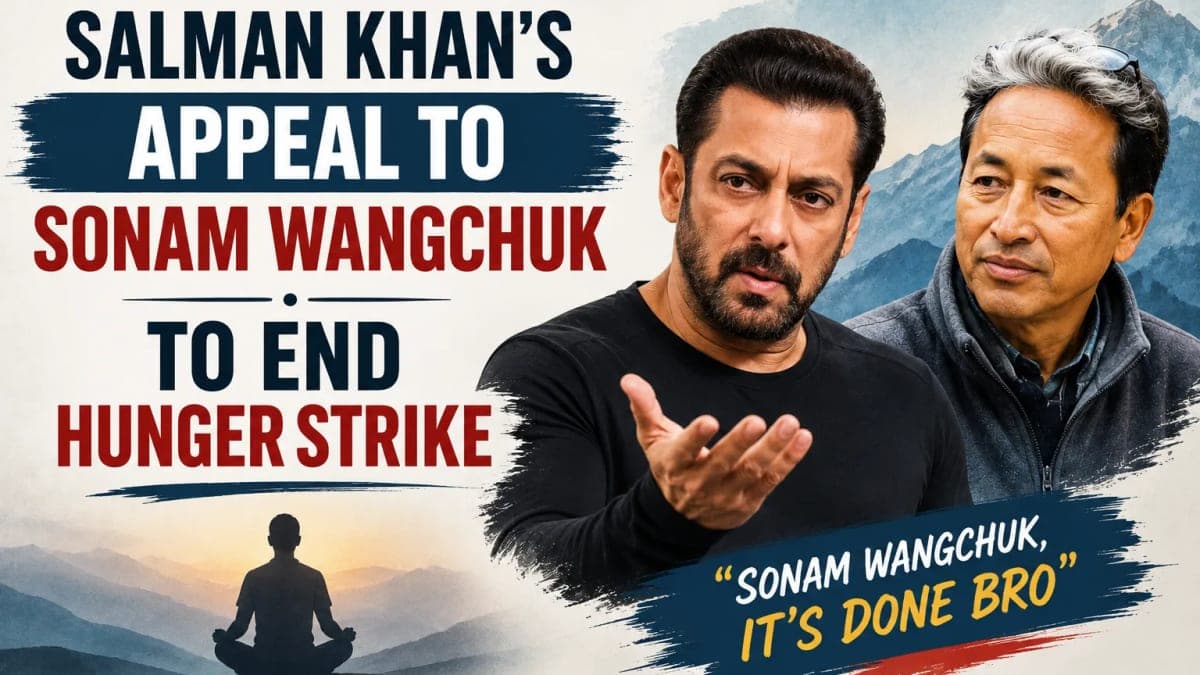
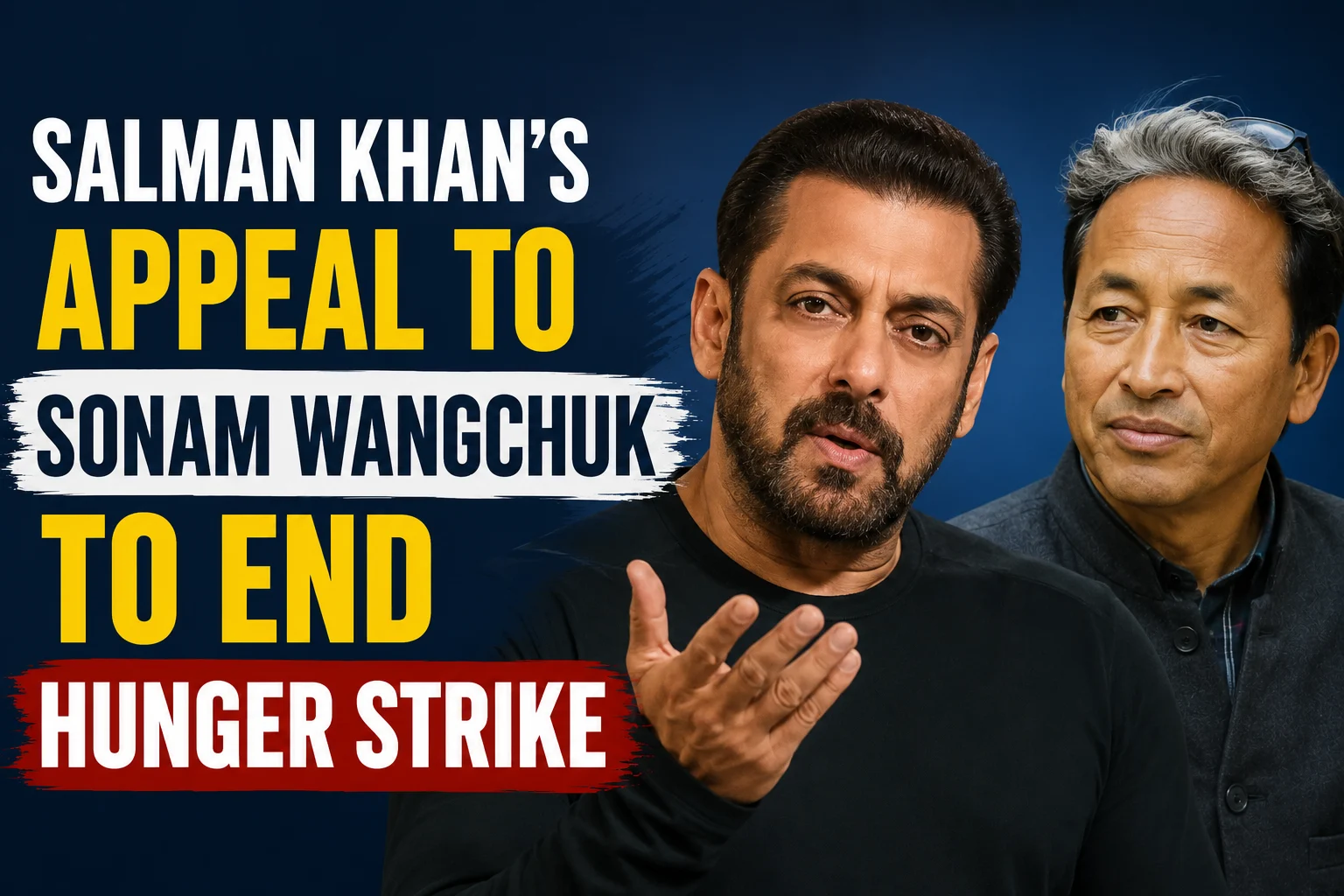
Bollywood actor Salman Khan has made a public appeal to Sonam Wangchuk, urging the renowned innovator and environmental activist to end his hunger strike. In a message directed at Wangchuk, Salman emphasized concern for his well-being and encouraged him to conclude the fast while hoping that meaningful discussions could continue.
The appeal comes at a time when Wangchuk's protest has attracted nationwide attention, with political leaders, activists, and public figures closely following developments.
Salman Khan's Public Appeal
In his message, Salman Khan urged Sonam Wangchuk to bring his hunger strike to an end, expressing concern about the activist's health after days of fasting. His appeal reflected a humanitarian perspective, highlighting the importance of preserving health while continuing to pursue public causes.
The actor's intervention has added a celebrity voice to an issue that has largely remained centered on governance, environmental protection, and regional concerns.
Growing Public Attention Around Wangchuk's Protest
Sonam Wangchuk's protest has generated widespread discussion across the country, drawing support from various sections of society. His campaign has focused on issues affecting the Himalayan region, environmental conservation, and policy measures impacting local communities.
The movement has also attracted the attention of public personalities, social organizations, and political representatives, making it one of the most closely watched civic campaigns in recent weeks.
Background
Sonam Wangchuk is widely recognized for his contributions to sustainable innovation, education reform, and environmental conservation. Over the years, he has become an influential public figure through initiatives promoting ecological balance and community-driven development.
His recent hunger strike has sought to draw attention to concerns that he believes require greater policy focus. The protest has remained peaceful and has sparked discussions about environmental governance, regional development, and democratic engagement.
Why This Matters
Public interventions by influential personalities often expand the reach of important social issues. Salman Khan's appeal may encourage wider public awareness about Wangchuk's campaign while also emphasizing the humanitarian concern surrounding prolonged hunger strikes.
The episode also illustrates how public figures can contribute to national conversations by encouraging peaceful dialogue, consensus-building, and constructive engagement between citizens and authorities.
Balanced Analysis
Supporters of Sonam Wangchuk argue that peaceful protests and hunger strikes have historically served as powerful democratic tools to draw attention to significant public issues. They believe sustained civic action can encourage policymakers to respond more effectively.
Others stress that while public advocacy is important, prolonged fasting carries serious health risks. They argue that dialogue between stakeholders remains the most sustainable path toward resolving complex policy concerns.
Salman Khan's message reflects this latter perspective by expressing support for Wangchuk's well-being without dismissing the importance of the issues being raised.
Public and Social Media Response
The actor's appeal has generated discussion across social media, where users have expressed a variety of opinions. Some welcomed the intervention as a compassionate gesture focused on Wangchuk's health, while others reiterated the importance of addressing the underlying issues that prompted the protest.
The conversation highlights how celebrity involvement can amplify public attention while encouraging broader engagement with civic movements.
Conclusion
Salman Khan's appeal to Sonam Wangchuk has brought renewed visibility to an ongoing public campaign, emphasizing concern for the activist's health while encouraging a peaceful resolution through dialogue. As discussions continue, attention is likely to remain focused both on Wangchuk's demands and on the broader policy issues surrounding his movement.