हिंदी में पढ़ें —JantaScope हिंदी
Startup

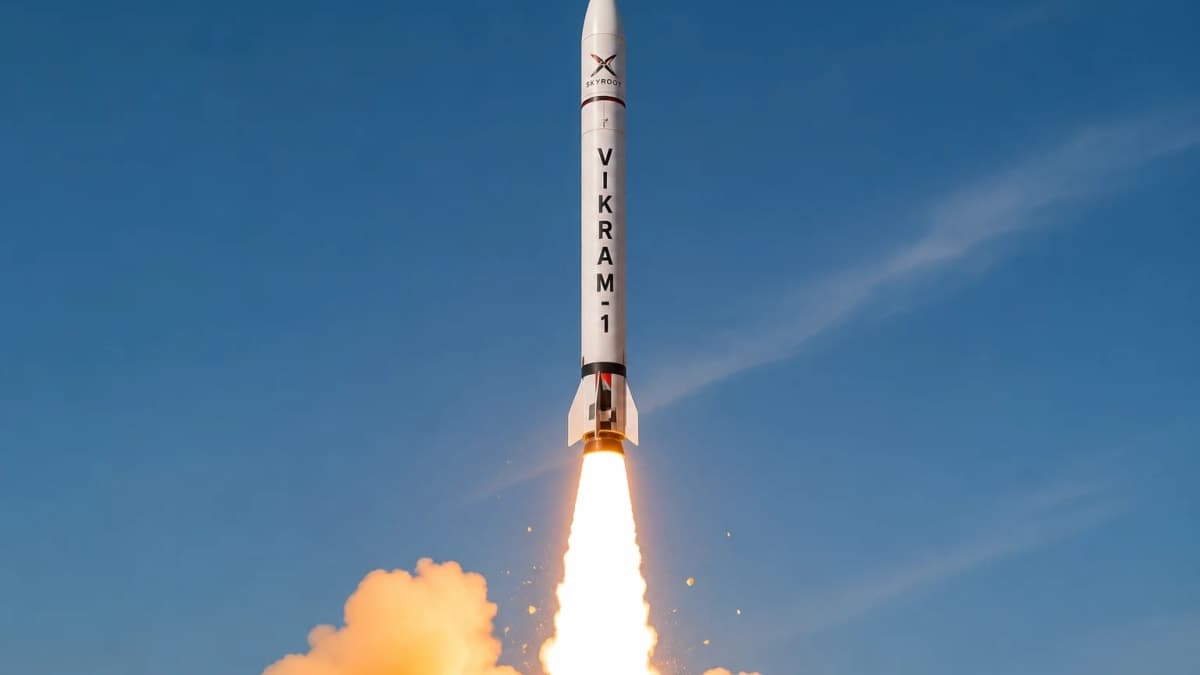
Skyroot’s Vikram-1 Makes History as India’s First Privately Developed Orbital Rocket Reaches Orbit

Skyroot Aerospace has achieved a landmark milestone by successfully launching Vikram-1, India's first privately developed orbital-class rocket. The mission marks a major breakthrough for the country's commercial space sector and signals a new phase in private participation in space exploration.

Skyroot’s Vikram-1 Makes History as India’s First Privately Developed Orbital Rocket Reaches Orbit

By Jeet Nirmal

Source: Janta Scope

India's commercial space industry has reached a defining milestone with the successful launch of Vikram-1, the country's first privately developed orbital-class rocket by Skyroot Aerospace. Lifting off from the Satish Dhawan Space Centre in Sriharikota under Mission Aagaman, the launch demonstrated the growing capabilities of India's private space ecosystem and highlighted the rapid progress made since the sector was opened to greater private participation.

The mission successfully placed multiple payloads into a low-Earth orbit, marking India's first successful orbital launch by a privately developed launch vehicle. This achievement places India among a small group of nations where private companies have independently developed and launched orbital-class rockets.

Designed to support commercial satellite launches, Vikram-1 incorporates advanced engineering features, including lightweight composite structures and a combination of solid and liquid propulsion technologies. The rocket also showcases innovations such as 3D-printed engine components, reflecting the increasing technological maturity of India's emerging space startups.

The successful mission represents more than a single launch. It demonstrates the growing collaboration between government institutions, regulators, and private enterprises working to expand India's presence in the global commercial launch market. As demand for small satellite deployment continues to rise worldwide, private launch providers are expected to play an increasingly important role in serving domestic and international customers.

The launch is widely viewed as a turning point for India's private aerospace industry, opening new opportunities for innovation, investment, and commercial space services. Analysts believe the achievement could encourage further investment into Indian space technology startups while strengthening the country's position in the rapidly expanding global space economy.

Industry experts also note that successful private orbital launches help build confidence in indigenous launch capabilities and create opportunities for future missions involving Earth observation, communications, scientific research, and technology demonstrations. The mission validates years of engineering development and reflects the increasing sophistication of India's startup ecosystem.

With Vikram-1 successfully reaching orbit, Skyroot Aerospace has demonstrated that Indian private companies are capable of developing advanced launch systems capable of supporting commercial space missions on the global stage. The achievement is expected to accelerate the growth of India's commercial space industry while inspiring further technological innovation across the sector.


Related

More stories

Indian Tech Startups Raise $10.3 Billion in 2026 as Investors Make Fewer, Bigger Bets

India’s technology ecosystem raised $10.3 billion between January 1 and September 21, 2026, up 7% year-on-year, even as the number of funding rounds dropped 38%. Tracxn data shows investment becoming more concentrated in larger deals, with enterprise technology, fintech and AI infrastructure attracting significant capital.

Startup

Indian Tech Startups Raise $10.3 Billion in 2026 as Investors Make Fewer, Bigger Bets

India Tech Funding Hits $10.3 Billion in 2026 Despite 38% Drop in Funding Rounds

India’s technology ecosystem raised $10.3 billion between January 1 and September 21, 2026, up 7% year-on-year, even as the number of funding rounds dropped 38%. Tracxn data shows investment becoming more concentrated in larger deals, with enterprise technology, fintech and AI infrastructure attracting significant capital.

Startup

India Tech Funding Hits $10.3 Billion in 2026 Despite 38% Drop in Funding Rounds

Aequs Plans ₹650 Crore Promoter Infusion to Expand Aerospace and Consumer Manufacturing Capacity

Aequs Limited’s board has approved a preferential issue of convertible warrants worth about ₹650 crore to a promoter-group entity. The fresh equity is intended to support capacity expansion across the company’s aerospace and consumer businesses, including development of its Hosur facility, investments in subsidiaries and joint ventures, and its borrowing programme. The proposal still requires shareholder and applicable regulatory approvals.

Startup

Aequs Plans ₹650 Crore Promoter Infusion to Expand Aerospace and Consumer Manufacturing Capacity

Indian Startups Raise $203.4 Million in a Week as AI and EV Deals Drive Funding Surge

Indian startups raised $203.4 million across 21 deals between September 21 and September 25, according to Inc42's weekly funding tracker. Large rounds involving Ultraviolette Automotive and enterprise AI company Ema accounted for most of the capital, while seed-stage activity remained active across AI, consumer and technology businesses.

Startup

Indian Startups Raise $203.4 Million in a Week as AI and EV Deals Drive Funding Surge

AceVector IPO Subscribed 23% on Day 1; Retail Portion Leads With 62% Booking

Snapdeal parent AceVector’s ₹420 crore IPO was subscribed 23% on the first day of bidding, with retail investors leading demand at 62%. The NII portion was booked 42%, while qualified institutional buyers had yet to submit bids by the end of Day 1.

Startup

AceVector IPO Subscribed 23% on Day 1; Retail Portion Leads With 62% Booking

VCs Turn to India’s New-Age Kitchen Startups as Premiumisation Drives Funding Interest

Venture capital investors are showing growing interest in India’s new-generation kitchenware and appliance startups as consumers spend more on design, convenience and safer materials. Beyond Appliances and Nuuk are reportedly seeking fresh capital, while Curaa, Cumin Co, Ember and EDT have recently attracted funding.

Startup

VCs Turn to India’s New-Age Kitchen Startups as Premiumisation Drives Funding Interest