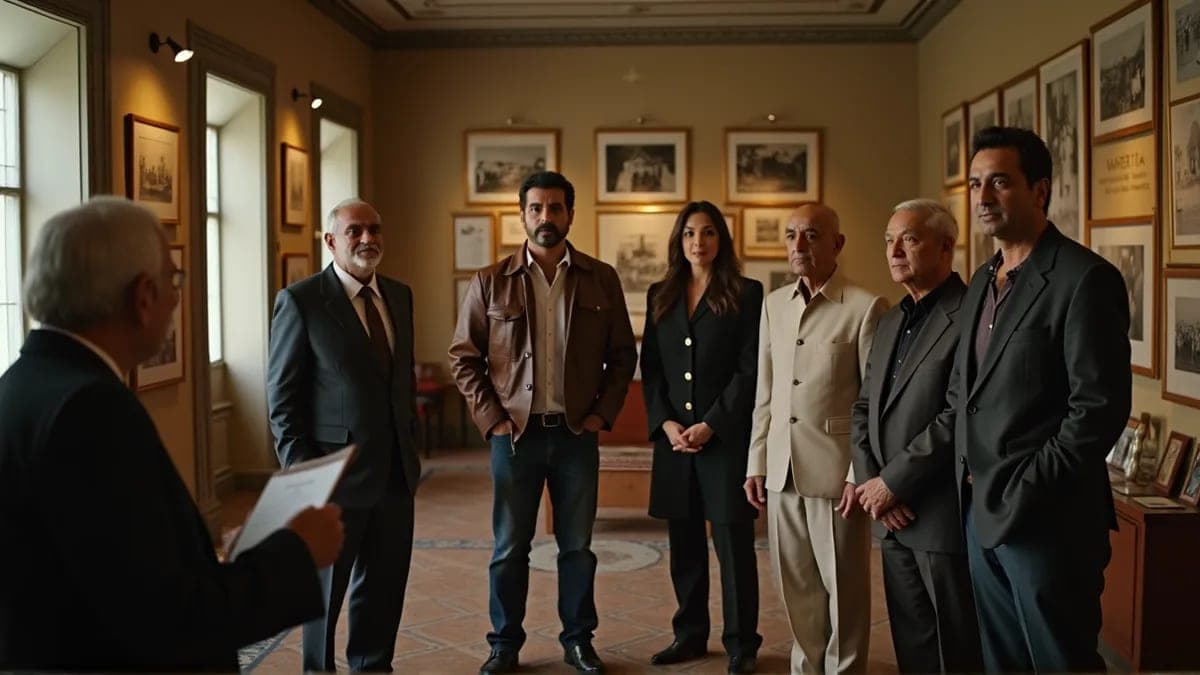
Sunny Deol, his son Karan Deol and Preity G Zinta stepped inside the Partition Museum in Amritsar as part of a high‑profile promotional trek for the upcoming period film "Batwara 1947". Their presence was framed as a bridge between cinematic storytelling and living memory, prompting observers to assess whether the outreach will deepen audience empathy or simply serve as a publicity hook.
Industry analysts had anticipated a conventional media circuit—press conferences, television interviews and city‑wide premieres—but the decision to engage directly with Partition survivors marked a departure from standard Bollywood promotion. The move aligns with a broader trend of filmmakers seeking authenticity by foregrounding real‑world testimonies, yet it also raises questions about how emotional resonance translates into box‑office performance.
The Development
"Batwara 1947" is a joint venture between Aamir Khan Productions and veteran director Rajkumar Santoshi, whose résumé includes socially conscious titles such as "Damini" and "Ghayal". The film stars Shabana Azmi alongside Sunny Deol and Preity Zinta, bringing together three generations of Bollywood talent to dramatise the upheaval surrounding the 1947 Partition of India. Set against the backdrop of Punjab's fractured villages, the narrative follows families torn apart by communal violence and forced migration.
Following a multi‑city promotional circuit that has already covered Jaipur, Ahmedabad, Patna and Lucknow, the cast arrived in Punjab for the final leg of the tour. The itinerary includes a scheduled meeting with elderly survivors of the Partition, followed by a guided visit to the Partition Museum, an institution dedicated to preserving artifacts, photographs and oral histories of the era. Organisers describe the segment as an "emotional encounter" designed to honor the lived experiences that inspired the screenplay.
Sunny Deol, whose own grandparents endured the 1947 turmoil, has repeatedly highlighted his personal connection to the story. During the film's trailer launch he recounted family anecdotes about villagers shielding each other from rioters, emphasizing the communal solidarity that emerged amid chaos. His remarks underscore a narrative thread that the film intends to weave: that ordinary citizens often became unexpected protectors during a period of widespread fear.
The Numbers
While concrete financial forecasts remain speculative, several quantifiable details have been disclosed. The film is slated for a nationwide theatrical release on August 14, coinciding with India's Independence Day celebrations. The promotional tour has already touched five major urban centres, with Punjab representing the fifth stop. The cast’s engagement with the Partition Museum involves a three‑hour program that includes a Q&A session with survivors.
Release date: 14 August 2026
Promotional cities visited: 5 (Jaipur, Ahmedabad, Patna, Lucknow, Punjab)
Key cast members: Sunny Deol, Karan Deol, Preity G Zinta, Shabana Azmi
Director: Rajkumar Santoshi
Production house: Aamir Khan Productions
Reading Between The Lines
The decision to meet Partition survivors suggests a strategic effort to lend the film moral weight beyond its commercial ambitions. By foregrounding first‑hand testimonies, the producers appear to be positioning "Batwara 1947" as a conduit for collective remembrance, potentially appealing to older audiences who lived through the era as well as younger viewers seeking historical context.
Critics note that Bollywood’s recent forays into period drama—such as "The Legend of Bhagat Singh" and "Gadar 2"—have benefited from authentic set pieces and community outreach. In that vein, the Punjab leg of the tour may serve to differentiate "Batwara 1947" in a crowded release calendar, especially as several high‑budget films are slated for the same Independence Day window.
The involvement of Sunny Deol, a figure synonymous with patriotic cinema, adds a layer of cultural credibility. His personal family narrative reinforces the film’s claim to authenticity, while Karan Deol’s participation signals a generational hand‑off, potentially broadening the film’s appeal across age groups.
The Risks
Partition remains a deeply sensitive subject in South Asian discourse, and any perceived misrepresentation can trigger public backlash. Filmmakers must navigate the fine line between dramatisation and exploitation, especially when dealing with survivors who may view cinematic portrayals as commodification of trauma.
From a commercial standpoint, releasing the film on August 14 places it in direct competition with other high‑profile releases that traditionally dominate the holiday box office. If the promotional strategy fails to convert emotional engagement into ticket sales, the film could underperform despite its star‑studded lineup.
What To Watch
Industry watchers will monitor opening‑weekend figures closely, as they will indicate whether the museum visit and survivor meetings have translated into audience curiosity. Early reviews from film festivals and critic screenings are also expected to shape public perception before the nationwide rollout.
Beyond box‑office metrics, the longer‑term impact will be measured by how "Batwara 1947" contributes to ongoing conversations about Partition in Indian popular culture. The film’s reception could influence future projects that aim to blend historical fidelity with mainstream entertainment.
This article is based on reporting published by Bollywood Hungama.