
Sunny Deol’s Batwara 1947 Cleared by CBFC Without Cuts, Earns Adults-Only Rating
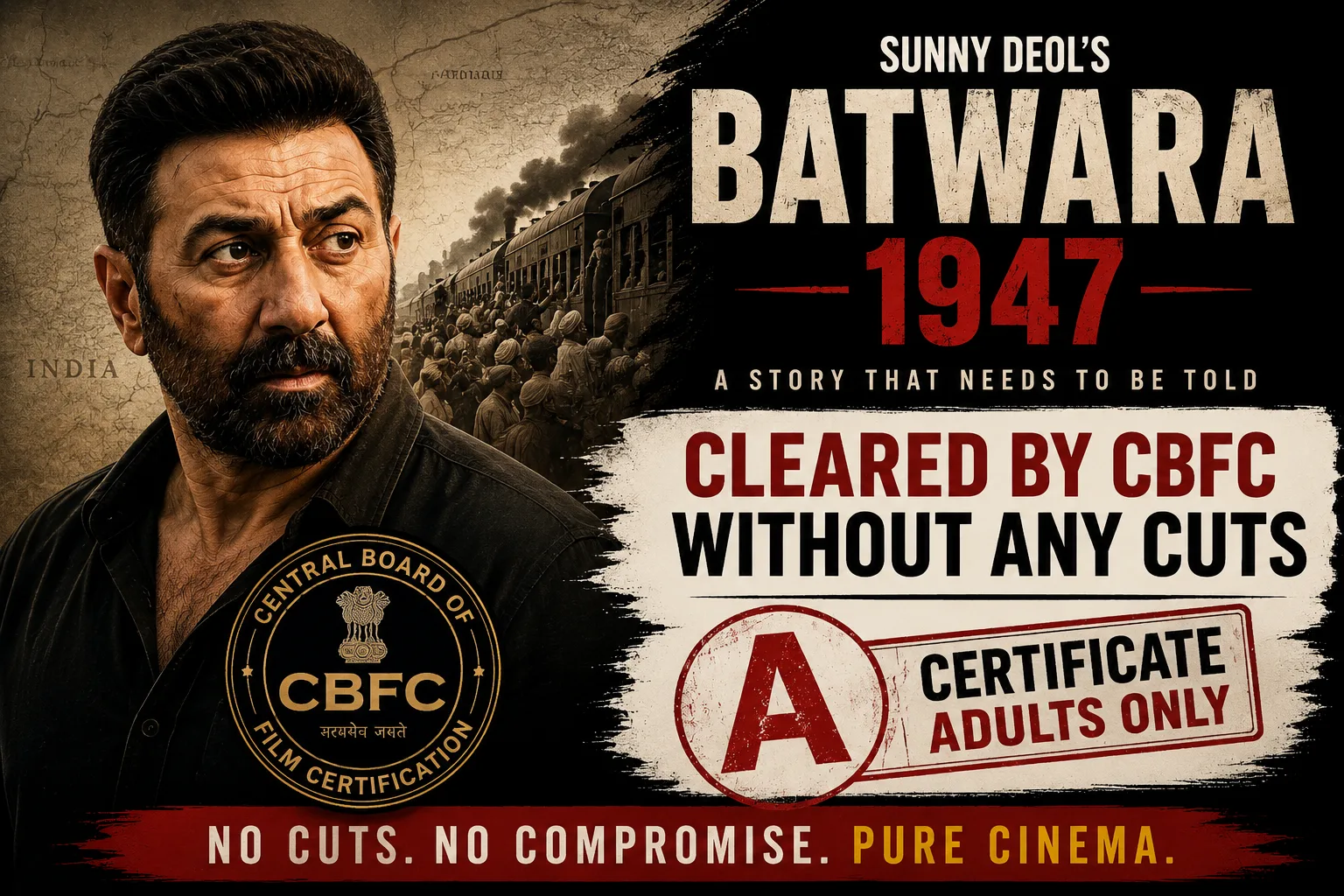
Sunny Deol’s much-awaited historical drama Batwara 1947 has officially crossed an important milestone ahead of its theatrical release. The Central Board of Film Certification (CBFC) has approved the film without recommending a single cut, while assigning it an ‘A’ certificate, meaning the movie is intended exclusively for adult audiences.
Receiving a censor certificate without any modifications is relatively uncommon, particularly for films that explore sensitive historical themes. The decision indicates that the board found no need to alter the filmmaker’s final version, allowing audiences to experience the story exactly as it was created.
A Significant Milestone Before Release
Certification from the CBFC is a mandatory step before any film can be released in Indian theatres. In the case of Batwara 1947, the approval without edits is likely to be viewed positively by both the filmmakers and fans who have been waiting for the project.
While the ‘A’ certificate limits the audience to viewers aged 18 years and above, it also signals that the film may contain mature themes, intense violence, disturbing visuals, or emotionally complex content considered suitable only for adults.
The certification ensures that the creative vision of the filmmakers remains intact while informing audiences about the nature of the film’s content.
Why the ‘A’ Certificate Matters
An ‘A’ certificate can influence a film’s commercial prospects since younger audiences cannot watch it in cinemas. However, such ratings are often expected for films dealing with serious historical events, conflict, or graphic storytelling.
For filmmakers, retaining the original version without censorship may be equally significant, as it preserves the intended narrative and emotional impact. Many creators view an uncut release as a reflection of confidence in their storytelling.
Sunny Deol Returns With Another Intense Role
Sunny Deol has built a strong reputation through patriotic dramas, action films, and emotionally charged performances over several decades. His association with Batwara 1947 has generated considerable interest among audiences, especially those who appreciate large-scale historical narratives.
Although the film's complete storyline has remained under wraps, its title suggests a backdrop connected to the Partition era of 1947—one of the most defining and emotionally significant chapters in the history of the Indian subcontinent.
Stories inspired by this period often explore themes of displacement, identity, sacrifice, communal tension, and human resilience, making them both historically significant and emotionally demanding.
Historical Subjects Often Invite Greater Scrutiny
Films based on historical events frequently undergo close examination during the certification process because they can involve sensitive political, cultural, or social subjects. In many instances, filmmakers are asked to make changes before certification is granted.
Against that backdrop, Batwara 1947 receiving approval without any cuts stands out as a notable development. It suggests that the board was satisfied with the film in its submitted form while still determining that its mature content warranted an adult-only classification.
What Audiences Can Expect
The certification has increased curiosity surrounding Batwara 1947, with audiences now eager to see how the film portrays one of the most pivotal moments in modern history. While the adult rating narrows its theatrical audience, it may also raise expectations for a serious, uncompromising cinematic experience.
Whether the film ultimately succeeds will depend on its storytelling, performances, historical treatment, and audience response after release. For now, the censor board’s decision marks an important step in the film’s journey to cinemas.
Why This News Matters
The certification of Batwara 1947 is significant because it highlights the balance between creative freedom and regulatory oversight in Indian cinema. An uncut approval for a film rooted in historical themes may encourage discussion about artistic expression, while the ‘A’ certificate prepares audiences for mature subject matter and sets expectations before release.