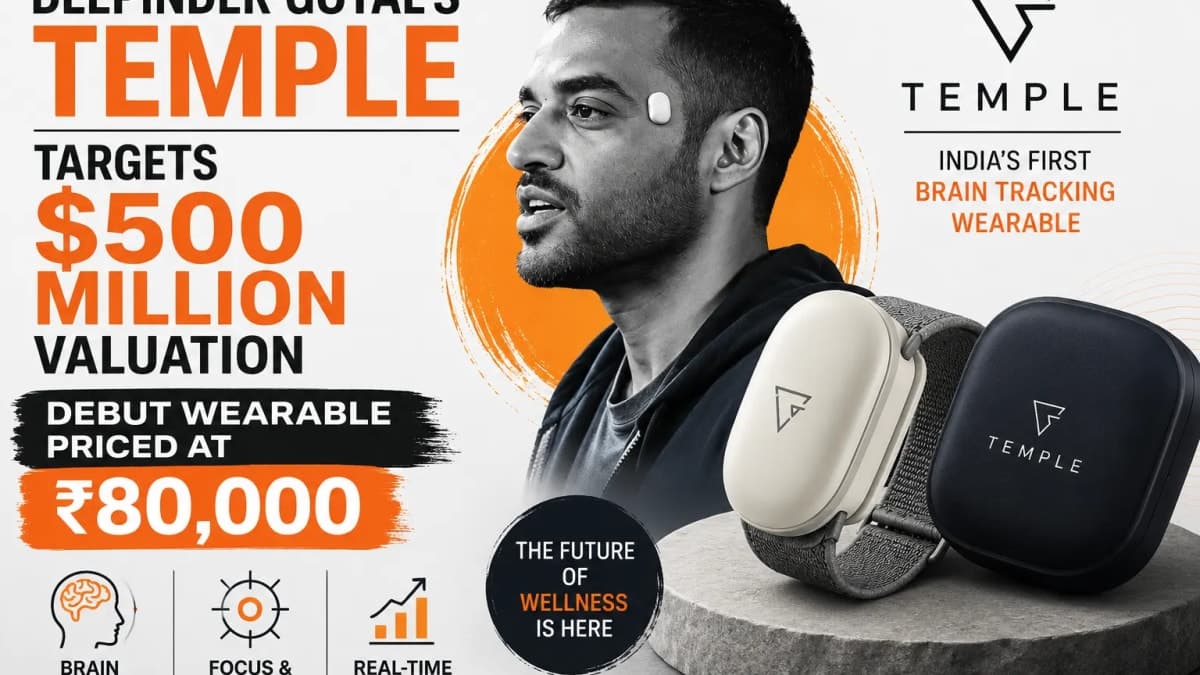
Temple Enters Premium Wearable Technology Segment
Temple, the consumer technology venture associated with entrepreneur Deepinder Goyal, is reportedly aiming for a valuation of approximately $500 million as it prepares to launch its first wearable device. The debut product, priced at ₹80,000, positions the company firmly within the premium technology category rather than the mass-market wearable segment.
The reported valuation and pricing strategy suggest that Temple is seeking to establish itself as a premium consumer technology brand from the outset.
Premium Pricing Signals Long-Term Positioning
Unlike many wearable brands that compete primarily on affordability, Temple appears to be pursuing a premium-market strategy. Pricing its inaugural device at ₹80,000 places it alongside high-end technology products where buyers often prioritize design, advanced features, and overall user experience.
Such positioning indicates that the company is targeting consumers willing to invest in premium technology rather than focusing solely on large-scale adoption through lower prices.
Growing Interest in India's Wearable Market
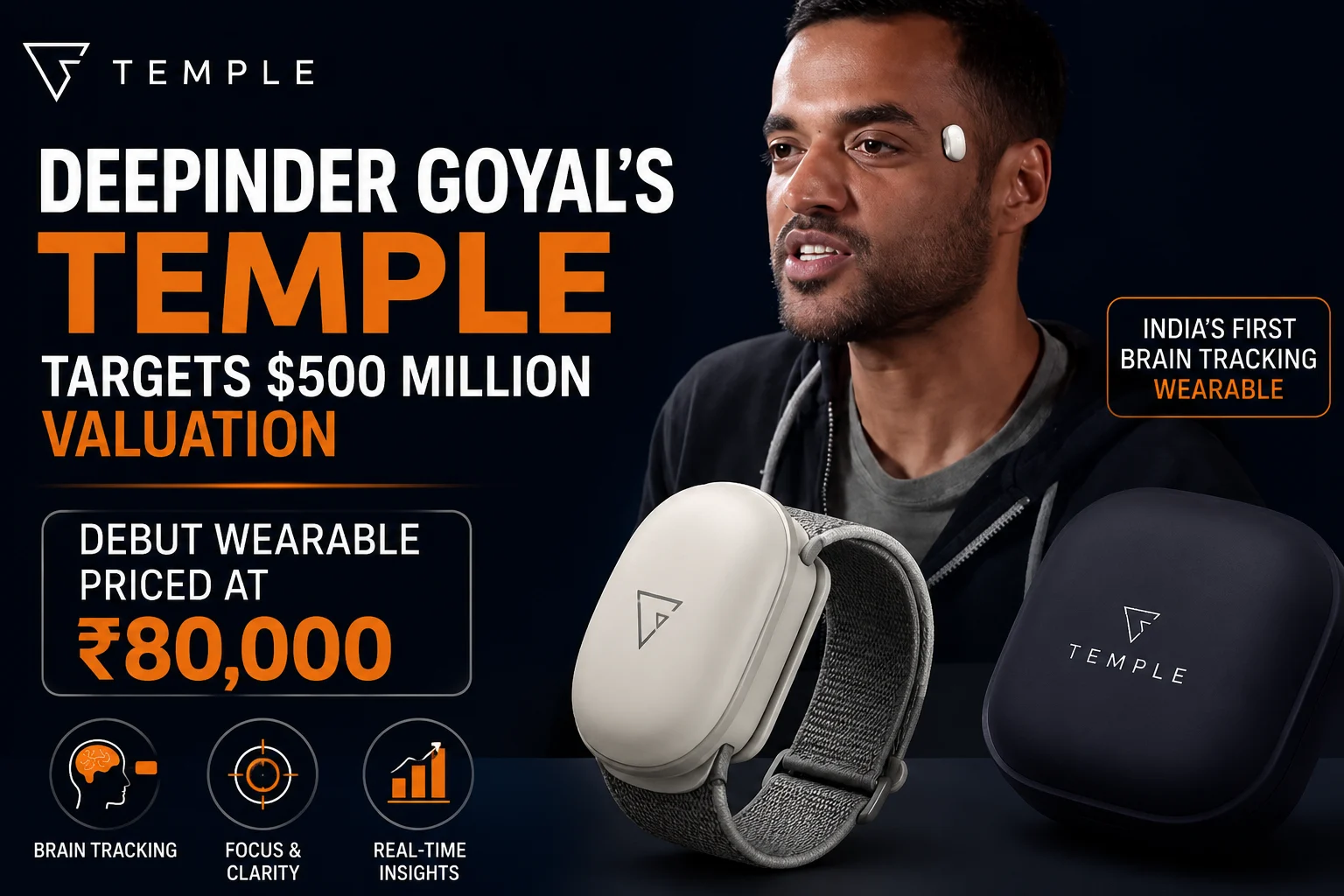
India has become one of the world's fastest-growing wearable technology markets over the past several years. While budget smartwatches and fitness bands have driven much of the industry's expansion, premium devices continue to attract professionals, technology enthusiasts, and consumers seeking advanced functionality.
The entry of a new premium-focused player reflects increasing confidence in the maturity of India's consumer technology ecosystem and the willingness of some buyers to explore high-value products beyond traditional smartphone brands.
Why the Reported Valuation Matters
A reported valuation of $500 million places Temple among the notable emerging technology ventures before achieving large-scale commercial presence. Investors often evaluate such startups based on factors including product innovation, market opportunity, leadership, growth potential, and long-term business strategy rather than current sales alone.
If realized, the valuation would highlight continued investor interest in India's expanding consumer electronics and wearable technology sectors.
Challenges Ahead
Entering the premium wearable market presents significant opportunities but also considerable challenges. Established global brands already enjoy strong customer loyalty, mature software ecosystems, and extensive distribution networks.
Temple will likely need to differentiate itself through product innovation, reliability, customer experience, and after-sales support to compete effectively in the premium category.
Consumer acceptance will also depend on whether the wearable delivers compelling value that justifies its premium pricing.
Why This Development Matters
Temple's reported valuation target and premium launch strategy illustrate a broader shift in India's startup ecosystem, where entrepreneurs are increasingly building technology brands aimed at higher-value market segments instead of competing solely on price.
The move also reflects growing confidence that Indian startups can develop premium consumer products capable of competing with internationally recognized technology brands.
Balanced Analysis
Launching a premium wearable at ₹80,000 represents a bold strategic decision. Higher pricing can reinforce a premium brand image while potentially improving margins, but it also raises customer expectations regarding performance, design, software integration, and long-term support.
Similarly, a reported $500 million valuation reflects investor optimism but will ultimately be measured against Temple's ability to execute its strategy, gain customer trust, and expand its presence in an increasingly competitive wearable technology market.
Conclusion
Temple's reported pursuit of a $500 million valuation alongside the launch of its first ₹80,000 wearable marks an ambitious entry into India's premium technology landscape. As the company prepares to compete in the high-end wearable segment, its success will depend on product quality, innovation, and the ability to build lasting consumer confidence in a market dominated by established global brands.