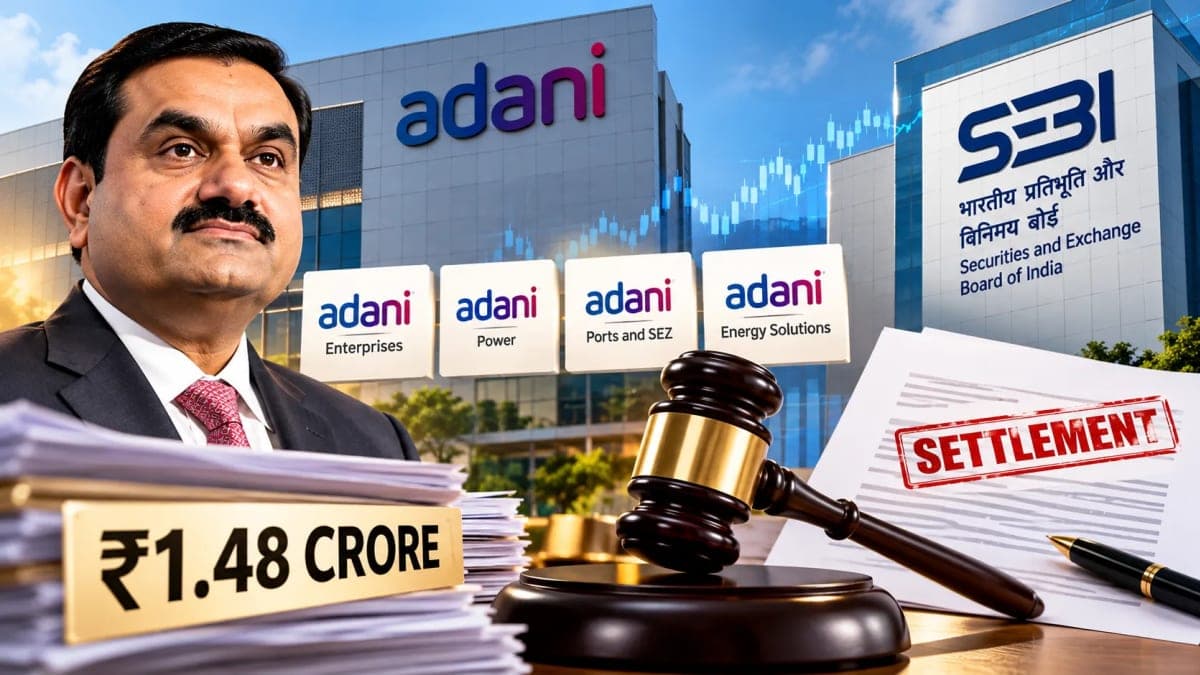
SEBI Settles Minimum Public Shareholding Proceedings Involving Adani Companies
India's securities regulator has concluded settlement proceedings involving four listed Adani Group companies and several individuals over alleged violations of minimum public shareholding (MPS) requirements.
The settlement covers Adani Enterprises Ltd, Adani Power Ltd, Adani Ports and Special Economic Zone Ltd (APSEZ), and Adani Transmission Ltd—now known as Adani Energy Solutions Ltd. Adani Group chairman Gautam Adani and other directors and officials were also among the applicants covered by the proceedings.
The applicants collectively paid approximately ₹1.48 crore under the settlement. Importantly, a settlement of this kind does not amount to an admission of the allegations: the proceedings were resolved without the applicants admitting or denying the facts and legal conclusions in SEBI's show-cause notices.
How Much Was Paid?
Under the settlement terms, each of the four company groups was required to pay ₹37.05 lakh, jointly and severally with the respective directors covered by that group's proceedings.
Together, the payments amounted to approximately ₹1.482 crore. According to the settlement details, the applicants made the payments on August 26, 2026, after SEBI issued demand notices a day earlier.
SEBI's settlement order took effect immediately on September 28.
What Was the Case About?
The matter stretches back several years.
SEBI received complaints in June and July 2020 alleging, among other issues, non-compliance with minimum public shareholding requirements at certain listed Adani Group companies. The regulator subsequently began an investigation on October 23, 2020.
Following its investigation, SEBI issued a show-cause notice on September 27, 2024, alleging failures to comply with MPS requirements prescribed under securities laws and listing regulations.
A supplementary show-cause notice followed on March 3, 2025, adding material related to the allegations.
While those enforcement proceedings remained pending, the applicants sought to settle the matter under the SEBI (Settlement Proceedings) Regulations, 2018.
What Are Minimum Public Shareholding Rules?
Minimum public shareholding rules are intended to ensure that a prescribed proportion of a listed company's shares remains in public hands rather than being concentrated entirely among promoters and related holdings.
For most listed Indian companies, the framework generally requires at least 25% public shareholding. The rules are intended to support adequate public float and broader market participation.
That makes MPS compliance relevant not simply as a technical listing requirement but also to the functioning and transparency of India's public equity markets.
Settlement Does Not Mean an Admission of Violation
This distinction is particularly important when reporting the SEBI development.
The applicants proposed resolving the proceedings without admitting or denying the facts and conclusions of law alleged in the notices. SEBI accepted the settlement terms and disposed of the relevant proceedings after the required payments were completed.
It would therefore be inaccurate to describe the settlement itself as either a finding that the applicants committed the alleged violations or a finding that the allegations were false.
SEBI also retained the ability to restore or initiate proceedings in specified circumstances, including if representations made during the settlement process are later found to be untrue or settlement conditions are breached.
A Separate SEBI Order Adds Important Context
There is another development that should not be confused with the settlement.
SEBI also issued a separate final order concerning alleged MPS violations involving Adani Group companies on September 28. The regulator's official orders page lists both the settlement order and the separate final order.
Reports on the separate proceeding say SEBI did not establish allegations that Vinod Adani controlled investments through certain foreign portfolio investors in the four companies. That finding concerns a separate regulatory proceeding and should not be presented as the legal basis for the ₹1.48-crore settlement.
The distinction matters because the two developments can otherwise produce misleading headlines suggesting either a blanket clearance or a blanket finding of wrongdoing.
Why This Development Matters
The settlement closes the specific enforcement proceedings arising from SEBI's September 2024 and March 2025 notices against the applicants covered by the agreement.
From a market-regulation perspective, the case also highlights the importance of public-float requirements in India's listed-company framework. Minimum public shareholding rules are designed to prevent excessive concentration of listed shares and maintain meaningful participation by public shareholders.
For investors, however, the settlement should be interpreted narrowly: it resolves specified regulatory proceedings under SEBI's settlement mechanism. It does not, by itself, establish the underlying allegations as proven or disproven.
That distinction is essential when assessing what the regulator's latest action means for the four Adani companies and their shareholders.