AI Changes the Economics of Cyberattacks
Artificial intelligence is making cyberattacks faster and cheaper to develop, raising new concerns about how quickly organisations can respond to emerging threats.
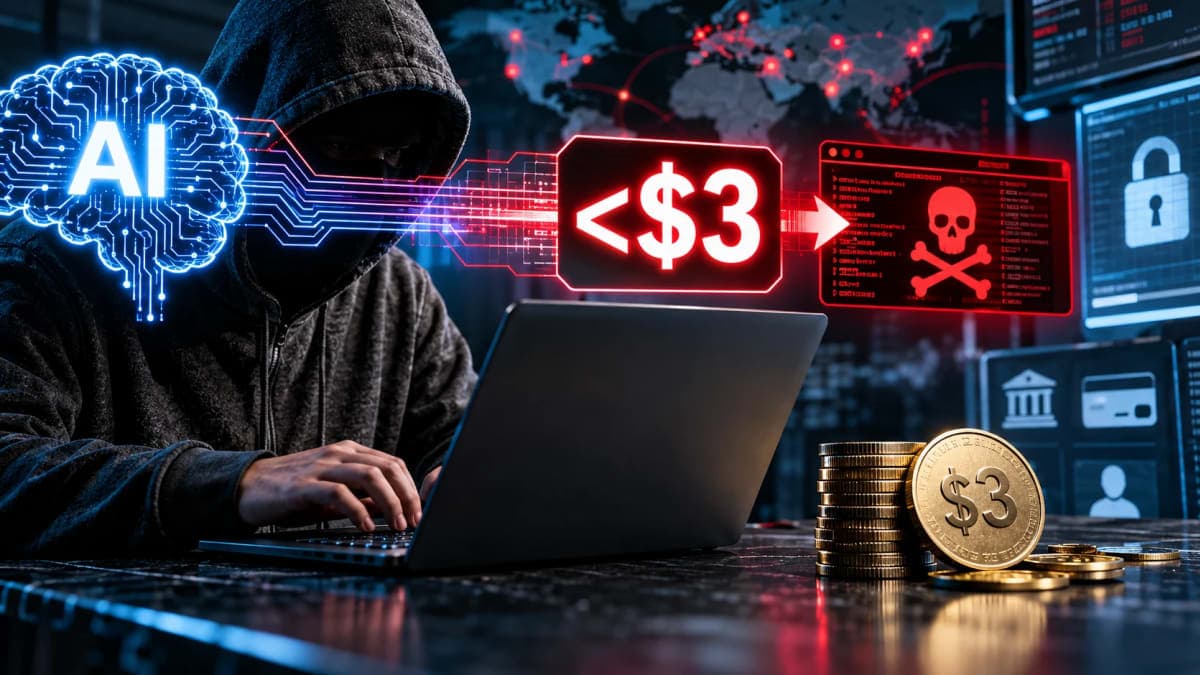
According to Mastercard's Resilience at Machine Speed research, wider access to advanced large language models has reduced the cost of converting a known software vulnerability into a functional cyberattack to less than $3. The development suggests that attackers may require fewer financial and technical resources to exploit known weaknesses than in the past.
Mastercard also reported that frontier AI models can identify zero-day vulnerabilities — previously unknown software flaws — at speeds up to 90 times faster than earlier-generation models. This acceleration can shorten the time available to organisations to identify and fix security weaknesses.
India Faces a Growing Cybersecurity Challenge
The issue has particular relevance for India. Mastercard's research indicates that the technology, public and financial sectors account for about 44% of observed cyberattacks in the country. Business systems along with customers' personal and financial information represent more than half of the assets being targeted.
The report also points to the growing overlap between traditional cyberattacks and financial fraud. Deepfakes, voice cloning, synthetic identities and impersonation can target the trust mechanisms used for authentication, account recovery and payments.
AI Is Also Strengthening Cyber Defence
The same technology creating new risks is helping security teams respond more effectively. Mastercard's research says AI can identify up to 86% of AI-planted vulnerabilities, compared with 37% previously, while the use of AI in decision-making has improved scam and impersonation detection by as much as 300%.
Mastercard itself has been expanding the use of AI in payment security. The company has said that generative-AI technology can help detect compromised payment cards faster, while newer AI models are being developed to strengthen cybersecurity and fraud-detection systems.
Why It Matters
The findings illustrate a two-sided shift in cybersecurity. Lower attack costs and faster vulnerability discovery can make sophisticated capabilities accessible to more threat actors. But AI can also give defenders faster detection, prioritisation and response tools.
The result is increasingly a race between automated attack and automated defence. Technology alone, however, is unlikely to determine the outcome. Mastercard's research stresses the continuing importance of governance, human oversight, clear accountability and organisations' ability to contain and recover from attacks.