Government Offers Amit Shah Statement Amid Parliament Standoff
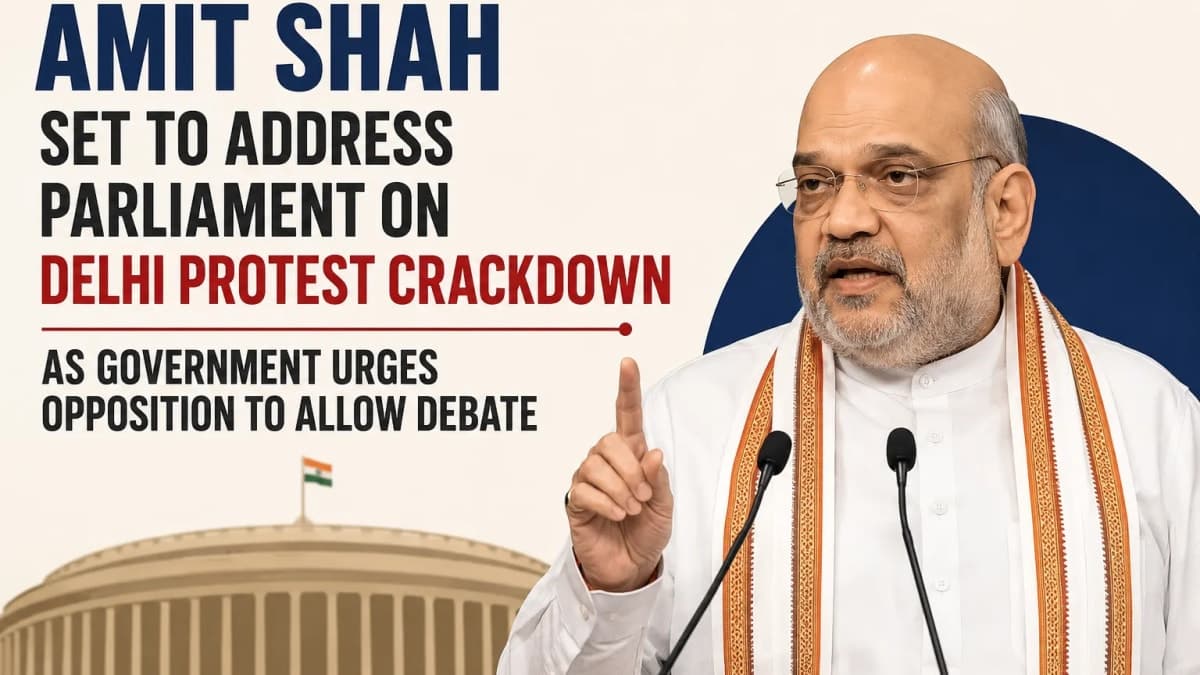
The Centre has moved to address one of the key demands behind the continuing parliamentary deadlock, saying Union Home Minister Amit Shah is prepared to speak in Parliament about the police action against protesters in Delhi.
Parliamentary Affairs Minister Kiren Rijiju announced the government's willingness to have Shah respond to the controversy, but attached an important political condition: Opposition members should allow proceedings to continue without disruption.
The development represents an attempt to break a prolonged impasse that has repeatedly affected parliamentary business. Opposition parties have been pressing for the Home Minister to personally explain the circumstances surrounding the police response to protesters.
What Triggered the Political Dispute?
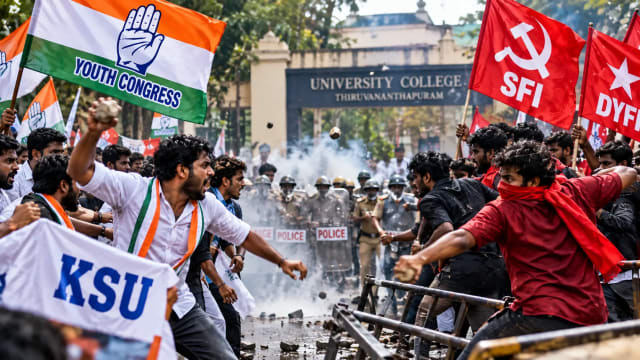
The controversy centres on police action during a July 20 protest in Delhi connected to the agitation over the alleged NEET paper leak. Opposition parties have raised allegations about the level of force used against protesters and have demanded accountability from the government.
Reports indicate that one of the particularly contentious questions concerns allegations surrounding the use of pellet guns during the police action. The issue subsequently moved from the streets into Parliament, where Opposition MPs repeatedly demanded a statement from the Home Minister.
The protests over the issue contributed to disruptions in both Houses and became one of the major points of confrontation during the Monsoon Session.
Rijiju Says Government Is Ready for Discussion
By offering a statement from Amit Shah, the government has signalled that it is willing to address questions surrounding the Delhi incident on the floor of Parliament.
At the same time, Rijiju has argued that such a discussion can only be meaningful if proceedings are allowed to take place normally. The government's position is that Opposition MPs should raise their concerns through parliamentary debate rather than continued disruption.
This creates a political test for both sides. The government can argue that it has responded to the demand for ministerial accountability by offering Shah's statement, while the Opposition must decide whether that offer sufficiently addresses its wider concerns.
Opposition's Demands Go Beyond Shah's Statement
The dispute, however, may not be resolved simply by the Home Minister speaking.
The Congress-led Opposition has indicated that its demands extend beyond a statement from Shah. Opposition leaders have also sought an apology from Prime Minister Narendra Modi over the treatment of protesting students and have raised a separate issue involving allegations related to donations connected with the Ram temple in Ayodhya.
As a result, the government's offer does not automatically guarantee an end to the parliamentary confrontation.
Why Amit Shah's Statement Matters
As Union Home Minister, Shah's response carries particular significance because policing and internal security questions involving the national capital can quickly become matters of national political accountability.
A statement in Parliament could provide the government with an opportunity to present its account of what happened, clarify the circumstances surrounding police action and respond directly to allegations raised by Opposition parties.
For the Opposition, the parliamentary discussion offers an opportunity to place its questions formally on record and seek specific answers from the government.
The substance of Shah's response — rather than merely his appearance in Parliament — is therefore likely to determine whether the controversy begins to ease.
Parliamentary Deadlock Raises Wider Concerns
The confrontation also highlights a recurring challenge in India's parliamentary politics: balancing the Opposition's right to demand accountability with the need to conduct legislative business.
Opposition parties maintain that disruption can become necessary when governments do not adequately respond to serious issues. The government, meanwhile, argues that repeated interruptions prevent debate and stop Parliament from performing its legislative responsibilities.
Both arguments are likely to feature prominently as the two sides negotiate a possible way forward.
Balanced Analysis: Can the Offer Break the Logjam?
The government's decision to make Amit Shah available for a parliamentary response is potentially significant because it addresses one of the Opposition's most visible demands.
However, the political disagreement has expanded beyond that single question.
If Opposition parties consider Shah's explanation satisfactory and the government permits a substantive debate, the statement could create an opening for normal parliamentary proceedings to resume. If the Opposition believes important questions remain unanswered — or insists that its additional demands must also be accepted — the confrontation could continue.
The next phase will therefore depend not only on whether Amit Shah speaks, but also on how detailed his response is and whether both sides are willing to use the parliamentary debate as a route out of the standoff.
Why This Development Matters
The episode has become more than a dispute over a single protest. It now involves questions about police accountability, the government's responsibility to answer Parliament, the Opposition's methods of protest and Parliament's ability to conduct regular business during periods of intense political disagreement.
A substantive debate could allow competing claims to be examined publicly and on the parliamentary record. Continued disruption, however, could deepen the institutional and political stalemate.
This article is based on reporting published by ANI.