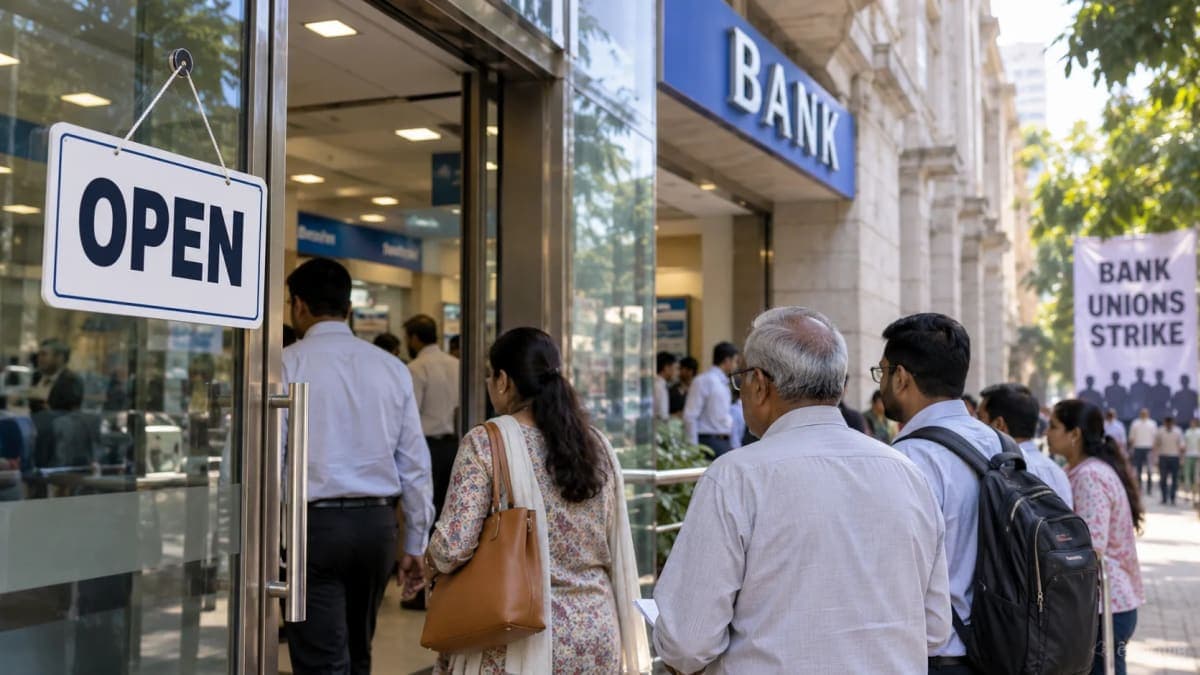
New Delhi, September 23, 2026: Public sector banks and Regional Rural Banks (RRBs) across India will remain open on Sunday, September 27, as authorities take steps to protect customers from an extended interruption in banking services ahead of a proposed three-day nationwide strike.
The Ministry of Finance said the special Sunday opening is intended to give customers access to normal banking facilities immediately before the strike scheduled for September 28, 29 and 30, 2026.
The Reserve Bank of India has granted approval for bank branches, offices, ATM-linked branches and currency chests to operate on September 27.
Why Are Banks Opening on Sunday?
September 27 would ordinarily fall within the weekend break immediately preceding the proposed strike.
The government has highlighted the risk that the weekend combined with three consecutive strike days could produce an extended interruption to normal branch-based banking services.
In its earlier appeal to employees, the Finance Ministry said the September 28-30 strike, when combined with the preceding weekend, could effectively result in five days of disruption.
Opening public sector banks and RRBs on Sunday therefore gives customers an additional opportunity to complete transactions that require branch staff before the proposed industrial action begins.
Which Banks Will Be Open on September 27?
The government's announcement specifically states that all Public Sector Banks and Regional Rural Banks will function normally on Sunday, September 27, 2026.
The RBI approval also covers associated offices, ATM-linked branches and currency chests.
Customers should note that the official announcement specifically refers to public sector banks and Regional Rural Banks. It should therefore not be interpreted as a blanket statement that every private-sector bank branch in India will necessarily operate on Sunday.
Why Have Bank Unions Called the Strike?
The proposed industrial action has been called by the United Forum of Bank Unions (UFBU).
According to the Finance Ministry, unions had raised two principal demands: introduction of a five-day banking week and withdrawal of the Performance Linked Incentive (PLI) scheme.
The government subsequently decided to keep the PLI scheme in abeyance. The Finance Ministry said that following this decision and rounds of conciliation, the outstanding dispute centres on the demand for five-day banking.
Bank employees had already held a one-day strike on September 11, 2026. The Finance Ministry's September 21 statement said a further three-day strike was scheduled for September 28-30, while an indefinite strike had been proposed from October 26, 2026, over the five-day workweek demand.
The UFBU has indicated that it could reconsider the September 28-30 action if there is concrete and positive progress towards implementing five-day banking.
Why September 30 Makes the Strike Particularly Significant
The timing of the proposed strike is important because September 30 marks the half-yearly closing of banks.
Processes including reconciliation, provisioning, treasury operations and market-related activities are associated with this period, increasing the potential operational significance of a disruption at the end of the month.
The government has argued that an extended disruption could affect not only individual customers but also businesses, government transactions and international banking operations.
Government and Bank Managements Appeal to Unions
The government and bank managements have appealed to the unions to defer the proposed strike while discussions continue.
The Finance Ministry has said it wants differences to be addressed through dialogue and has maintained that protecting customers from disruption remains a priority.
The government's position and the unions' position should be distinguished: the government says the remaining demand continues to be examined, while UFBU has maintained pressure for concrete progress on implementing a five-day banking system.
What Customers Should Know
Customers who need services requiring an in-person branch visit will have an additional opportunity to complete them on Sunday, September 27, at public sector banks and RRBs.
If the proposed September 28-30 strike proceeds, normal branch operations could be affected. Digital services such as UPI, mobile banking and internet banking provide alternatives for many routine transactions, although availability of individual services can depend on the bank and the nature of the transaction. Public sector banks have also advised customers to use digital channels where appropriate.
Customers with time-sensitive, branch-dependent work may therefore find the special Sunday opening particularly relevant.
What Happens Next?
Attention now turns to whether further discussions between the government, bank managements and unions produce progress before September 28.
As of September 23, the three-day strike remains proposed for September 28-30, 2026, while the government has put measures in place to reduce inconvenience if the industrial action proceeds.
The unusual decision to keep public sector banks and RRBs open on September 27 provides customers with an additional working day immediately before a potentially disruptive period.


