Bandhan Bank Promoter Plans Gradual Stake Reduction as 26% RBI Target Looms
Introduction
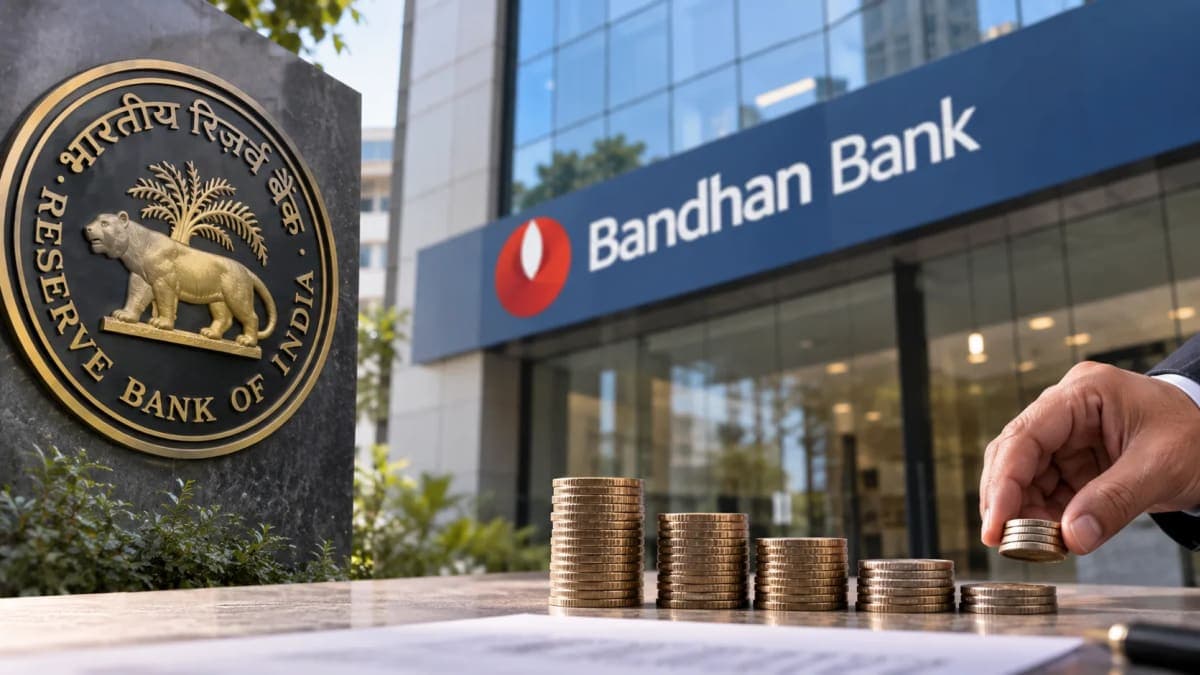
Bandhan Bank’s promoter is expected to continue reducing its stake in the private-sector lender in stages as it works toward meeting the shareholding requirement applicable under its regulatory framework with the Reserve Bank of India (RBI).
Bandhan Financial Services intends to avoid a large, one-time divestment and instead pursue a gradual reduction over the coming years, according to a September 22 report by The Economic Times. The report said the promoter is required under the bank’s licensing arrangement to bring its holding down to 26% by 2030.
The approach is significant for investors because the promoter still has several years to meet the target, potentially allowing the dilution to take place in a more measured manner.
Promoter Holding Falls to 37.54%
The promoter and promoter group held 37.54% of Bandhan Bank as of June 30, 2026, according to the latest disclosed shareholding pattern. Public shareholders accounted for the remaining 62.46%.
The promoter holding has already been declining. It stood at 38.98% at the end of March 2026 and 39.74% at the end of December 2025, according to the latest report.
That means the promoter stake declined by approximately 2.20 percentage points between December 2025 and June 2026.
From the June 2026 level of 37.54%, a further reduction of roughly 11.54 percentage points would be required to reach 26%, assuming the applicable target and share-capital structure remain unchanged.
No Plan for a Single Bulk Sale
Bandhan Financial Services chairman Chandra Shekhar Ghosh indicated that the group has time to complete the required dilution and does not intend to dispose of its entire excess holding through one large transaction.
“There is sufficient time. We have no plans for a bulk offloading in one go,” Ghosh told The Economic Times.
The report said the recent reduction in promoter ownership was likely carried out through open-market share sales. This point should be treated as a reported assessment rather than a separately confirmed disclosure about the precise mechanism used for every sale.
Why the 26% Level Matters
The planned stake reduction is linked to the regulatory framework governing Bandhan Bank’s promoter shareholding rather than simply being a portfolio decision.
According to the report, the bank’s licensing arrangement with the RBI requires the promoter holding to be reduced to 26% by 2030.
Bandhan Financial Holdings Limited serves as the promoter and non-operating financial holding company associated with Bandhan Bank. It is wholly owned by Bandhan Financial Services Limited.
The latest June 2026 shareholding disclosure shows the promoter and promoter group collectively holding about 604.72 million Bandhan Bank shares, representing 37.54% of the bank’s equity.
Gradual Dilution Could Spread Market Impact Over Time
A phased approach means the regulatory dilution does not necessarily have to occur through a single large transaction.
For shareholders, the pace and method of future stake sales will therefore be important to monitor. Large block transactions can increase the immediate supply of shares available in the market, while smaller disposals spread over a longer period may distribute that supply across multiple transactions.
However, the timing, size and route of future stake reductions have not been fully specified. Investors should therefore distinguish the confirmed regulatory objective from assumptions about exactly how future sales will be executed.
Bandhan Financial Services Has Other Financial-Sector Investments
Bandhan Financial Services primarily manages its investments and has two subsidiaries — Bandhan Financial Holdings and Bandhan Technologies, according to the latest report.
Bandhan Financial Holdings is the holding company for businesses including Bandhan Bank, Bandhan AMC, Bandhan Mutual Fund Trustee, Bandhan Investment Managers (Mauritius) and Bandhan Life Insurance.
As of March 31, 2026, Bandhan Financial Services owned 59.98% of Bandhan AMC and 97.16% of Bandhan Life Insurance Company, according to the report.
Promoter Also Proposes Stock Split
Separately, Bandhan Financial Services has proposed a stock split under which each existing equity share with a face value of ₹10 would be divided into five equity shares with a face value of ₹2 each.
Shareholders were scheduled to consider the proposal at the company’s annual general meeting on September 22, 2026.
A stock split changes the number of outstanding shares and the per-share face value but does not, by itself, change the underlying economic value of a shareholder’s proportional ownership immediately after the split.
The Economic Times report suggested that the proposal could also make the shares more accessible to retail investors if Bandhan Financial Services eventually pursues a public listing. That potential IPO-related benefit remains an interpretation rather than confirmation of a specific IPO timetable.
What Investors Should Watch Next
The central issue will be how Bandhan’s promoter moves from its current 37.54% holding toward the 26% level by 2030.
Future shareholding disclosures should provide evidence of the pace of that reduction. Investors may also watch for exchange filings or company announcements detailing the size, timing and structure of additional stake sales.
For now, the reported strategy points toward gradual dilution rather than a single large exit, giving the promoter several years to work toward the regulatory target.