Gen Z Moves Closer to the Centre of Indian Politics
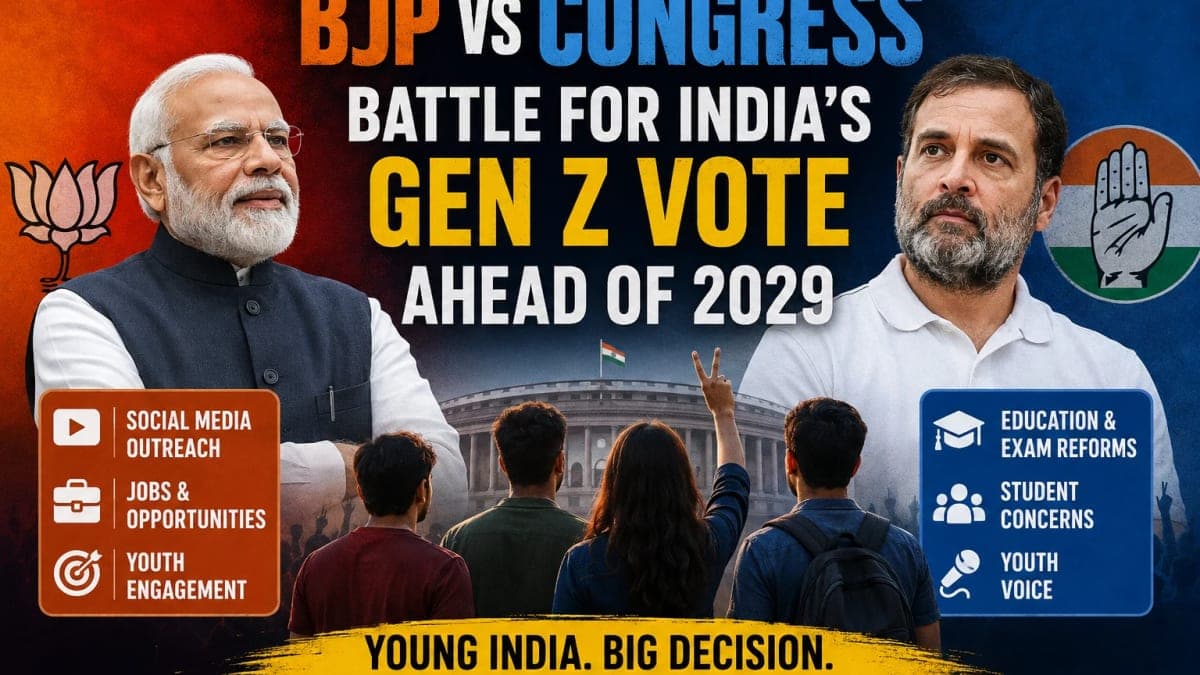
With the next Lok Sabha election scheduled for 2029, the political competition for India's younger electorate is already taking shape.
Gen Z is particularly important because millions of its members are either already eligible to vote or will enter the electorate before the next national election. More than half of India's population is under 35, while Gen Z is expected to constitute one of the country's largest electoral groups by 2029.
But numbers alone do not explain the political importance of this generation.
Unlike earlier generations of voters who relied heavily on newspapers, television and physical political campaigns, younger Indians increasingly encounter politics through Instagram, YouTube, memes, short videos and online conversations. Recent political mobilisation has demonstrated how quickly youth-focused messages can move from social media into wider public debate.
That changing information environment is forcing political parties to compete not only over policies, but also over language, communication styles and credibility.
BJP Expands Its Gen Z Outreach
The BJP has begun strengthening its efforts to connect directly with young and first-time voters.
The party has reportedly established a dedicated Gen Z outreach initiative involving senior figures including Nitin Nabin, Smriti Irani and Vinod Tawde. The programme is aimed at developing strategies that can broaden the BJP's appeal among young voters and bring youth perspectives into its political messaging.
Prime Minister Narendra Modi's digital communication has also evolved. Recent outreach has included more informal Instagram content, humour, selfie-style videos and references to popular culture as the BJP seeks to communicate in formats familiar to younger audiences.
The party also replaced its social-media chief in August 2026 as part of an organisational reshuffle following a period in which youth activism gained considerable momentum online.
The challenge for the BJP is whether a change in presentation can translate into stronger political identification among younger voters.
Digital reach can make politicians more visible, but visibility does not necessarily guarantee electoral support.
Congress Builds Its Youth Strategy Around Issues
Congress, meanwhile, appears to be placing greater emphasis on issues that directly affect students and young workers.
Its youth-focused political agenda has highlighted employment, recruitment, examination irregularities and education. The party's 2024 manifesto, for example, proposed a Right to Apprenticeship for eligible young diploma holders and graduates, measures concerning examination paper leaks and the filling of vacant government posts.
In 2026, Congress launched the "Chhatron Ki Goonj" campaign around student concerns including examination irregularities, paper leaks, cancelled examinations and recruitment delays.
The party has also continued experimenting with communication designed specifically for younger audiences. Its official media platform recently featured Rahul Gandhi in content explicitly framed around "Gen Z, Politics and 'Rizz'."
At the state level, Punjab Congress is preparing to place Gen Z-related concerns at the centre of its 2027 election manifesto, including employment, education, skills and climate-related issues.
Why Young Voters Are Becoming So Important
The political importance of Gen Z extends beyond its demographic size.
This generation is entering adulthood at a time when India is simultaneously experiencing rapid economic expansion, technological disruption and major changes in the labour market.
For young voters, political debates can therefore become closely connected with practical questions: Where will new jobs come from? Will degrees translate into employment? Can competitive examinations be trusted? What skills will remain valuable as artificial intelligence transforms industries? How affordable will housing and education become?
These questions can make economic opportunity and institutional credibility particularly important political themes.
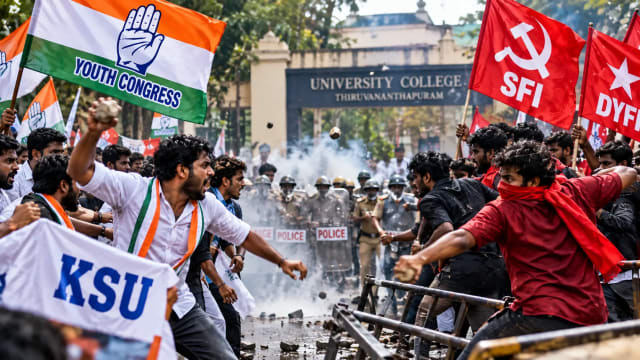
Recent youth-led protests have reinforced that message. They demonstrated how online dissatisfaction can develop into organised political pressure, encouraging parties to pay closer attention to a generation capable of mobilising both digitally and physically.
The Battle Is Also Being Fought on Instagram and YouTube
Traditional election campaigning is unlikely to disappear, but Gen Z is changing the political communication battlefield.
A viral reel, meme or short video can potentially reach millions of people before a traditional political speech receives widespread coverage.
That creates opportunities for both BJP and Congress, but it also reduces their control over political narratives. Young users can remix speeches, challenge claims, create satire and rapidly circulate criticism.
The result is a political environment in which parties are no longer simply broadcasting messages to voters. They are participating in online conversations where the audience can immediately respond, ridicule, fact-check or amplify those messages.
Authenticity could therefore become as important as production quality. Analysts cited by Reuters have noted that heavily curated political communication can struggle with younger audiences accustomed to spontaneous and informal social-media content.
BJP's Advantage — and Its Challenge
The BJP enters this competition with a highly developed digital political machinery and Narendra Modi's enormous personal social-media reach.
Its ability to combine central leadership, government programmes, party organisations and digital campaigning gives it substantial capacity to reach young Indians.
However, incumbency also means that young voters can judge the BJP on measurable outcomes rather than promises alone.
Employment opportunities, education, competitive examinations and economic mobility could consequently become tests of whether digital engagement is supported by improvements that younger Indians experience in everyday life.
Congress's Opportunity — and Its Challenge
Congress has an opportunity to position itself as a political outlet for dissatisfaction among students, job seekers and younger workers.
Campaigns focused on unemployment, examination problems and recruitment allow the opposition party to connect its broader criticism of the government with concerns that directly affect young people. Congress has already announced nationwide political mobilisation around unemployment and paper leaks, among other issues.
Yet opposition politics has its own challenge.
Criticising the government may attract attention, but converting dissatisfaction into durable electoral support requires convincing voters that the opposition can provide workable alternatives.
Congress will therefore need to demonstrate not only that it understands youth frustration, but also that its proposed solutions are financially, administratively and politically credible.
Balanced Analysis: Gen Z May Be Harder to Capture Than Parties Expect
The competition for young voters should not be interpreted as a simple BJP-versus-Congress contest.
Gen Z is not a single ideological voting bloc. Young Indians differ enormously by region, caste, income, education, language, gender, employment status and whether they live in rural or urban areas.
A college student in Delhi, an engineering graduate seeking work in Bengaluru, a young farmer in Punjab and a first-time voter in a small town may have very different priorities.
There is another complication for both national parties: digitally connected voters have access to political voices far beyond BJP and Congress. Regional parties, independent creators, activists and emerging political movements can all compete for their attention.
That makes the Gen Z electorate potentially influential but also difficult to control.
The party that succeeds in 2029 may therefore not necessarily be the one producing the most viral content. The bigger advantage could belong to whichever political force can combine credible policies, effective digital communication and visible results on issues affecting younger Indians.
Why This Matters for the 2029 Lok Sabha Election
The growing focus on Gen Z signals a broader generational transition in Indian politics.
For decades, election strategies have been built around established combinations of caste, community, geography, welfare programmes and leadership appeal. Those factors will remain important.
But the expansion of a massive digitally native electorate adds another layer.
Employment, education, technological change, entrepreneurship, climate concerns and institutional accountability could become increasingly important alongside traditional political considerations.
BJP's expanding youth outreach and Congress's effort to organise around student and employment issues indicate that both parties recognise this shift.
The contest for 2029 may therefore begin years before polling booths open — on campuses, smartphones, social-media feeds and, most importantly, through competing attempts to convince young Indians that their economic and social aspirations can actually be delivered.
This article is based on reporting published by Moneycontrol.