BJP Targets Congress Over Protest
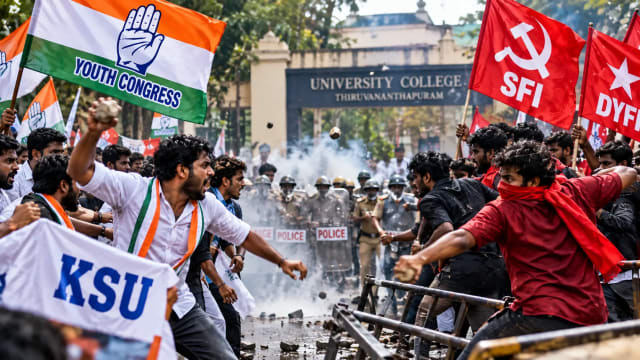
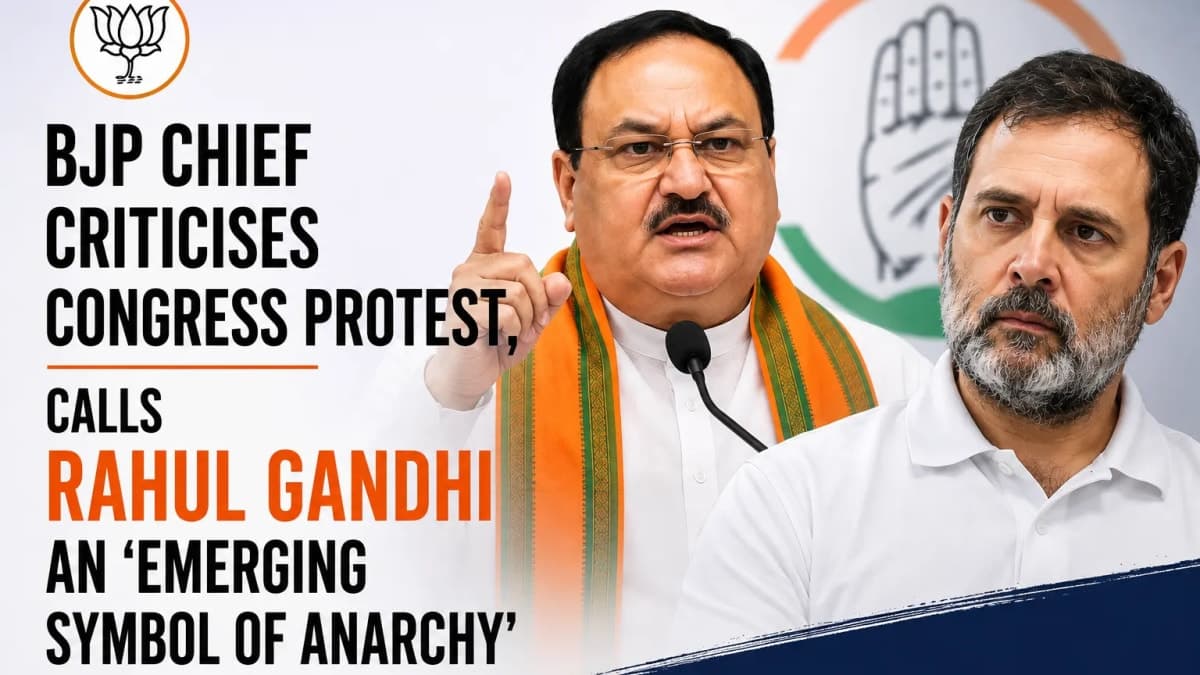
Political tensions intensified after Congress leaders staged a protest over issues they have been raising against the central government. Responding to the demonstration, BJP president J.P. Nadda condemned the protest and alleged that the Congress leadership was attempting to create disorder instead of participating in constructive parliamentary debate.
The BJP maintained that elected representatives should raise concerns through democratic institutions rather than through protests that, according to the party, disrupt public life and parliamentary functioning.
Congress Continues Its Opposition Campaign
Congress leaders defended their protest, arguing that demonstrations are a legitimate democratic tool to hold the government accountable. The party has repeatedly accused the ruling government of ignoring opposition voices on several national issues and has said public protests remain necessary when parliamentary discussions fail to address key concerns.
Rahul Gandhi, who serves as the Leader of Opposition in the Lok Sabha, has been at the forefront of several campaigns challenging government policies and demanding greater accountability.
Political Exchange Intensifies
The BJP's remarks against Rahul Gandhi have added another chapter to the increasingly sharp political rivalry between the ruling National Democratic Alliance (NDA) and the Congress-led opposition.
While the ruling party has accused Congress of pursuing confrontation for political gain, opposition leaders argue that robust criticism and public demonstrations are essential features of a functioning democracy.
The latest exchange reflects the broader political atmosphere, where disagreements inside and outside Parliament frequently develop into high-profile public confrontations.
Background
Relations between the BJP and Congress have remained tense since the formation of the current Lok Sabha. Parliamentary sessions have often witnessed heated debates, protests and allegations from both sides over governance, accountability and legislative priorities.
Rahul Gandhi's appointment as Leader of Opposition has given the Congress a more prominent role in challenging the government inside Parliament while continuing public campaigns on issues affecting citizens.
Why This Development Matters
The latest political clash highlights the widening divide between the government and the opposition ahead of future legislative debates and political campaigns.
Statements made by senior leaders often shape the tone of national political discourse and influence how both parties present their positions before the public. Such exchanges may also affect parliamentary cooperation on important legislation and policy discussions.
Balanced Analysis
The BJP argues that repeated protests weaken democratic institutions when Parliament is available for debate and discussion. From its perspective, opposition parties should prioritise legislative engagement over demonstrations.
On the other hand, the Congress maintains that peaceful protests are an integral part of democracy and become necessary when the opposition believes its concerns are not being adequately addressed within Parliament.
The contrasting viewpoints underline the continuing debate over how political opposition should function in a parliamentary democracy. While the government stresses institutional processes, the opposition views public mobilisation as an equally important democratic mechanism.