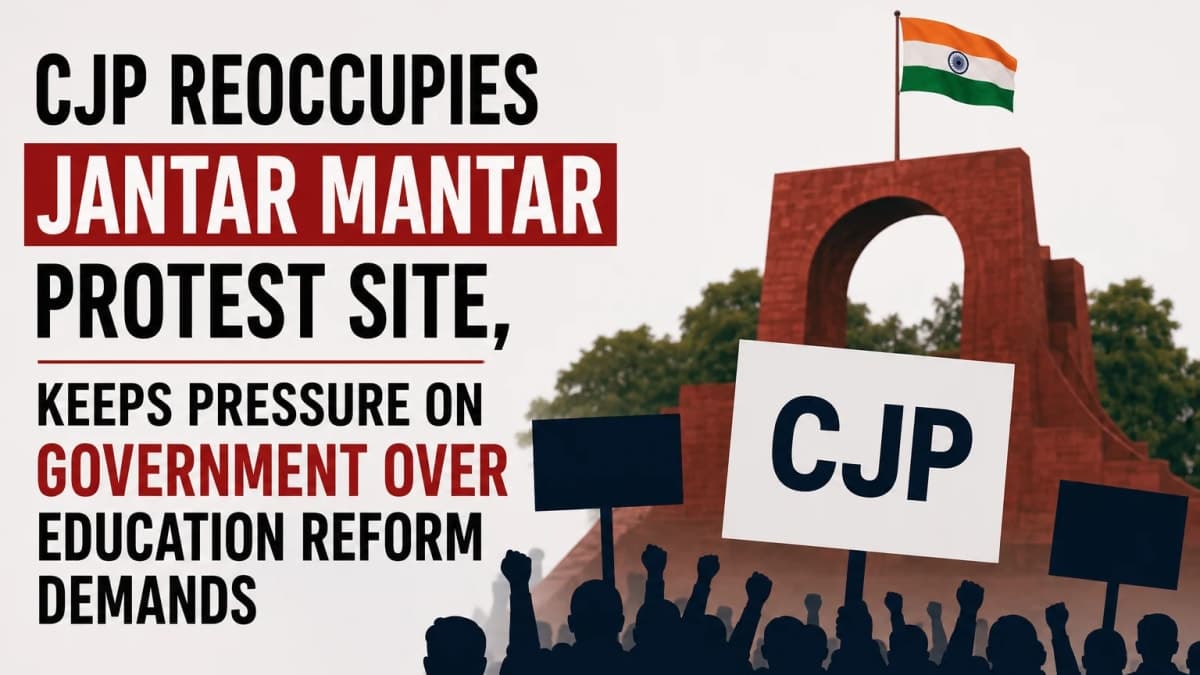
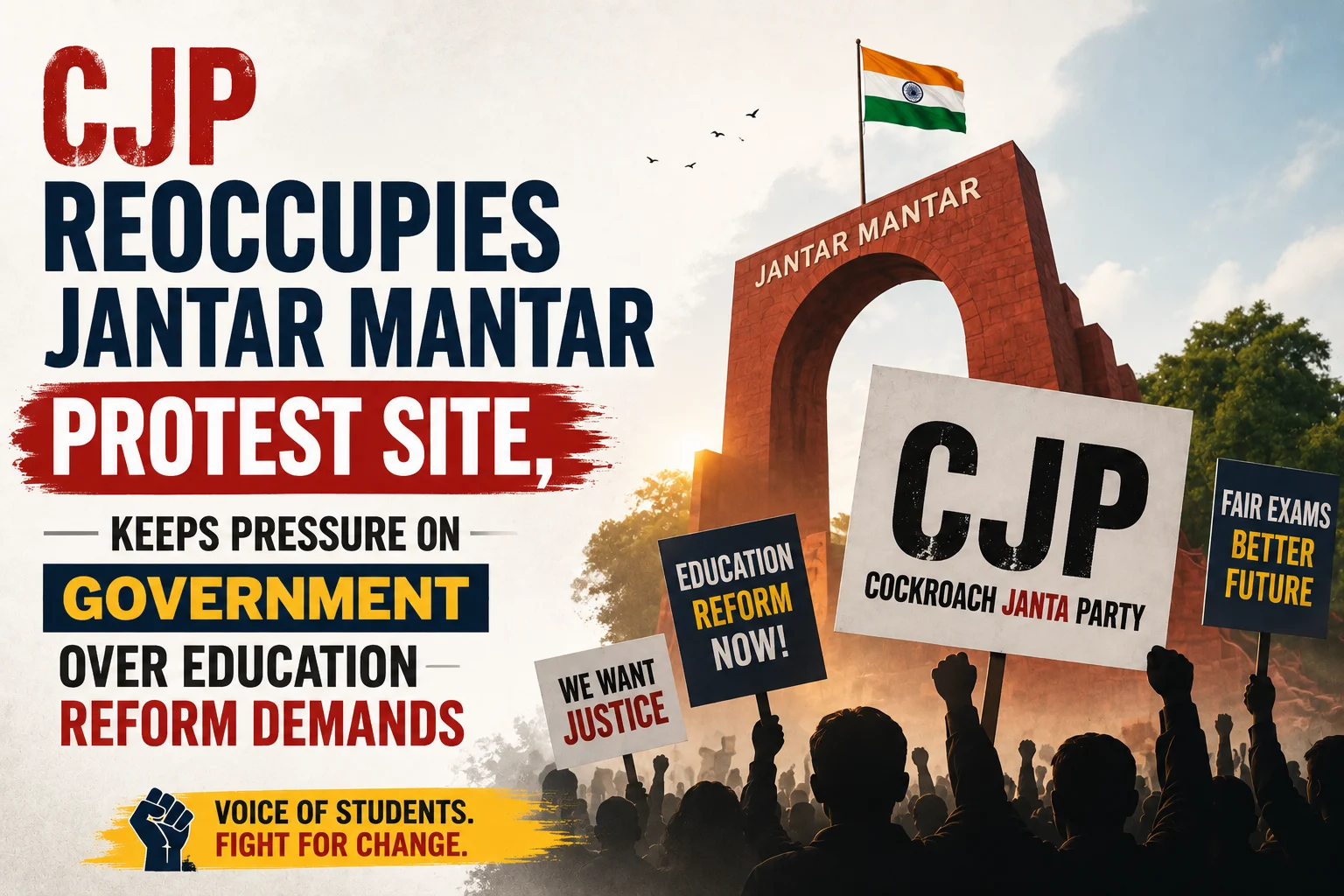
CJP Reoccupies Jantar Mantar Protest Site, Keeps Pressure on Government Over Education Reform Demands
Introduction
The Cockroach Janta Party (CJP) has renewed its protest campaign in New Delhi after supporters reclaimed the Jantar Mantar demonstration site that had earlier been dismantled. Led by founder Abhijeet Dipke, the protesters said they would continue their agitation while waiting for a formal response from the government regarding their demands.
The renewed gathering signals that the movement remains active despite recent police action and ongoing negotiations. Protest organizers maintain that their campaign will continue until they receive a meaningful response from authorities on issues they have consistently raised.
Protest Site Becomes Focal Point Again
Jantar Mantar has once again emerged as the center of the CJP's demonstrations, with supporters returning to the site after earlier attempts to clear the protest area. Protesters reorganized the venue and reiterated that the movement remains peaceful while continuing to press for action from the government.
The symbolic reclaiming of the site reflects the group's intention to sustain public attention on its campaign and maintain pressure on policymakers.
Dipke Says Movement Will Continue
Abhijeet Dipke reiterated that the organization is waiting for a clear government response but indicated that demonstrations would continue until concrete action is announced. He has questioned whether previous outreach efforts represented genuine dialogue or merely attempts to reduce momentum behind the protests.
The CJP leadership has consistently argued that discussions should be accompanied by measurable policy decisions rather than assurances alone.
Background of the Movement
The CJP movement began as a youth-led campaign centered on concerns over examination irregularities and broader issues within India's education system. Over time, it has expanded into a larger public movement drawing participation from students, professionals, activists, and opposition leaders.
Its principal demands have included greater accountability for examination administration, education reforms, and action regarding alleged systemic failures affecting students.
Government Signals Dialogue
While security measures have remained in place following earlier confrontations, government representatives have also indicated a willingness to engage with protesters through discussions. Officials have spoken about reforms and accountability, though demonstrators continue to seek specific commitments before ending the agitation.
This combination of enforcement and outreach reflects the government's effort to maintain public order while addressing growing public concerns.
Why the Protest Matters
The demonstrations have evolved beyond a single protest into a wider discussion about educational governance, examination integrity, and public accountability.
The movement has attracted attention because it reflects broader concerns among young people regarding educational opportunities, institutional transparency, and trust in public systems. The scale of participation has also elevated the issue into a significant national political debate.
Balanced Analysis
The return of protesters to Jantar Mantar demonstrates that the movement retains organizational strength despite earlier attempts to disperse demonstrators. Continued public participation suggests that many supporters believe their concerns remain unresolved.
At the same time, any lasting resolution is likely to depend on constructive dialogue between the government and protest representatives. Governments have a responsibility to maintain public order, while peaceful protesters retain the right to express their concerns within the framework of the law. The success of future negotiations will depend on whether discussions lead to concrete policy outcomes acceptable to both sides.
Conclusion
The CJP's decision to reclaim the Jantar Mantar protest site underscores the movement's determination to continue pressing for its demands while awaiting a formal government response. As discussions over education reforms continue, the coming days may prove crucial in determining whether dialogue can reduce tensions and produce meaningful policy progress.