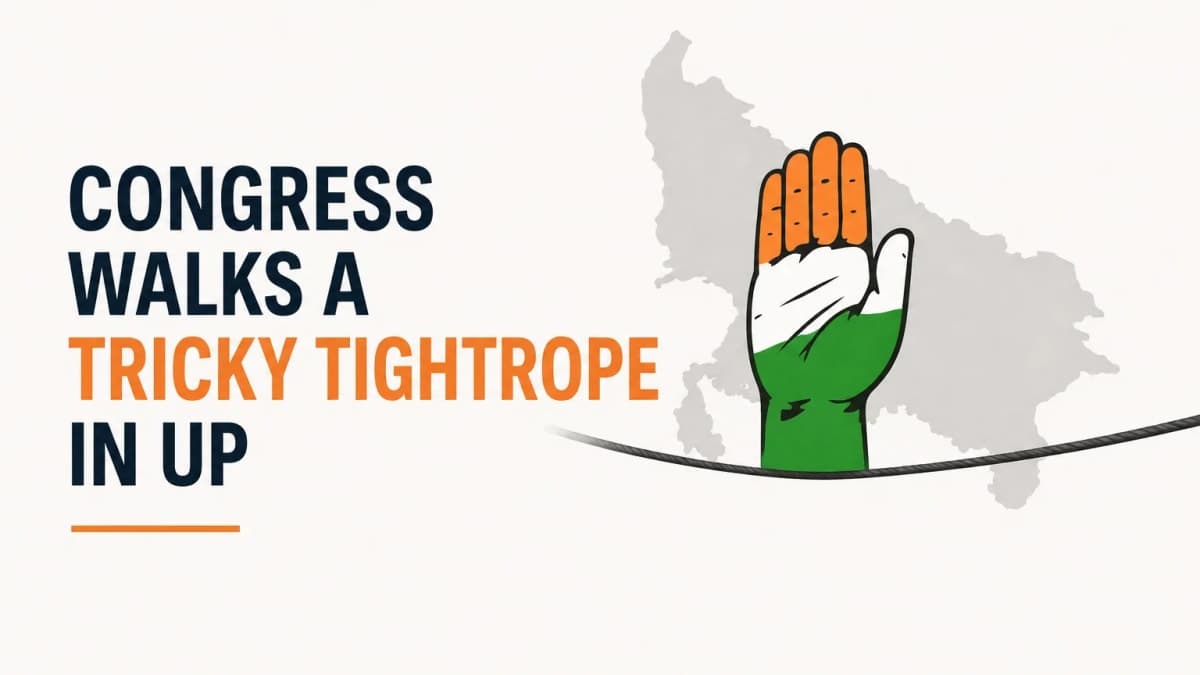
The Congress party finds itself managing a delicate political balancing act in Uttar Pradesh, a State that remains central to India's electoral landscape. As political activity intensifies, the party is attempting to strengthen its grassroots organization while carefully shaping its electoral strategy ahead of future political contests.
Uttar Pradesh, which sends the largest number of representatives to the Lok Sabha, has long been regarded as one of the most influential battlegrounds in Indian politics. Success in the State often carries national political significance, making every strategic decision closely watched by political analysts and party workers alike.
Congress is simultaneously working on multiple fronts—expanding its organizational presence, reconnecting with traditional supporters, attracting new voters, and coordinating with political allies where appropriate. These objectives require balancing long-term party growth with short-term electoral considerations.
Political observers note that alliances can provide electoral advantages in certain constituencies, but parties must also preserve their individual identity and organizational strength. As a result, Congress faces the challenge of presenting itself as a credible political alternative while maintaining constructive relationships with other opposition parties when necessary.
Another important aspect of the party's strategy involves increasing engagement with youth, women, farmers, and urban voters. Public outreach campaigns, organizational meetings, and issue-based discussions continue to play an important role in strengthening the party's presence across different regions of Uttar Pradesh.
Analysts also point out that electoral success depends on several factors beyond alliances, including candidate selection, grassroots organization, campaign effectiveness, voter outreach, and local leadership. These elements often determine political performance as much as broader national narratives.
The political environment in Uttar Pradesh remains highly competitive, with multiple parties seeking to expand their influence among diverse voter groups. Consequently, strategic decisions regarding campaign messaging, constituency-level planning, and organizational development are expected to remain a major focus for all political parties.
At present, the evolving political situation represents an ongoing strategic process rather than a definitive outcome. Political commentators emphasize that campaign strategies may continue to evolve as elections approach and parties respond to changing public sentiment and policy debates.
Ultimately, Congress's performance in Uttar Pradesh will depend on how effectively it balances alliance politics with independent organizational growth while addressing issues important to voters across the State.