Delhi HC Orders Interim Security Enhancement for Pappu Yadav
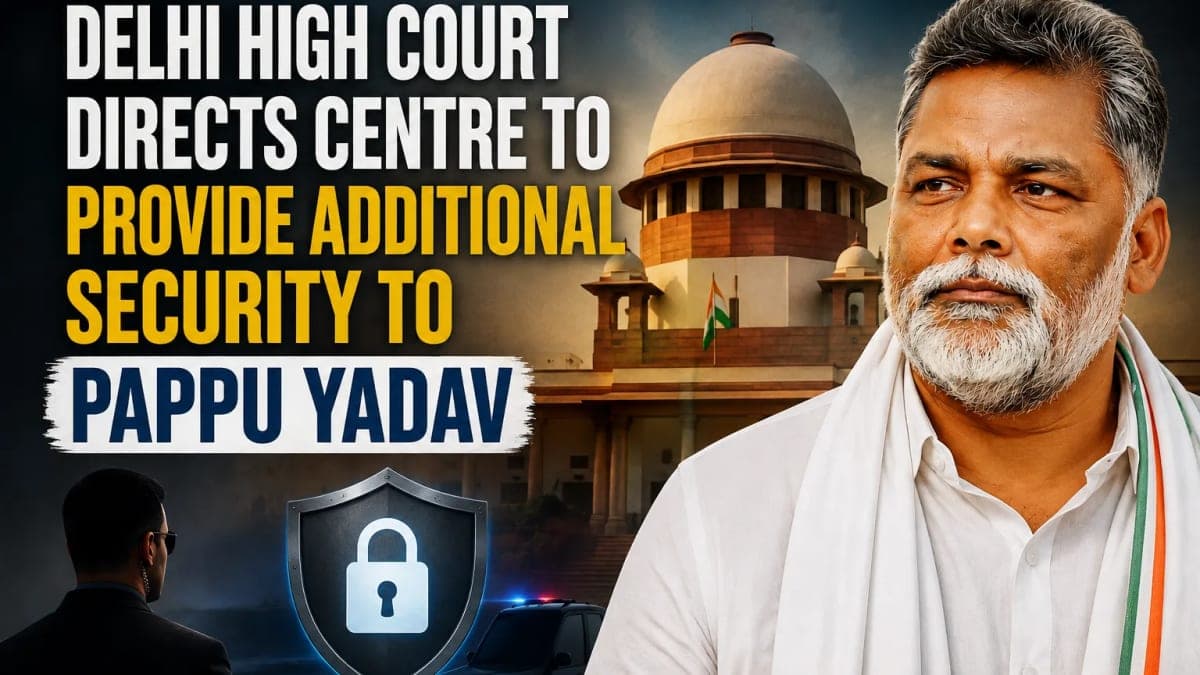
New Delhi, August 12, 2026: The Delhi High Court has asked the Centre to strengthen the personal security arrangements for Bihar MP Pappu Yadav by providing him with one additional Personal Security Officer without further delay.
The direction serves as an interim measure while the Central government considers Yadav's representation seeking a higher level of security protection. Justice Manoj Jain said the additional PSO arrangement would remain in place until the Centre takes a decision on the request for enhanced cover.
Why Pappu Yadav Sought Enhanced Security
Pappu Yadav, whose official name is Rajesh Ranjan, represents Purnia in Bihar. His concerns over personal safety have previously reached the courts.
Earlier proceedings before the Patna High Court recorded his claims of persistent threats, including alleged threats linked to the Lawrence Bishnoi gang and the Chhotu Yadav gang. The court record also noted that he had made representations to both the Bihar government and the Union government regarding his security.
The same record shows that Yadav had Y-category security when his earlier petition was filed. Bihar subsequently upgraded his protection to Y+ in August 2025, before scaling it back to Y category in September 2025.
Security Issue Has Been Before Courts Earlier
Yadav's efforts to obtain enhanced protection have involved more than one judicial proceeding. A Supreme Court record from May 2026 states that he had approached the Patna High Court seeking an upgrade from Y-category to Z-category security.
The latest Delhi High Court direction does not itself amount to a final grant of the enhanced category sought by the MP. Instead, it provides an immediate additional layer of personal protection while the competent authorities assess his representation.
Why the High Court's Direction Matters
The development highlights the difficult balance involved in security-cover decisions for public representatives. Authorities are responsible for assessing intelligence inputs, the credibility and seriousness of reported threats, and the level of protection considered proportionate to the risk.
At the same time, where a security request remains under consideration, an interim arrangement can provide additional protection without predetermining the government's final threat assessment.
In Yadav's case, the High Court has effectively separated the immediate safety question from the longer administrative process: an additional PSO is to be provided now, while the Centre retains responsibility for deciding whether a broader enhancement of his security category is justified.
What Happens Next?
Attention will now turn to the Centre's assessment of Pappu Yadav's request for enhanced protection. Until a decision is taken, the additional PSO ordered by the Delhi High Court is expected to function as an interim safeguard.
The eventual security arrangement will depend on the government's assessment of the threat perception and other relevant security considerations.
Balanced Analysis
The High Court's intervention provides immediate relief without substituting a judicial decision for the government's final security assessment. This is significant because protection levels for public figures involve operational and intelligence considerations that authorities must periodically evaluate.
For Yadav, the additional PSO addresses his stated concerns in the short term. For the Centre, the order leaves the substantive question of enhanced security open, allowing the government to complete its assessment before deciding whether a higher category of protection is warranted.