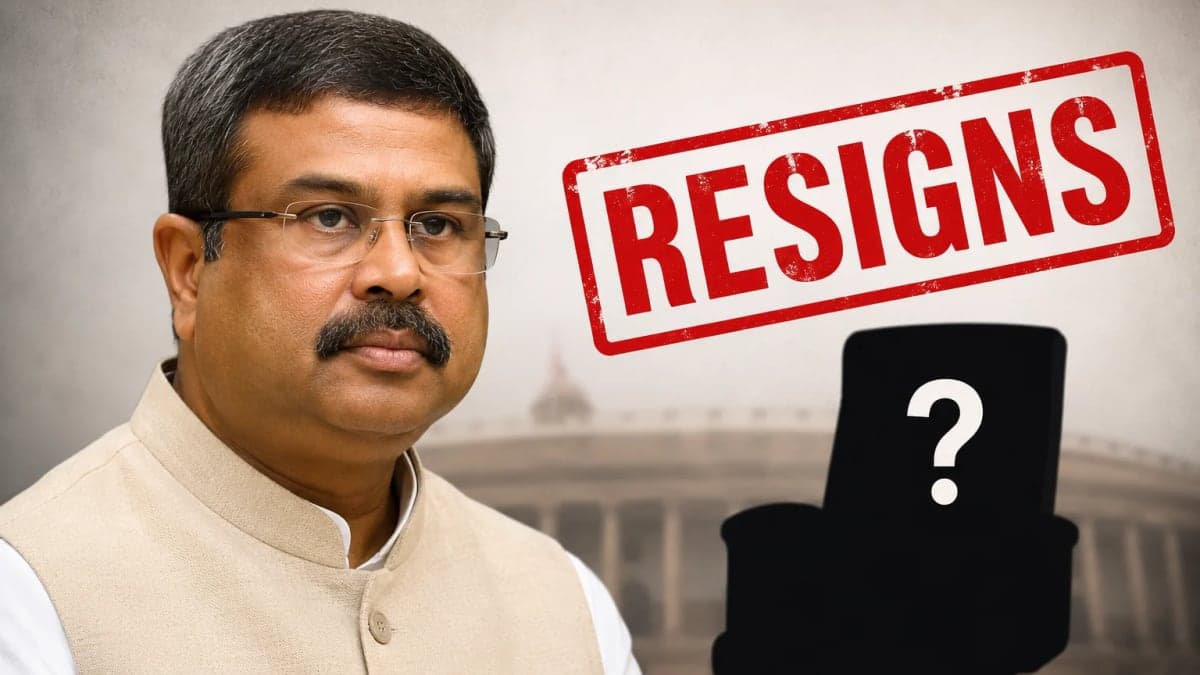
Dharmendra Pradhan Resigns Amid Mounting Pressure from Student Movement
Union Education Minister Dharmendra Pradhan resigned from his post on Saturday after weeks of large-scale student demonstrations across the country over alleged examination irregularities and paper leak controversies. The resignation comes after sustained public pressure, with students and several opposition parties demanding accountability for repeated concerns surrounding competitive examinations, particularly the NEET-UG examination.
In a public statement accompanying his resignation, Pradhan said his decision was intended to ensure that students' futures remain the priority and that the ongoing controversy does not further disrupt the education system or create additional uncertainty for aspiring candidates. He also stated that he had consistently accepted responsibility while attempting to address the crisis.
Why Students Took to the Streets
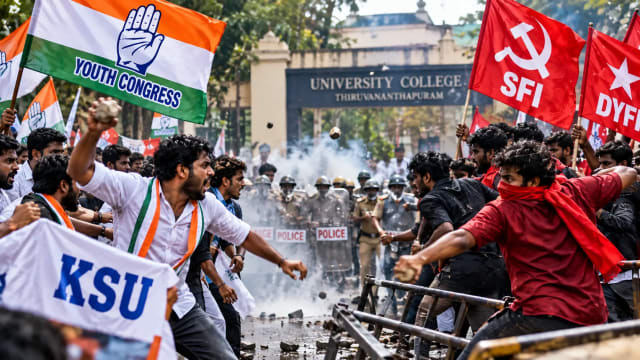
The protests began after allegations of paper leaks, examination irregularities, and concerns regarding the integrity of national entrance examinations triggered widespread anger among students. What initially focused on examination transparency gradually expanded into a broader movement demanding structural reforms, stronger safeguards against malpractice, and greater accountability within the education system.
Demonstrations spread across several cities, with thousands of students, parents, education activists, and civil society members participating. Protesters argued that repeated controversies had eroded confidence in competitive examinations that determine admissions to higher education institutions.
Political Reactions Intensify
Pradhan's resignation immediately drew strong reactions from across the political spectrum. Opposition leaders described the move as evidence that sustained public pressure had compelled the government to respond, while ruling party leaders maintained that the decision was taken in the interest of students and to restore confidence in the education system.
The resignation is expected to influence ongoing parliamentary discussions, where opposition parties have repeatedly raised concerns regarding examination management and demanded broader reforms.
What the Resignation Means
The departure of the Education Minister represents one of the most significant political consequences of the examination controversy so far. However, education experts note that replacing a minister alone may not resolve the deeper institutional challenges facing India's examination system.
Many stakeholders continue to call for:
Stronger anti-paper leak mechanisms.
Greater transparency in examination processes.
Faster investigations into irregularities.
Better protection of students' interests.
Long-term reforms to restore public confidence.
Whether these demands translate into policy changes will be closely watched in the coming months.
Background
India conducts several high-stakes national entrance and recruitment examinations every year, involving millions of candidates. In recent years, allegations of paper leaks, technical failures, and administrative lapses have repeatedly sparked concerns about fairness and credibility. The latest controversy intensified public scrutiny of examination governance and ultimately led to one of the biggest political developments in the education sector this year.
Balanced Analysis
The resignation may temporarily ease political tensions, but the larger challenge remains rebuilding trust in India's examination system. Students have consistently emphasized that accountability must be accompanied by lasting institutional reforms rather than symbolic political action. At the same time, the government faces the task of ensuring future examinations are conducted with greater transparency, security, and efficiency to restore confidence among millions of aspirants.