Government Approves RBI’s Polymer Note Trials for ₹10 and ₹20 Denominations; Paper Currency to Remain in Circulation
Introduction
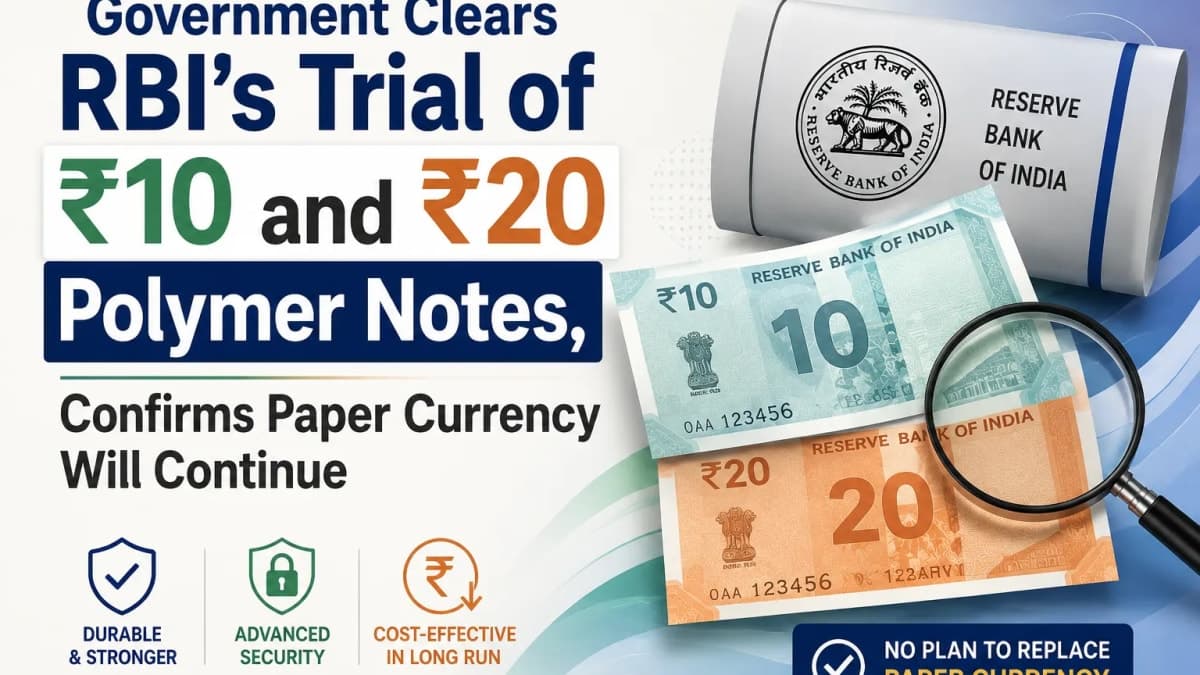
The Government of India has given the green light for the Reserve Bank of India (RBI) to begin pilot testing of polymer banknotes in the ₹10 and ₹20 denominations. While the move marks an important step in evaluating next-generation currency materials, officials have made it clear that the exercise is limited to trials and should not be interpreted as the beginning of a nationwide shift away from traditional paper currency.
The decision reflects India's continued efforts to explore innovations in currency management while ensuring stability in the country's cash-based economy.
Pilot Project to Test Polymer Currency
The approved initiative will allow the RBI to assess the performance of polymer-based banknotes under Indian conditions. The trial will focus on evaluating factors such as durability, resistance to wear and tear, security features, and the overall cost-effectiveness of polymer notes compared to conventional paper currency.
The pilot programme will help policymakers determine whether polymer banknotes offer practical advantages before considering any broader policy decisions.
No Plan to Replace Existing Paper Notes
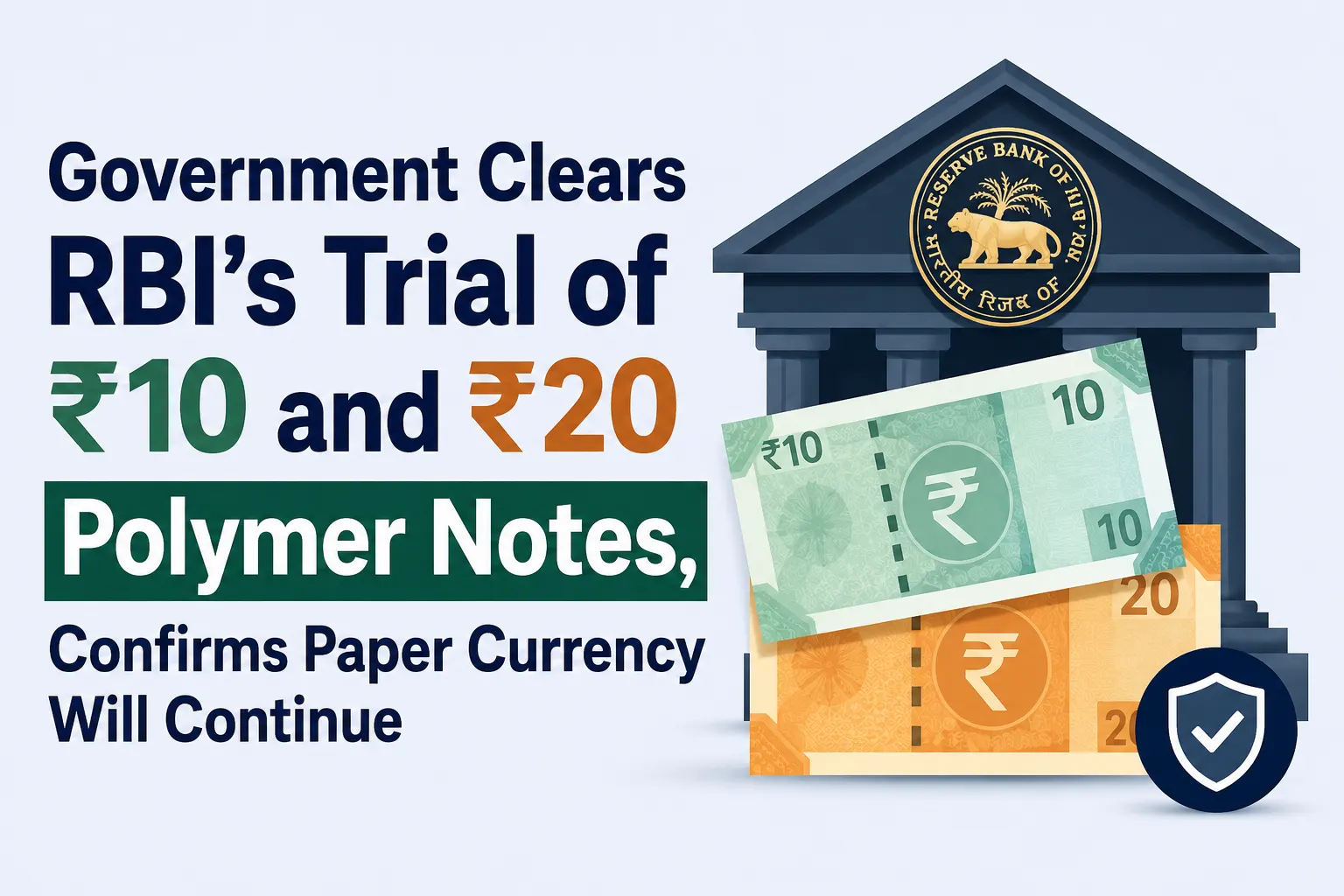
Government officials have emphasized that the approval only covers experimental trials of ₹10 and ₹20 notes. There is no proposal to withdraw or replace the existing paper-based currency currently in circulation.
The clarification is intended to prevent unnecessary speculation among the public and reassure citizens that India's current currency system will continue functioning as usual during the testing phase.
Why Polymer Notes Are Being Considered
Several countries have introduced polymer banknotes over the past two decades because they generally last longer than paper notes and are more resistant to moisture, dirt, and physical damage.
Polymer notes can also accommodate advanced anti-counterfeiting features, making them more difficult to duplicate. Their longer lifespan may reduce replacement costs over time, particularly for lower-denomination notes that change hands frequently.
The RBI's pilot aims to determine whether these potential benefits can be effectively realized under India's diverse climatic and usage conditions.
Importance for India's Currency Management
India remains one of the world's largest users of physical cash despite rapid growth in digital payments. Millions of lower-denomination notes circulate daily through retail transactions, public transport, local markets, and rural economies.
If polymer notes prove more durable, they could reduce the frequency of note replacement and lower long-term printing and distribution costs. However, any future decision would also require careful assessment of production expenses, environmental impact, recycling methods, and public acceptance.
Balanced Analysis
The pilot represents a cautious and evidence-based approach rather than a policy shift. Testing new currency materials allows the RBI to gather real-world performance data before making long-term decisions.
At the same time, adopting polymer currency on a large scale would involve significant logistical planning, including printing infrastructure, distribution systems, and compatibility with currency-handling machines. These considerations mean that even if the trials are successful, any broader rollout would likely be gradual.
For now, the government's message remains clear: India's existing paper currency will continue to remain legal tender, and the polymer note initiative is purely an experimental exercise.
Conclusion
The government's approval for RBI to test ₹10 and ₹20 polymer banknotes reflects a measured effort to explore modern currency technologies without disrupting the existing monetary system. While polymer notes may offer advantages in durability and security, the initiative remains a limited pilot programme. With no plans to replace paper currency at present, the trials will primarily help policymakers evaluate whether polymer banknotes are suitable for India's future currency needs.