Dharmendra Pradhan Speaks Out After NEET Protest Crisis
Former Union Education Minister Dharmendra Pradhan has broken his silence over the turbulent period that culminated in his resignation amid widespread protests linked to the NEET-UG examination controversy.
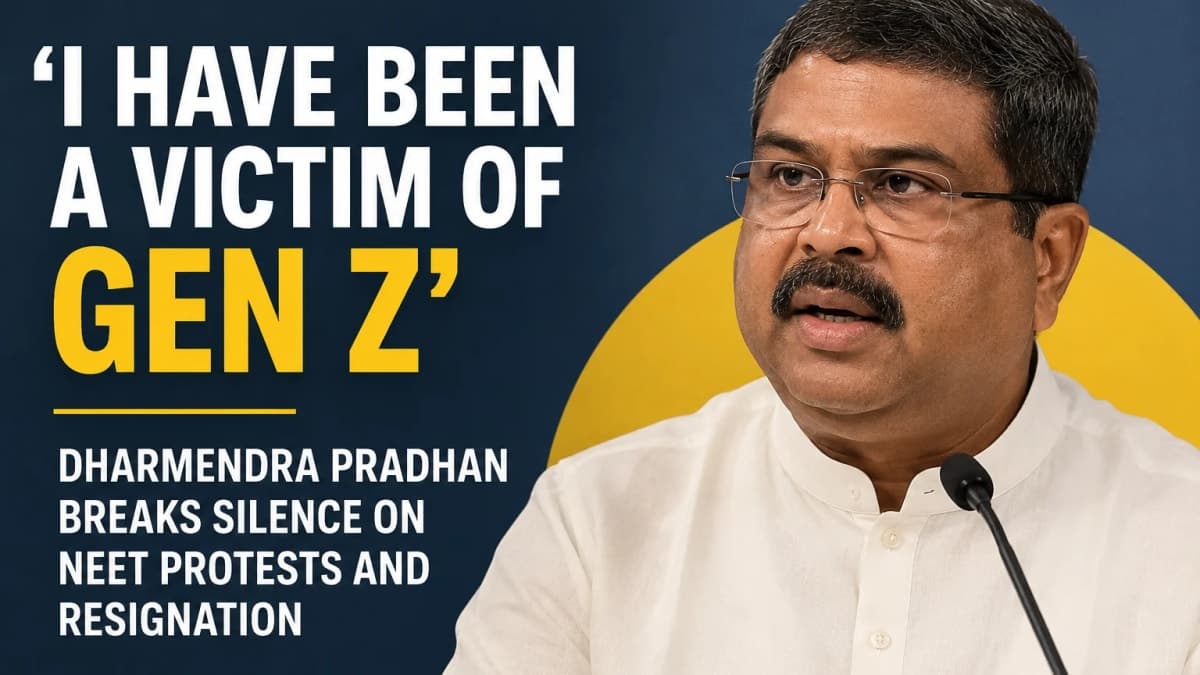
Speaking in Bhubaneswar, the senior BJP leader reflected on the influence of India's younger generation during the agitation. Pradhan said he had been a “victim of Gen Z” and claimed that some people had attempted to mislead young citizens as the controversy intensified.
His comments come roughly two weeks after he stepped down as Union Education Minister following sustained pressure over irregularities surrounding NEET-UG 2026. His resignation had emerged as one of the principal demands of protesters.
Pradhan Says Gen Z Cannot Be Ignored
Despite describing himself as a victim of the youth-driven political pressure, Pradhan also acknowledged the importance of Generation Z in India's public life.
He described Gen Z as a force that cannot be ignored and highlighted the ambitions and energy of young Indians. According to reports, Pradhan also recalled telling Prime Minister Narendra Modi that holding the position of education minister was less important than responding to the aspirations of the country's youth.
The remarks present two sides of Pradhan's assessment of the protests. While he believes young people were influenced by efforts to mislead them, he has simultaneously recognised their growing ability to influence public debate and government accountability.
NEET-UG Controversy Triggered Widespread Anger
The political crisis developed around irregularities involving the NEET-UG 2026 examination, a crucial entrance test for students seeking admission to undergraduate medical courses.
The examination held on May 3 became the centre of controversy after a paper leak emerged. The government subsequently transferred the investigation to the Central Bureau of Investigation, cancelled the examination and announced a re-test. Plans were also announced to move the examination to a computer-based format from the following year.
For students who spend months or even years preparing for highly competitive entrance examinations, allegations of leaks strike at a fundamental issue: whether every candidate is competing under equal conditions.
That concern helped turn an examination controversy into a much wider debate over the credibility and administration of India's testing system.
Youth-Led Protests Increased Pressure on Government
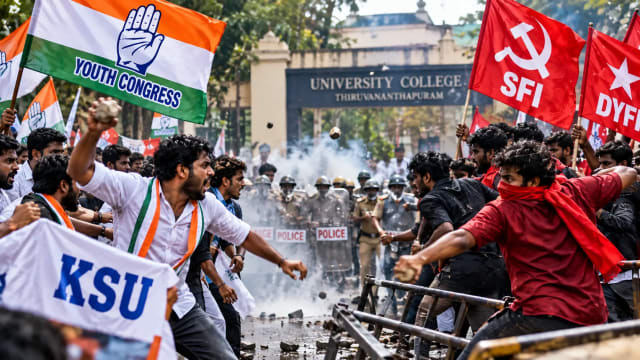
The controversy eventually developed into a significant youth mobilisation.
The Cockroach Janta Party, or CJP, became closely associated with the demonstrations, with protesters demanding Pradhan's resignation and broader reforms to the examination system. What began as a digitally driven youth movement developed into sustained street demonstrations, including protests at Delhi's Jantar Mantar.
Pradhan's departure on July 25 represented a major victory for demonstrators because his resignation had been one of their central demands.
Following his exit, protesters ended their 36-day agitation. The government also agreed to withdraw FIRs and provide compensation to affected families, according to reports.
Pradhan Had Taken Responsibility While Resigning
Pradhan's latest remarks also need to be viewed alongside the explanation he offered when leaving office.
In his resignation letter, he said the developments were not about protecting his personal reputation and emphasised his responsibility toward students and the education system. He expressed distress over the events surrounding the controversy while saying that he had not turned away from responsibility.
His latest comments, however, shift attention toward how he believes the protest movement developed and how political messaging may have influenced young participants.
That distinction is important. Accepting ministerial responsibility for a crisis and questioning some of the forces surrounding a protest are not necessarily contradictory, but the combination is likely to remain politically contested.
Why Pradhan's ‘Victim of Gen Z’ Remark Matters
The significance of the statement extends beyond Pradhan's personal political future.
India has a huge population of young citizens who communicate, organise and mobilise through digital platforms. The NEET protests demonstrated how an issue affecting students can move rapidly from online discussion to sustained public mobilisation.
The movement also showed that examination integrity is no longer simply an administrative concern. For millions of families investing money, time and years of preparation in competitive examinations, fairness in recruitment and admission systems can become a major question of public trust.
The protests therefore became a test not only for the education administration but also for how political leaders communicate with an increasingly vocal generation.
Balanced Analysis: Accountability Versus Political Mobilisation
Pradhan's contention that attempts were made to mislead Gen Z raises a legitimate political question about whether organised groups sought to influence or expand the agitation. Large protest movements can attract political parties, activists and organisations with differing motivations.
However, that argument does not by itself resolve the underlying grievances that brought students onto the streets.
The examination controversy involved concerns about fairness and the credibility of a system on which students' careers depend. The government's decision to cancel the examination, order an investigation and conduct a re-test itself demonstrated the seriousness of the problem.
Critics may therefore interpret Pradhan's “victim” description as shifting attention away from institutional accountability, while his supporters may see his remarks as a warning against the political exploitation of genuine student concerns.
Both questions — examination accountability and the politics surrounding mass mobilisation — can be examined independently.
Gen Z Emerges as a Stronger Political Voice
Perhaps the broader lesson from the controversy is the growing influence of India's younger citizens.
The protests showed how quickly digitally connected students can organise around issues directly affecting education, employment and opportunity. Recent reporting has described the movement as a significant example of youth-driven political mobilisation capable of forcing a response from the government.
Pradhan's own acknowledgement that Gen Z is a force that cannot be ignored reinforces that conclusion.
His resignation may have ended one chapter of the NEET controversy, but the larger questions raised by the protests — examination security, transparency, institutional responsibility and confidence among young Indians — are likely to remain important long after the demonstrations themselves have ended.
For policymakers, the episode offers a clear message: India's young citizens increasingly expect not only opportunities but also transparent and credible institutions capable of protecting those opportunities.
This article is based on reporting published by Business Today Desk.