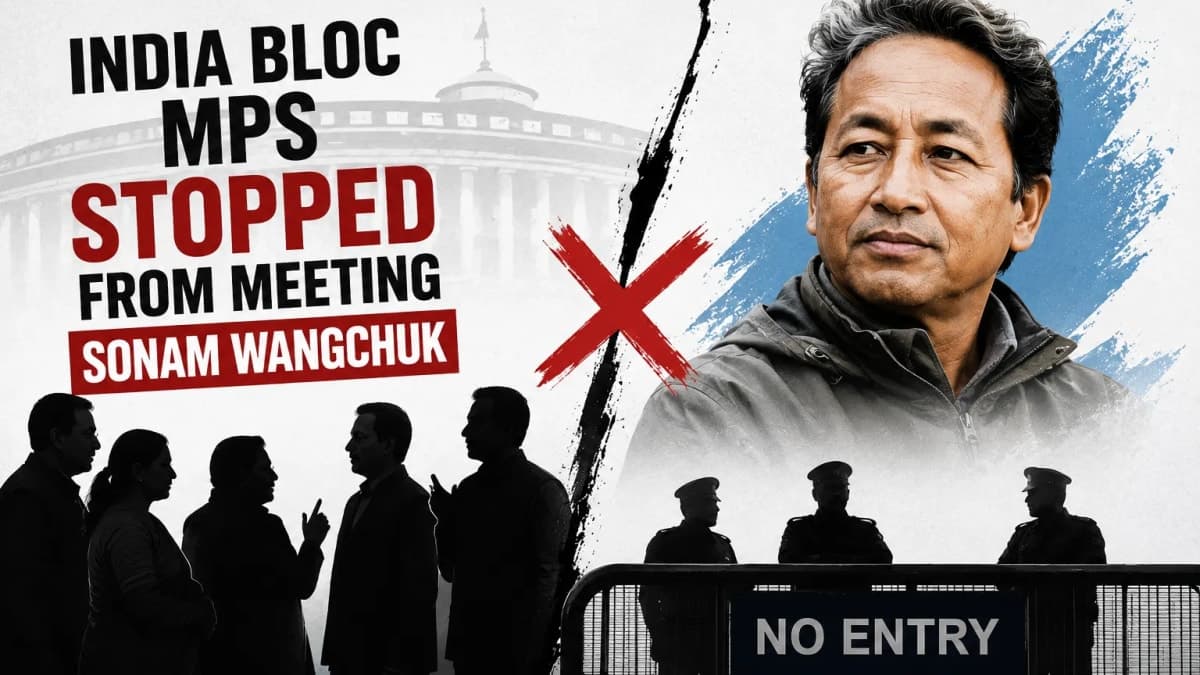
INDIA Bloc MPs Prevented From Meeting Sonam Wangchuk, Political Tensions Intensify
Opposition Leaders Allege They Were Stopped
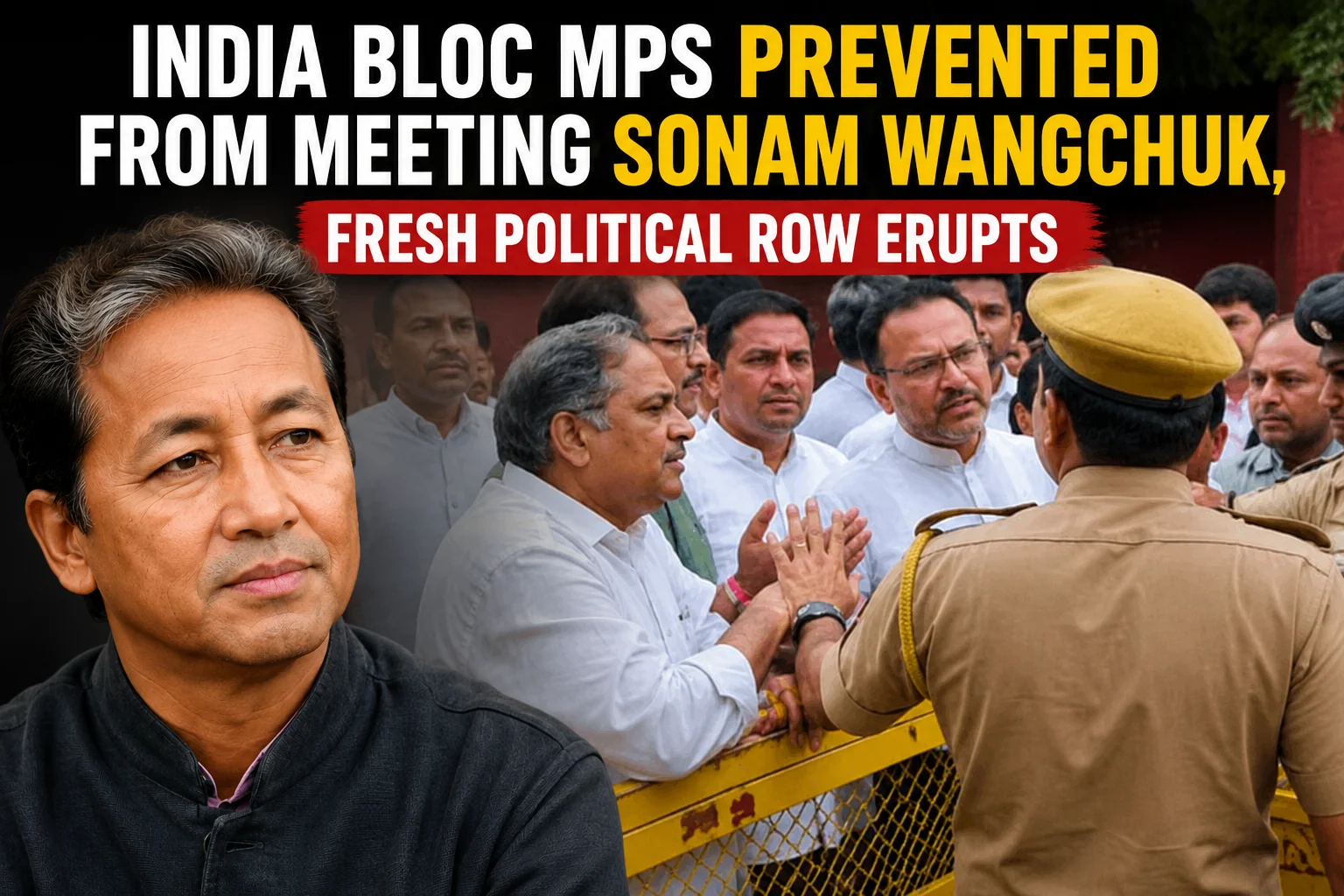
A delegation of Members of Parliament from the INDIA bloc has alleged that they were prevented from meeting activist and education reform advocate Sonam Wangchuk, triggering criticism of the authorities and intensifying the political debate surrounding the incident.
According to opposition leaders, the MPs had sought to meet Wangchuk to express support and understand the circumstances surrounding his situation. However, they claimed they were not allowed to proceed, leading to sharp reactions from several political figures.
Political Dispute Deepens
The incident quickly developed into a political flashpoint, with opposition parties questioning the decision to restrict access to Wangchuk. They argued that elected representatives should be able to meet individuals involved in matters of public interest, particularly when issues concerning governance and civil rights are under discussion.
Leaders from the INDIA bloc described the move as inconsistent with democratic traditions and called for greater transparency regarding the reasons behind the restrictions.
Authorities Maintain Security Considerations
Officials have maintained that security and administrative considerations guide decisions regarding access to individuals in sensitive situations. Authorities often regulate visits when there are concerns related to public order, safety, or logistical challenges.
While no detailed public explanation was immediately available regarding the specific restrictions, officials have generally stated that such decisions are made based on prevailing circumstances rather than political considerations.
Who Is Sonam Wangchuk?
Sonam Wangchuk is widely known for his work in education, sustainable development, and innovation in the Himalayan region. Over the years, he has become a prominent public voice on environmental conservation, regional development, and policy issues affecting Ladakh.
His advocacy has frequently attracted nationwide attention, bringing educational reform and ecological sustainability into mainstream public discussion.
Why the Meeting Matters
The proposed meeting carried political significance because Wangchuk's campaigns have increasingly intersected with broader debates on governance, regional representation, environmental protection, and constitutional issues.
By seeking to meet him, opposition MPs appeared to signal support for his concerns while emphasizing the importance of dialogue between public representatives and civil society voices.
Reactions Across the Political Spectrum
The development prompted contrasting responses from political parties. Opposition leaders criticized what they described as unnecessary restrictions on democratic engagement, while supporters of the administration argued that security protocols should be respected whenever authorities deem them necessary.
The incident has once again highlighted the continuing disagreements between the government and opposition over the balance between administrative decisions and democratic freedoms.
Why This Incident Matters
The controversy extends beyond a single meeting. It raises broader questions about access to public figures, the rights of elected representatives, and the relationship between civil society movements and political institutions.
As discussions continue, the episode is expected to remain part of the wider national debate on democratic participation, political accountability, and the management of sensitive public issues.