हिंदी में पढ़ें —JantaScope हिंदी
Politics

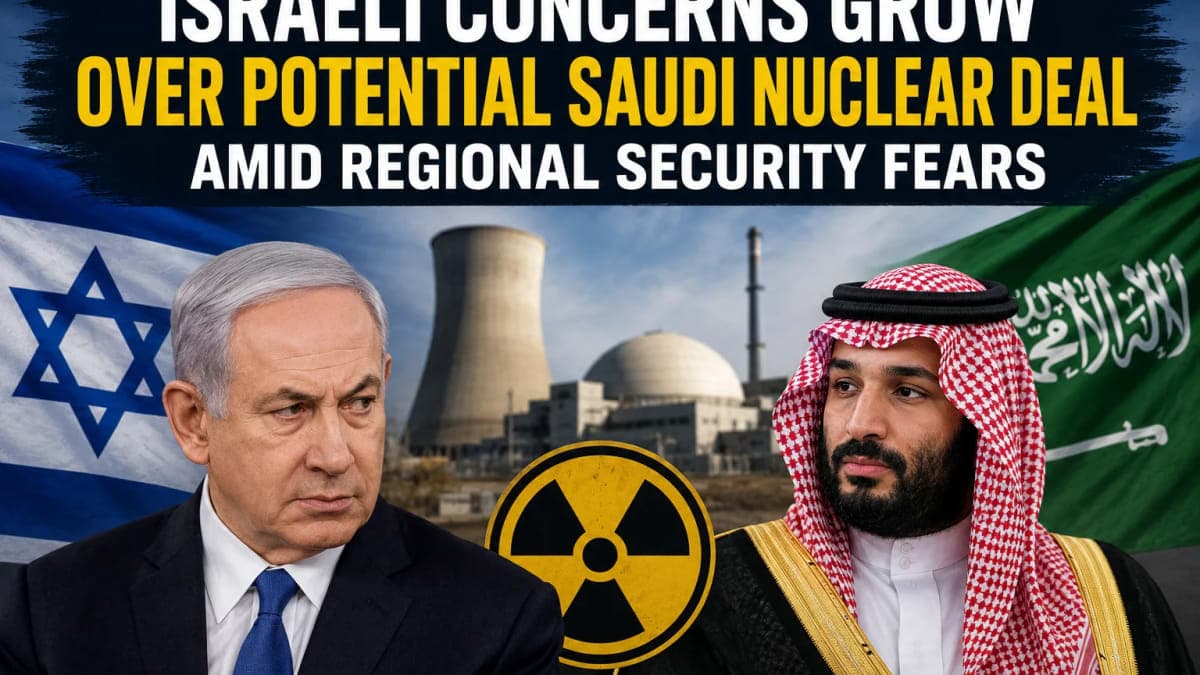
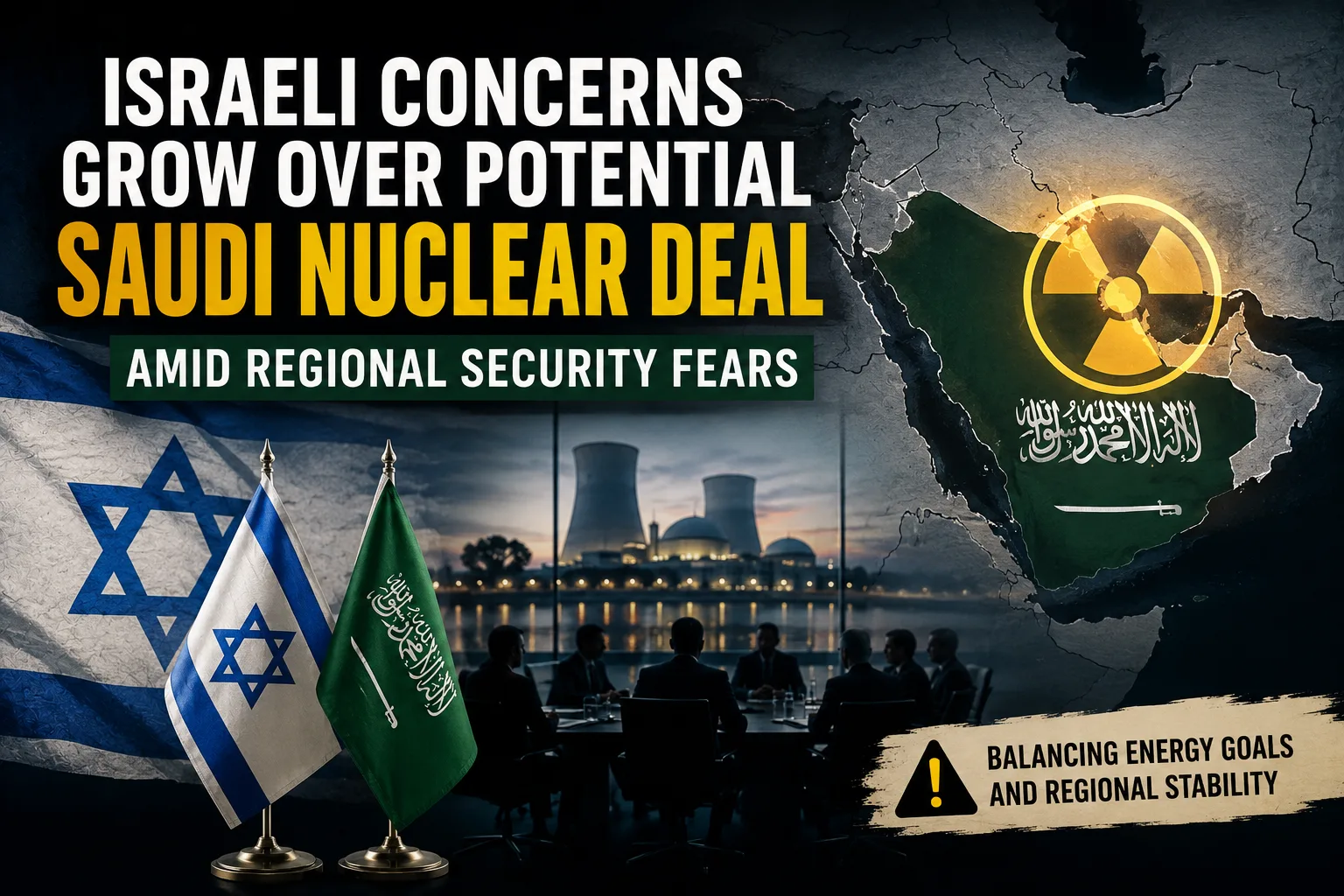
Israeli Concerns Grow Over Potential Saudi Nuclear Deal Amid Regional Security Fears

Growing discussion over a possible Saudi civilian nuclear agreement has sparked concern among many in Israel, where security analysts and citizens worry it could reshape the strategic balance in West Asia. The debate has revived questions about nuclear safeguards, regional stability, and the possibility of an emerging arms race.

Israeli Concerns Grow Over Potential Saudi Nuclear Deal Amid Regional Security Fears

By Jeet Nirmal

Source: Janta Scope

Israeli Concerns Grow Over Potential Saudi Nuclear Deal Amid Regional Security Fears

Debate Intensifies Over Saudi Nuclear Cooperation

Public discussion surrounding a potential civilian nuclear agreement involving Saudi Arabia has generated growing concern in Israel, with many fearing the long-term security implications for the region.

While supporters of such an agreement argue that civilian nuclear cooperation can support energy diversification and economic development, critics warn that any expansion of nuclear capabilities in an already volatile region could trigger broader strategic competition.

Why the Issue Matters to Israel

Israel has traditionally viewed maintaining a qualitative security advantage as central to its national defense strategy. Any significant technological or strategic development among neighboring states is therefore closely monitored by policymakers, security experts, and the public.

Many observers in Israel argue that even a civilian nuclear programme requires strict international oversight to ensure it remains exclusively peaceful. They believe that maintaining robust safeguards is essential to preserving regional stability.

Saudi Arabia's Energy Ambitions

Saudi Arabia has repeatedly expressed interest in expanding its civilian nuclear energy sector as part of its broader economic transformation and long-term energy strategy. Officials have stated that nuclear power could help diversify electricity generation, reduce domestic reliance on fossil fuels, and support future industrial growth.

Supporters emphasize that peaceful nuclear energy is permitted under international agreements when operated under internationally recognized safeguards and monitoring mechanisms.
Fears of a Regional Arms Competition

One of the principal concerns voiced by Israeli analysts is that additional nuclear infrastructure in the region could encourage neighboring countries to pursue similar capabilities, potentially increasing geopolitical competition.

Security experts note that perceptions of strategic imbalance often influence defence planning across the Middle East, making transparency and confidence-building measures particularly important.

Although no immediate evidence suggests an imminent arms race, the discussion reflects longstanding regional sensitivities surrounding advanced nuclear technology.

International Oversight Remains Central

International nuclear cooperation typically involves safeguards administered by the International Atomic Energy Agency (IAEA), whose role is to verify that civilian nuclear programmes remain dedicated to peaceful purposes.

Analysts across different countries continue to stress that transparency, inspections, and international agreements are essential for building confidence among regional stakeholders.

Diplomatic Implications

The discussion also carries broader diplomatic significance. A potential nuclear cooperation framework could become part of wider negotiations involving regional security, economic partnerships, and normalization efforts among Middle Eastern countries.

Diplomatic observers believe that balancing energy development with security assurances will remain one of the key challenges for governments involved in future negotiations.

Broader Regional Context

West Asia continues to experience complex geopolitical rivalries involving security, energy, and strategic influence. Nuclear technology, even for civilian purposes, is often viewed through the broader lens of regional power dynamics.

As a result, discussions about nuclear cooperation frequently attract attention beyond technical energy policy, becoming intertwined with diplomatic relations and national security considerations.

Why This Development Matters

The debate highlights the delicate balance between supporting peaceful civilian nuclear development and addressing regional security concerns. While countries seek to expand clean and reliable energy sources, neighbouring states remain attentive to the strategic implications of advanced nuclear technology.

How future agreements are structured, monitored, and implemented will likely influence both regional diplomacy and international confidence in the years ahead.

Related

More stories

Xi Jinping Likely to Visit India After 7 Years for BRICS Summit in Major Diplomatic Development

Chinese President Xi Jinping is likely to travel to New Delhi for the BRICS Summit on September 12–13, 2026, in what would be his first visit to India in seven years. Reports indicate he could arrive with a delegation of about 400 officials, while his final travel plans have not yet been officially confirmed.

Politics

Xi Jinping Likely to Visit India After 7 Years for BRICS Summit in Major Diplomatic Development

Tension at Vidhana Soudha as Karnataka BJP Protest Over Valmiki Corporation Case Escalates

Political tensions intensified around Bengaluru's Vidhana Soudha as Karnataka BJP leaders and workers protested demanding the removal of minister B Nagendra over alleged financial irregularities involving the Maharshi Valmiki Scheduled Tribes Development Corporation. Police blocked protesters attempting to move toward the legislature, leading to scuffles and the detention of several BJP leaders.

Politics

Tension at Vidhana Soudha as Karnataka BJP Protest Over Valmiki Corporation Case Escalates

Women’s Reservation Back in Spotlight: BJP and Congress Clash as Rahul Gandhi Becomes Centre of Political Battle

The debate over women’s political representation has returned to the centre of national politics, with the BJP and Congress trading sharp accusations over the implementation of the 33% reservation for women in the Lok Sabha and state assemblies. Rahul Gandhi has emerged as a key figure in the confrontation as both sides challenge each other’s record on women’s empowerment.

Politics

Women’s Reservation Back in Spotlight: BJP and Congress Clash as Rahul Gandhi Becomes Centre of Political Battle

Parliament Session Ended 10 Days Ago — So Why Has It Still Not Been Formally Closed? Congress Raises Questions

A procedural delay after Parliament’s Monsoon Session has turned into a fresh political controversy. Both the Lok Sabha and Rajya Sabha were adjourned sine die on August 13, 2026, but the session had still not been formally prorogued more than a week later. Congress has questioned the gap and sought clarity from the government, while political speculation has grown over whether Parliament could be recalled to consider important legislation.

Politics

Parliament Session Ended 10 Days Ago — So Why Has It Still Not Been Formally Closed? Congress Raises Questions

PM Modi’s Marathon BJP Meeting Signals Early Push for 2027 State Elections — Here’s What Was Discussed

Prime Minister Narendra Modi held an extended meeting with the BJP’s newly appointed national office-bearers in New Delhi as the party begins sharpening its organisational and political strategy for the next round of Assembly elections. The discussions put emphasis on strengthening the party organisation, connecting with younger voters, improving coordination and preparing state units for upcoming electoral contests.

Politics

PM Modi’s Marathon BJP Meeting Signals Early Push for 2027 State Elections — Here’s What Was Discussed

Rahul Gandhi–BJP Political Battle Escalates After Pune Student Outreach

A student-focused outreach programme led by Congress leader Rahul Gandhi in Pune has triggered a fresh political confrontation between the Congress and the BJP. While Gandhi used the platform to raise questions around women’s rights, gender equality and concerns affecting students, BJP leaders accused the Congress of converting a youth interaction into a political event. The Congress, in turn, has argued that the sharp BJP response shows the ruling party is uncomfortable with Gandhi’s growing.

Politics

Rahul Gandhi–BJP Political Battle Escalates After Pune Student Outreach