Venugopal Responds to Tharoor’s Remarks
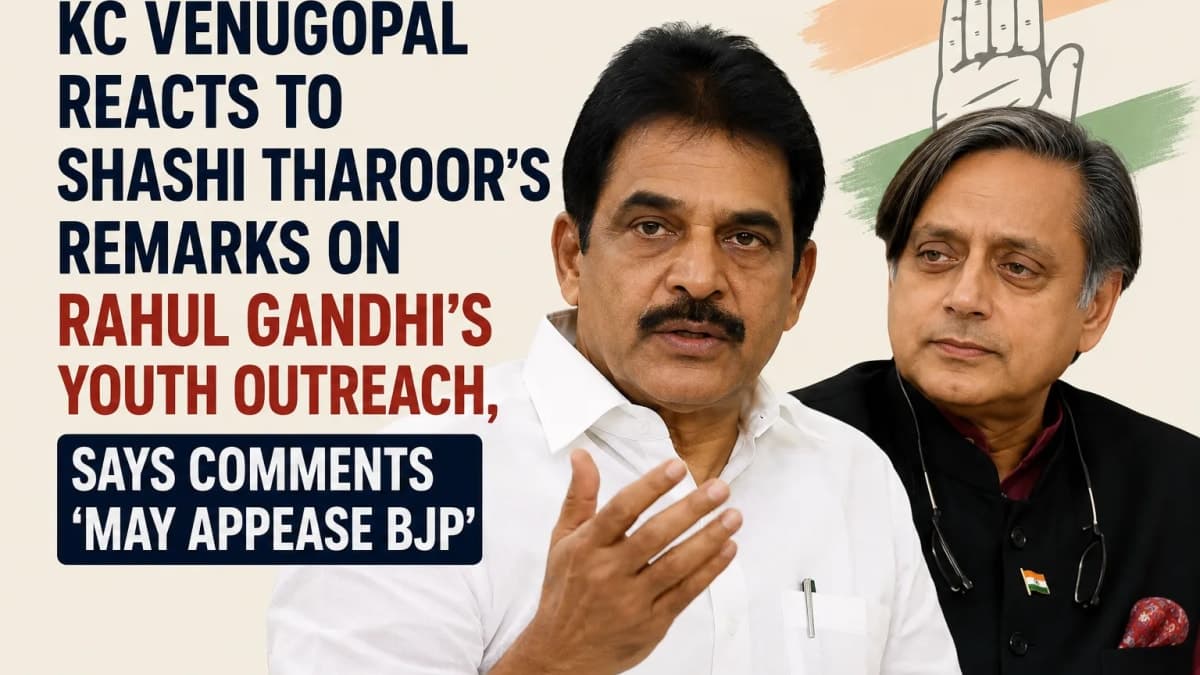
A fresh political discussion has emerged within the Congress after KC Venugopal responded to remarks by party colleague Shashi Tharoor concerning Rahul Gandhi’s youth outreach campaign.
Venugopal indicated that comments of this nature could end up politically benefiting or “appeasing” the Bharatiya Janata Party (BJP) and suggested that they should be avoided.
The reaction puts the spotlight on how senior Congress leaders publicly discuss the party’s political strategy, particularly initiatives associated with Rahul Gandhi.
Rahul Gandhi’s Youth Outreach in Focus
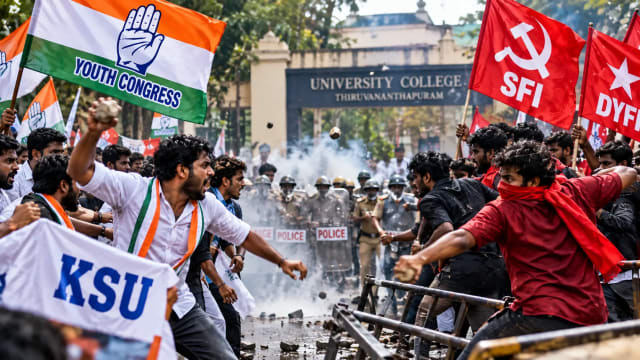
The exchange comes against the backdrop of efforts to connect with younger citizens, a demographic that plays an increasingly important role in India's political conversation.
Youth outreach can cover issues ranging from education and employment opportunities to economic aspirations and political participation. For opposition parties such as the Congress, building stronger connections with young voters can be particularly important when attempting to expand their electoral base.
The latest exchange, however, shifts some attention away from the outreach campaign itself and toward the way senior Congress figures publicly assess political initiatives associated with the party leadership.
Why Venugopal’s Reaction Matters
Venugopal’s criticism is politically significant because public differences between senior leaders can quickly become part of the wider contest between the ruling party and the opposition.
His suggestion that Tharoor’s remarks could appease the BJP reflects concern about whether internal commentary might provide political ammunition to the Congress's principal national rival.
At the same time, differing assessments and viewpoints among political leaders are not unusual in a large party. The political impact often depends on whether such disagreements remain limited to individual comments or develop into a broader debate over strategy and leadership.
Tharoor’s Independent Political Voice
Shashi Tharoor has long maintained a distinctive public profile within the Congress and frequently participates in wider discussions about politics, governance and the direction of the party.
The latest reaction from Venugopal therefore highlights a recurring challenge for political organisations: balancing space for individual leaders to express their views with the need to maintain a coherent public message.
For the Congress, that balance becomes particularly important when discussions involve Rahul Gandhi and campaigns designed to strengthen the party’s connection with strategically important voter groups.
Political Battle Over Young Voters
India’s younger population represents a major constituency for political parties. Employment, competitive examinations, education, entrepreneurship, digital opportunities and economic mobility can all influence the political priorities of younger voters.
As a result, outreach aimed at young people is not simply a communication exercise. It can form part of a larger attempt to shape a party’s political identity and build support for future electoral contests.
The Congress will therefore want attention to remain on the substance of its youth engagement rather than allowing internal disagreements to dominate the political narrative.
Balanced Analysis
Venugopal’s response can be viewed as an attempt to reinforce message discipline and prevent statements from senior Congress figures from being used by political opponents. From this perspective, his “may appease BJP” observation reflects the competitive environment in which comments from one party are frequently amplified by rivals.
Another perspective is that senior politicians expressing different assessments does not automatically indicate a major internal conflict. Political parties often contain competing opinions about campaign strategy, messaging and leadership.
Because the available facts are limited to Venugopal’s reaction to Tharoor’s remarks, it would be premature to characterize the episode as evidence of a larger disagreement within the Congress.
What is clear is that the exchange has brought renewed attention to the political importance of Rahul Gandhi’s youth outreach and to the Congress leadership’s sensitivity about how such initiatives are publicly discussed.
Why This Matters
The episode touches on two significant challenges for the Congress: reaching younger voters and maintaining consistent messaging among its senior leaders.
With political parties competing for the support of a large and increasingly influential younger electorate, campaigns directed at youth can have strategic importance beyond their immediate events. Public differences over such initiatives can therefore attract attention from political rivals as well as supporters.
This article is based on reporting published by Hindustan Times.