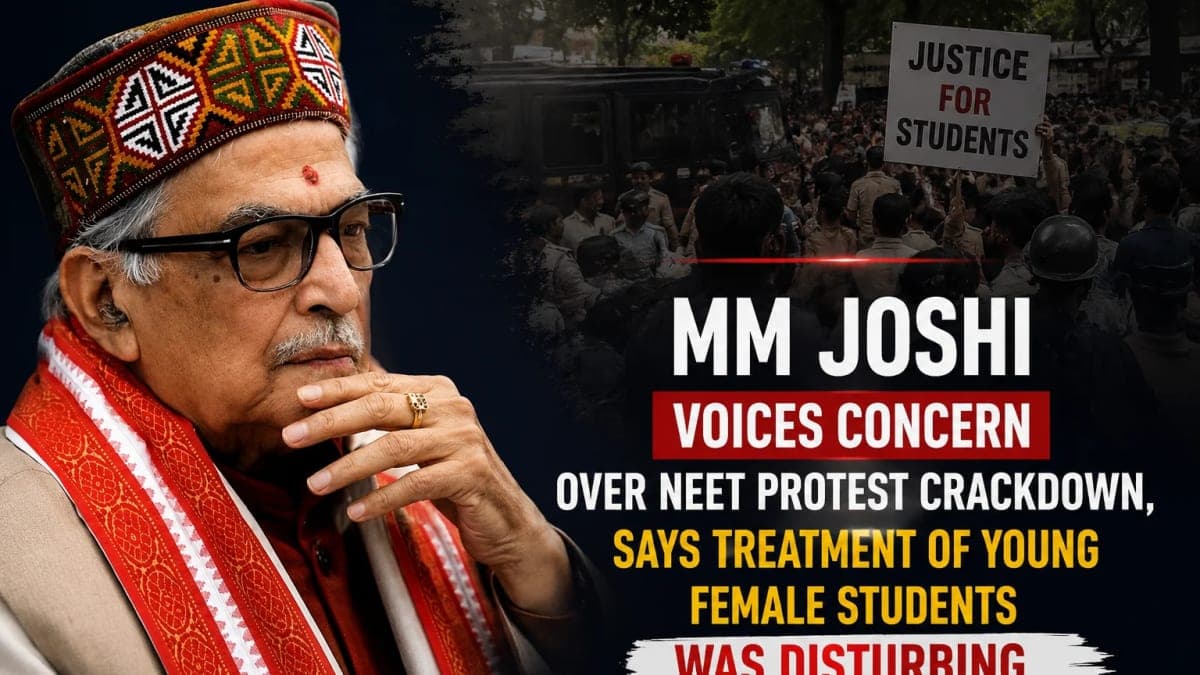
MM Joshi Says He Is ‘Pained’ Over NEET Protest Crackdown, Raises Concern Over Treatment of Young Women
Veteran BJP Leader Reacts to Student Protest Controversy
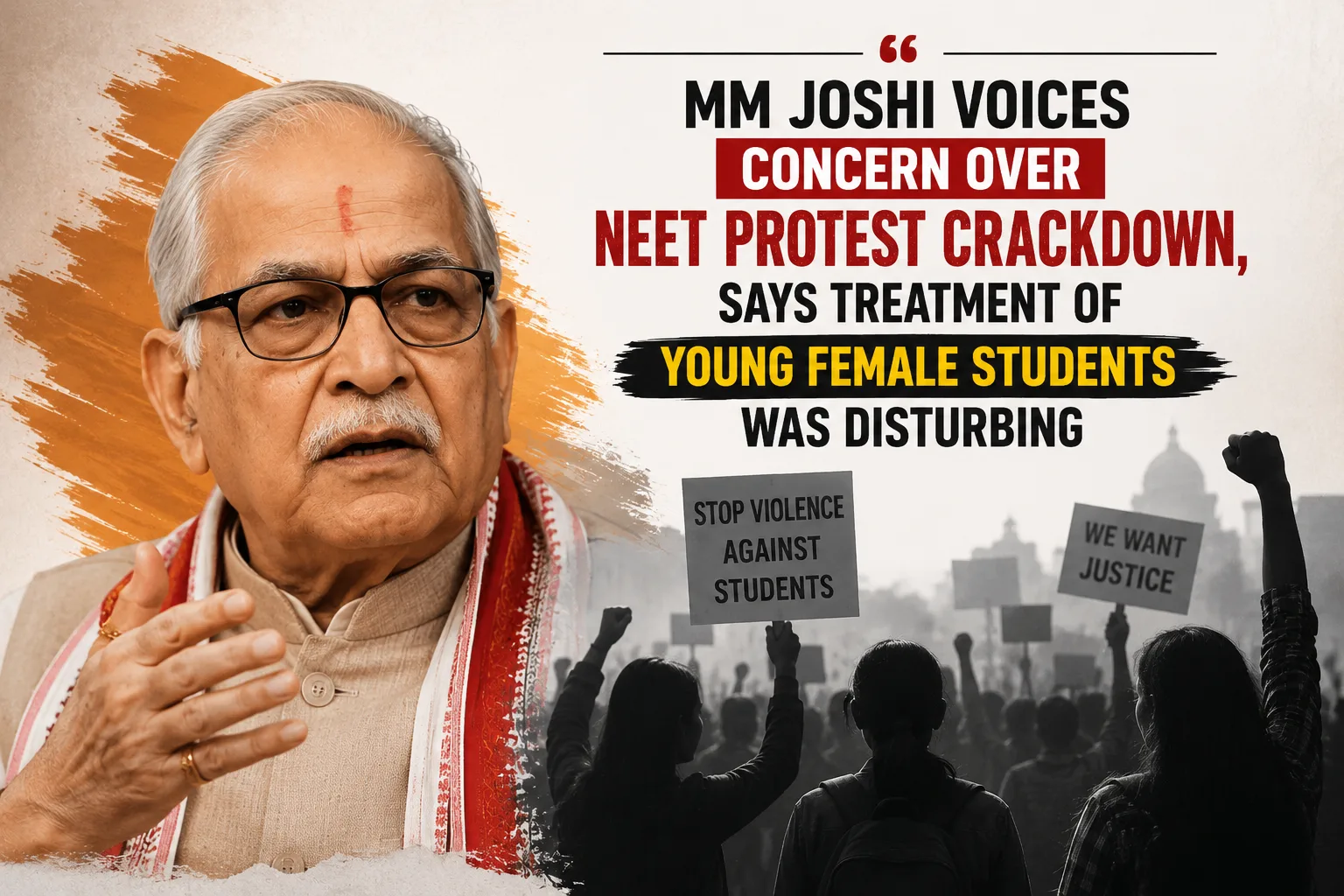
Veteran Bharatiya Janata Party (BJP) leader Murli Manohar Joshi has publicly expressed distress over the police action taken during recent NEET-related protests. Referring to reports that young female students were allegedly subjected to rough treatment, Joshi said the developments had caused him deep concern.
His remarks come at a time when the handling of student demonstrations has become a major political issue, with both the Opposition and several public figures questioning the response to protests over education-related demands.
Concern Focuses on Reported Treatment of Female Students
Speaking on the issue, Joshi said he was particularly troubled by accounts suggesting that young girls participating in the protests were allegedly mishandled during the crackdown.
His comments highlight growing concern over the manner in which law enforcement dealt with demonstrators and have added a new dimension to the public debate surrounding the protests.
While political reactions have varied, the alleged treatment of students has become one of the central issues dominating discussions.
Political Reactions Continue to Grow
The veteran leader's statement is notable because it comes from a senior BJP figure at a time when criticism of the crackdown has largely been driven by opposition parties and student organizations.
His remarks may intensify calls for greater transparency regarding the events that unfolded during the protests and could encourage renewed discussion over how authorities respond to demonstrations involving students.
Government representatives have consistently maintained that security agencies act within the framework of the law while preserving public order whenever protests become disruptive.
Background: NEET Protests Expand Into National Political Issue
The NEET-related protests have evolved beyond examination concerns into a wider debate involving education policy, accountability, and the right to peaceful protest.
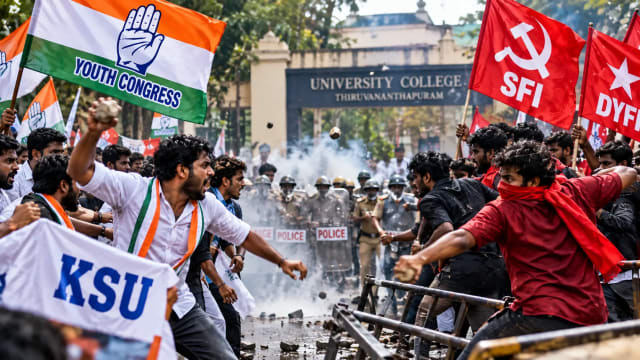
Demonstrations in multiple locations have witnessed clashes, detentions, and allegations of excessive force, leading to sharp political exchanges between the ruling alliance and opposition parties.
Several public figures, civil society members, and political leaders have weighed in, making the issue one of the country's most closely watched political developments.
Why This Matters
Murli Manohar Joshi's comments carry significance because they represent concern voiced by a respected senior leader associated with the ruling party's broader ideological tradition.
His statement may influence the national conversation by shifting attention toward the treatment of student protesters rather than solely the political conflict surrounding the demonstrations.
The controversy also underscores the continuing challenge of balancing law enforcement responsibilities with the protection of democratic rights and peaceful dissent.
Balanced Analysis
Joshi's remarks are likely to be welcomed by those seeking greater accountability over the reported handling of protesters, particularly female students. At the same time, government authorities have maintained that police actions are taken based on security requirements and operational assessments during public demonstrations.
As investigations, official explanations, and political responses continue, the issue is expected to remain a significant point of discussion in both public and political circles.