‘No Room for Traitors’: TMC Supporters Lock Saayoni Ghosh’s Jadavpur Office, Put Up ‘Gaddar’ Posters
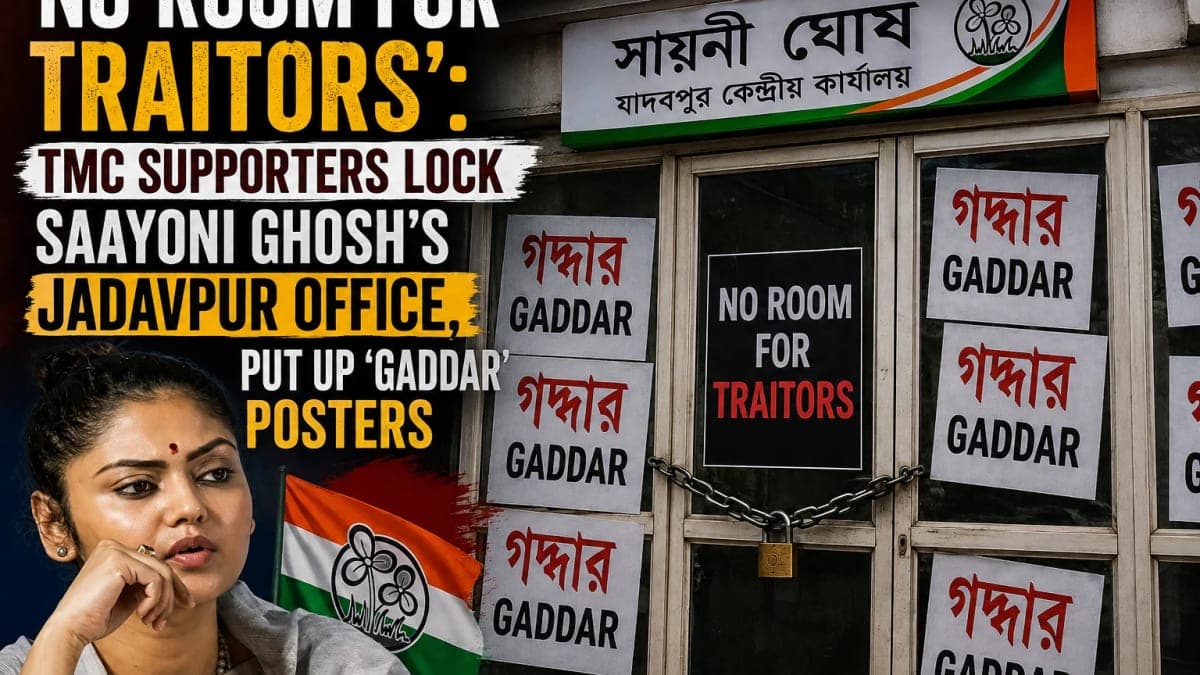
Political tensions within the Trinamool Congress came into public view in Jadavpur after party supporters locked an office associated with Saayoni Ghosh and covered it with posters carrying the word “gaddar”, meaning “traitor”.
The action, accompanied by the message that there was “no room for traitors”, represented an unusually visible expression of anger from within the party’s own support base.
While the immediate episode centres on a local party office, its political significance extends beyond the locked doors. Public demonstrations of dissatisfaction involving members or supporters of the same political organisation can become a test of how effectively the leadership manages internal disagreements.
Supporters Target Jadavpur Office
According to the facts surrounding the incident, TMC supporters locked the Jadavpur office linked to Saayoni Ghosh and pasted “gaddar” posters outside it.
The language used on the posters gave the protest a confrontational tone. Instead of keeping disagreements within internal party channels, those involved chose a highly visible form of protest.
Such actions can attract considerable political attention because they transform an internal dispute into a public spectacle, giving both party leaders and political opponents an opportunity to respond.
Why the Incident Matters
Internal disagreements are common in large political organisations, particularly when different local groups compete for influence, representation and organisational authority.
However, locking a party office and publicly branding someone a “traitor” represents a significant escalation in rhetoric. It can create questions about discipline within local units and whether differences between factions are being managed through established organisational mechanisms.
For the TMC, the political challenge will be preventing such confrontations from distracting from the party’s broader organisational and electoral priorities.
Saayoni Ghosh and the Political Spotlight
Saayoni Ghosh is a prominent face of the Trinamool Congress and has developed a significant public profile in West Bengal politics. That makes any visible protest connected with her politically noteworthy.
The Jadavpur episode may therefore receive greater attention than a routine local-level disagreement. How the party and the people involved respond could determine whether the controversy remains limited or develops into a wider political dispute.
Internal Differences Can Carry Electoral Consequences
Public factional disputes can be particularly sensitive for political parties because they affect perceptions of organisational unity.
Opposition parties can use visible disagreements to question a rival party’s internal cohesion, while party workers themselves may seek clarity from senior leaders about competing factions and responsibilities.
At the same time, one local confrontation does not necessarily establish that there is a broader organisational crisis. Political parties frequently experience disputes among workers and local leaders that are eventually resolved internally.
Balanced Analysis
The incident presents two competing interpretations.
On one hand, the locking of the office and the use of “gaddar” posters suggest serious frustration among the supporters involved. Publicly taking such action indicates that at least one group believed a stronger demonstration was necessary.
On the other hand, it would be premature to treat a single protest as evidence of a party-wide split without additional information about the scale of the disagreement and the position of the TMC leadership.
Much will depend on what happens next. A quick intervention or reconciliation could contain the controversy, while continued protests or public accusations could give the dispute greater political importance.
What Happens Next?
Attention will now be on the response from Saayoni Ghosh and the Trinamool Congress leadership.
Any disciplinary action, clarification or attempt at reconciliation could provide a clearer indication of how seriously the party views the episode. The reaction of local workers will also determine whether the confrontation ends with the office protest or develops further.
For now, the locked office and “gaddar” posters have turned an apparent internal disagreement into a highly visible political controversy in Jadavpur.