Oil-Linked Stocks Gain as Crude Prices Slide
Oil-sensitive shares witnessed strong buying interest as a steep decline in crude oil prices boosted market sentiment toward businesses exposed to fuel and energy costs.
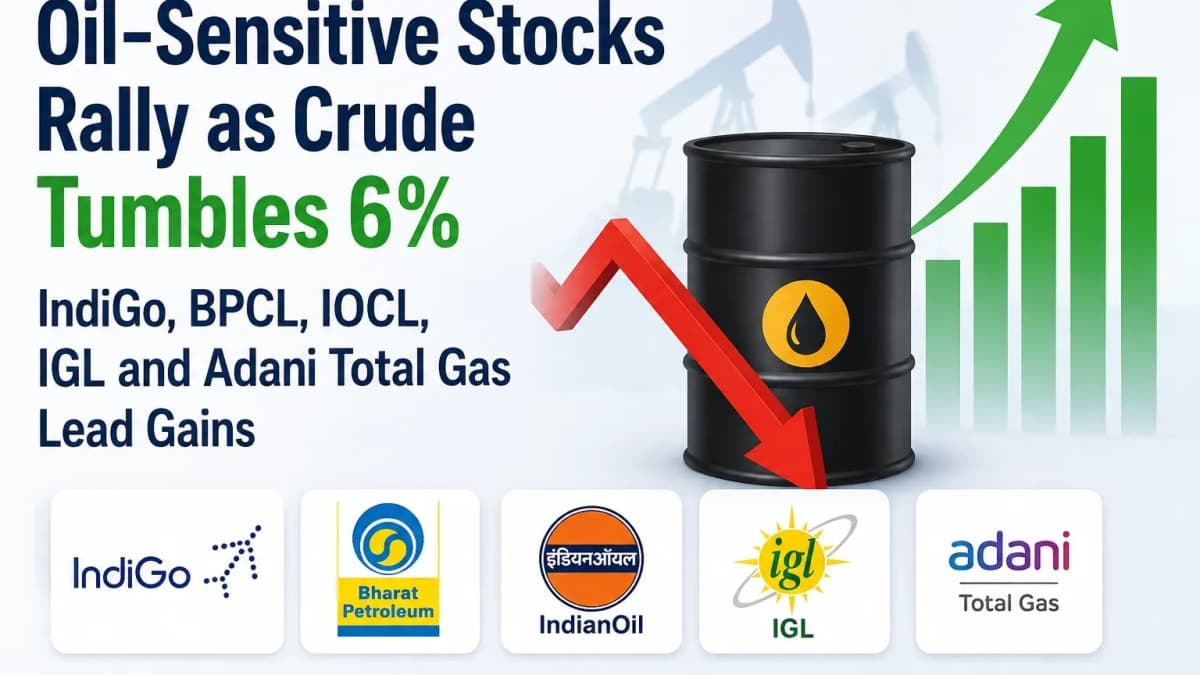
Crude prices tumbled around 6%, prompting investors to reassess the outlook for sectors that can potentially benefit from lower oil prices. IndiGo, Bharat Petroleum Corporation Limited (BPCL), Indian Oil Corporation Limited (IOCL), Indraprastha Gas Limited (IGL) and Adani Total Gas were among the stocks leading the gains.
The market reaction highlighted how movements in international crude prices can quickly influence investor expectations for aviation, oil marketing and gas distribution companies.
Why Falling Crude Matters for Oil-Sensitive Companies
Crude oil is a major global commodity whose price movements can affect transportation, refining, fuel distribution and several other industries.
For aviation companies such as IndiGo, fuel represents an important operating expense. A sustained reduction in energy prices can therefore improve expectations around the industry's cost environment, although the eventual impact depends on factors including fuel pricing, currency movements and broader operating conditions.
Oil marketing companies such as BPCL and IOCL are also closely watched whenever crude prices move sharply. Lower crude can influence procurement costs and the economics of refining and fuel marketing, though the relationship between crude prices and profitability is not always straightforward.
Gas distribution companies including IGL and Adani Total Gas can similarly attract investor attention during major changes in the wider energy market.
Investors React to 6% Crude Oil Drop
The approximately 6% decline in crude provided the immediate trigger for the rally in oil-sensitive counters.
Stock markets often respond rapidly to commodity-price changes because investors price in their possible impact on future earnings before the full effect becomes visible in corporate results.
The gains in IndiGo, BPCL, IOCL, IGL and Adani Total Gas suggest that traders viewed the crude decline as potentially supportive for companies with significant exposure to energy costs or fuel-market dynamics.
Why Lower Oil Prices Matter for India
Movements in crude prices have broader importance for India because the country relies substantially on imported energy.
A sustained period of lower international oil prices can potentially reduce pressure associated with the cost of energy imports. Cheaper fuel inputs may also ease cost pressures across transportation and other energy-intensive parts of the economy.
However, the ultimate economic impact depends on how long lower crude prices persist and how changes in international prices flow through domestic markets.
Benefits Can Differ Across Companies
While falling crude prices can create a favourable backdrop for several oil-sensitive stocks, investors cannot assume that every company will benefit equally.
Airlines, refiners, oil marketing companies and city gas distributors operate under different business models. Currency fluctuations, domestic fuel pricing, refining margins, demand conditions and company-specific costs can all influence the eventual financial impact.
A sharp one-day decline in crude also does not necessarily establish a longer-term trend. Oil prices can be volatile and can reverse direction in response to changes in global demand, supply conditions and international developments.
Balanced Analysis
The rally in oil-sensitive stocks demonstrates the market's sensitivity to sudden movements in global crude prices. A 6% decline can meaningfully change short-term expectations for companies where fuel costs, crude procurement or energy pricing play an important role.
For IndiGo, cheaper energy potentially strengthens expectations around operating costs. For BPCL and IOCL, investors may focus on how lower crude affects refining and marketing economics. IGL and Adani Total Gas, meanwhile, remain sensitive to changes across the broader energy-pricing environment.
Still, the sustainability of the stock gains will likely depend on whether crude remains at lower levels and whether the commodity-price decline ultimately translates into improved business fundamentals.
For now, the sharp fall in crude has provided a positive catalyst for oil-sensitive shares, placing aviation, oil marketing and gas distribution companies firmly in market focus.