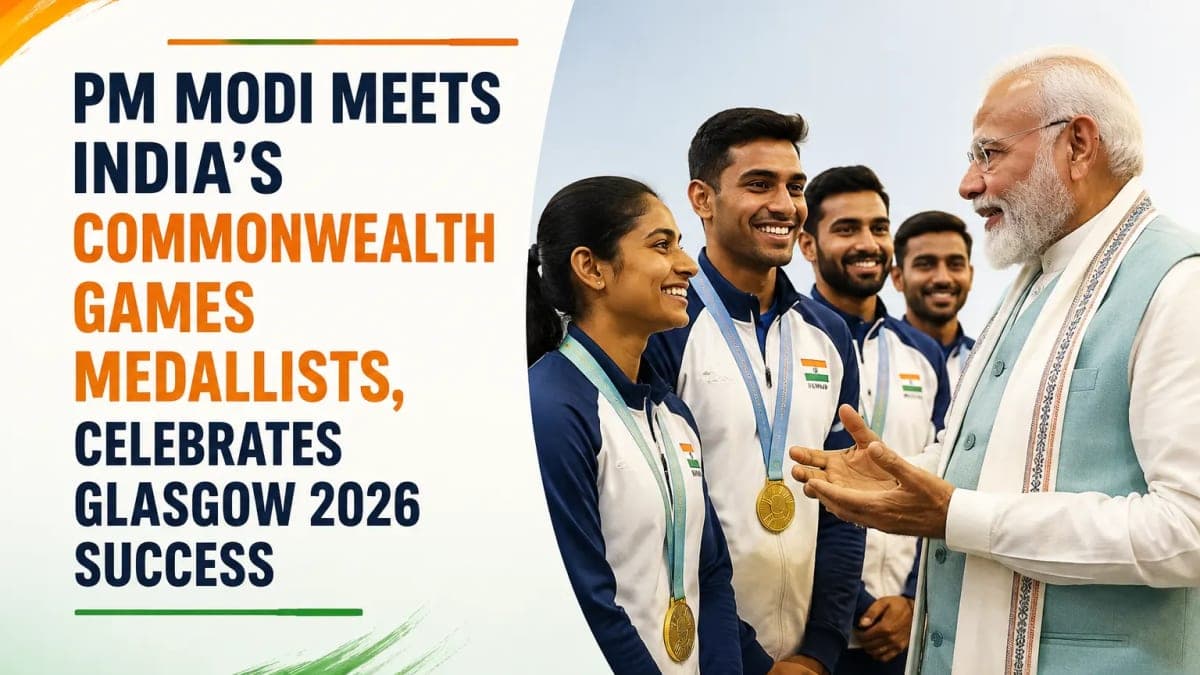
PM Modi Meets Commonwealth Games 2026 Medallists
Prime Minister Narendra Modi hosted India’s Commonwealth Games 2026 medallists for a special interaction following the conclusion of the Glasgow Games.
During the meeting in New Delhi, Modi congratulated the athletes for their performances and acknowledged the hard work and determination behind their achievements on the international stage. The interaction brought together members of an Indian contingent that returned home after securing fourth place in the overall medal standings.
The meeting also continued Modi’s public engagement with Indian athletes during the Games. Throughout the competition, the Prime Minister had issued congratulatory messages for several medal winners, including weightlifting champion Mirabai Chanu and other successful athletes.
‘Jo Khelega, Woh Khilega’: Modi’s Message to Athletes
One of the notable moments from the interaction came when Modi delivered the message, “Jo khelega, woh khilega,” broadly emphasizing the role of participation in sport in helping individuals grow and succeed.
The remark came as the Prime Minister praised the athletes’ dedication and achievements following their return from Glasgow.
Before the Games began, Modi had also wished the Indian contingent success, expressing confidence that the athletes would compete with determination and a spirit of excellence.
India Finishes Fourth at Glasgow Commonwealth Games
India concluded the 2026 Commonwealth Games with 39 medals and fourth place in the overall standings.
The result carries additional context because the Glasgow programme differed significantly from previous editions, meaning straightforward medal-total comparisons with earlier Commonwealth Games do not necessarily provide a complete picture of the team's performance.
Individual achievements across disciplines nevertheless provided India with several standout moments during the competition.
Mirabai Chanu added another Commonwealth Games gold medal to her decorated career, while several emerging athletes also reached the podium. Modi publicly congratulated Chanu following her victory, describing her performance as another major achievement for Indian weightlifting.
Why the Interaction Matters
Meetings between national leaders and international medal winners are largely ceremonial, but they can serve a wider purpose by increasing public visibility for athletes whose disciplines receive less attention outside major competitions.
Recognition can be particularly valuable for emerging and para athletes, helping their performances reach audiences beyond dedicated sports followers.
At the same time, ceremonial recognition represents only one part of developing a strong sporting ecosystem. Long-term international success also depends on coaching, sports science, infrastructure, competition exposure, athlete welfare and sustained financial support.
Government programmes have played a role in that preparation. Reports indicate that ₹15.56 crore under the Target Olympic Podium Scheme was allocated toward supporting athletes who ultimately won medals at Glasgow 2026, covering areas such as training, equipment, international exposure and support personnel.
Attention Now Turns Towards the Future
With Glasgow 2026 completed, the focus for Indian sport will increasingly shift from celebration to preparation for future international competitions.
The Commonwealth Games also carry additional significance for India because Ahmedabad is set to host the 2030 edition. That creates an opportunity not only to stage another major sporting event but also to strengthen athlete-development systems in the years leading up to it.
For the Glasgow medallists, the meeting with the Prime Minister represents recognition of what they achieved. The bigger challenge will be converting those performances into sustained success as Indian athletes prepare for their next international targets.