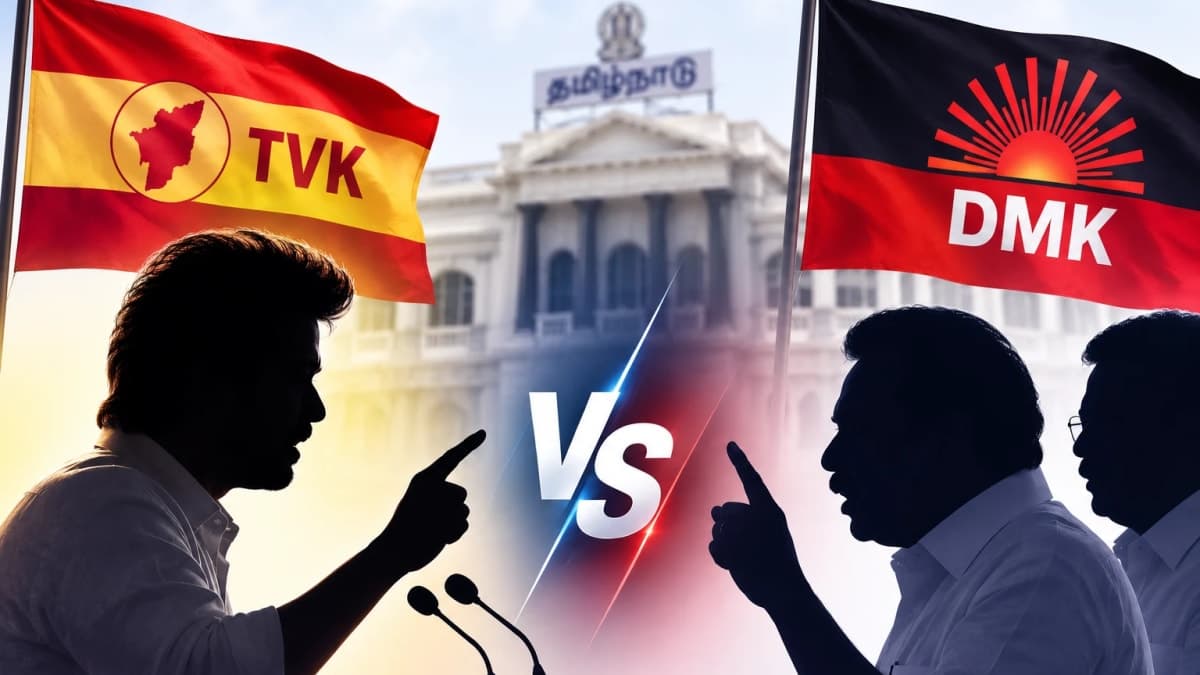
Political discussions in Tamil Nadu have intensified following a series of public statements and counter-statements involving the Tamilaga Vettri Kazhagam (TVK) and former ministers linked to the Dravida Munnetra Kazhagam (DMK). The exchange has attracted widespread attention, with political observers describing the situation as a strategic contest in which both sides are responding quickly to each other's remarks and political messaging.
The recent developments highlight the increasingly active political environment in the State, where parties are working to strengthen their public outreach and present their respective narratives. Public speeches, media interactions, and political campaigns have become important platforms for leaders to communicate with voters and respond to criticism from rival parties.
Political analysts note that strong public exchanges are a common feature of democratic politics, particularly when parties seek to expand their influence or consolidate support. Such debates often focus on governance, public policy, administrative performance, development priorities, and political accountability.
The discussion involving TVK and former DMK ministers has generated significant interest because TVK has emerged as a relatively new political force seeking to establish its presence in Tamil Nadu's political landscape. As new parties gain visibility, comparisons with established political organizations frequently become part of public discourse.
At this stage, many of the allegations, criticisms, and responses exchanged in political statements remain matters of political opinion unless independently verified or officially established. Voters are generally encouraged to evaluate public claims using official information and credible sources.
Observers also point out that healthy political competition often encourages greater public engagement and discussion on governance issues. However, they emphasize the importance of evidence-based debate and respectful democratic dialogue when addressing matters of public interest.
The evolving political exchanges are expected to continue as parties prepare for future electoral contests and policy discussions. Political campaigns typically involve competing visions on economic development, infrastructure, welfare programs, employment, education, and public administration. These issues are likely to remain central to political messaging in the coming months.
For now, the developments primarily reflect an ongoing political contest rather than any confirmed outcome. Further responses from political leaders and official announcements may provide additional context as events unfold.