Introduction
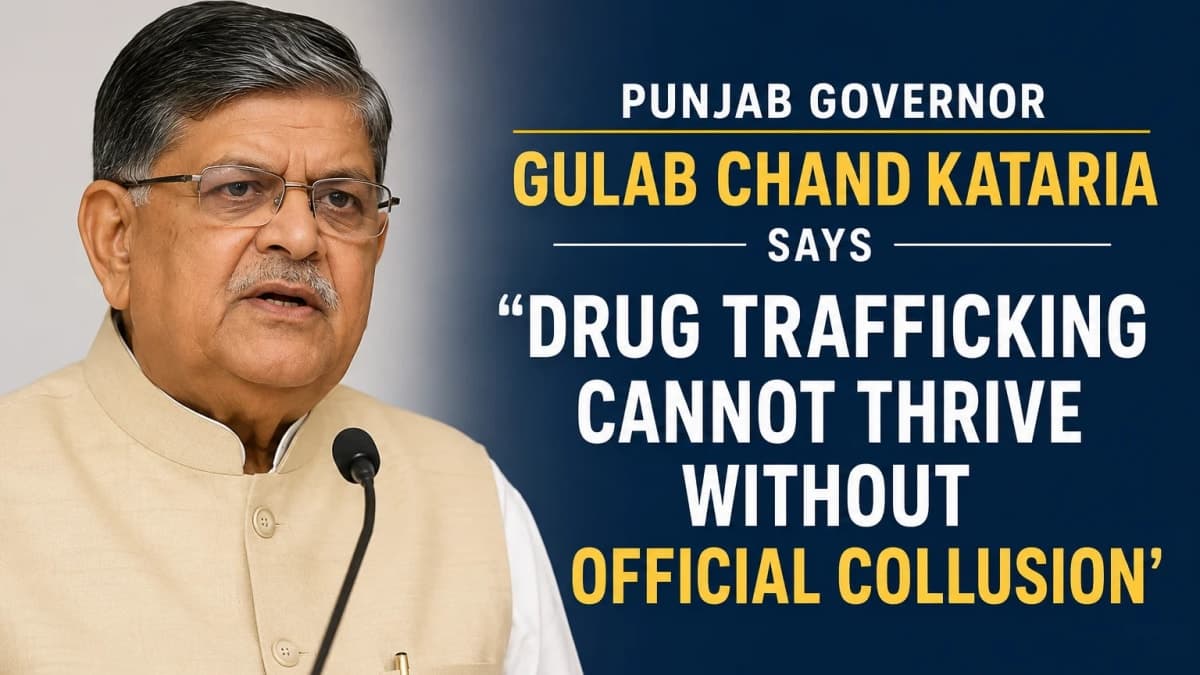
Punjab Governor Gulab Chand Kataria has made a strong statement on the state's long-standing battle against narcotics, asserting that drug trafficking cannot continue on a large scale without the connivance of certain elements within the police and the administration.
The remarks come amid continuing concerns over drug abuse and illegal trafficking networks in Punjab, where governments and law enforcement agencies have repeatedly pledged to curb the problem through stricter enforcement and coordinated action.
The Governor's comments have brought renewed focus to the importance of institutional accountability alongside conventional anti-drug operations.
Governor Highlights Need for Institutional Responsibility
Speaking on the issue of drug trafficking, the Governor emphasized that organized illegal networks cannot function effectively without support or negligence from individuals responsible for enforcing the law.
His remarks underline the view that tackling narcotics requires more than arrests of traffickers. It also demands strict oversight of institutions tasked with preventing illegal activities and ensuring transparency in law enforcement.
The statement places accountability at the center of the broader strategy against organized drug networks.
Punjab's Long Battle Against Drugs
Punjab has faced challenges related to drug abuse and narcotics trafficking for many years. Successive governments have introduced multiple initiatives aimed at reducing drug supply, strengthening law enforcement, and expanding rehabilitation services for individuals struggling with addiction.
Authorities have conducted enforcement drives, increased surveillance, enhanced border security coordination, and promoted awareness campaigns to address both the supply and demand sides of the problem.
Despite these efforts, concerns over drug availability and trafficking continue to remain a major public policy issue.
Why the Issue Matters
Drug trafficking extends beyond criminal activity and has broader social, economic, and public health consequences.
Illegal narcotics can contribute to addiction, family distress, unemployment, healthcare burdens, and organized crime. Communities affected by substance abuse often face long-term social and economic challenges.
Ensuring integrity within enforcement agencies is therefore viewed as an important component of any comprehensive anti-drug strategy.
Focus on Transparency and Governance
The Governor's statement also highlights the broader issue of governance and institutional accountability.
Experts frequently argue that combating organized crime requires a combination of intelligence gathering, inter-agency coordination, judicial efficiency, border management, financial investigations, and strict action against corruption wherever it is identified.
Transparent internal monitoring and independent oversight mechanisms are often considered essential for maintaining public confidence in law enforcement institutions.
Balanced Analysis
The Governor's remarks have intensified public discussion about accountability in addressing Punjab's drug problem. His statement emphasizes that enforcement efforts must extend beyond targeting traffickers to ensuring integrity within institutions responsible for implementing the law.
At the same time, allegations regarding official collusion require thorough investigation supported by credible evidence and due legal process. Sustainable progress against organized crime depends on fair enforcement, institutional reforms, transparency, and consistent prosecution of wrongdoing wherever it is established.
Balancing effective law enforcement with accountability and procedural fairness remains crucial for maintaining public trust.
Wider Significance
The comments are likely to contribute to broader discussions on strengthening governance, improving institutional oversight, and reinforcing anti-corruption mechanisms within public administration.
As governments continue investing in anti-drug initiatives, policymakers may increasingly focus on enhancing internal accountability systems while improving coordination among law enforcement agencies.
Public confidence in anti-drug campaigns often depends not only on enforcement outcomes but also on the credibility and transparency of the institutions carrying out those efforts.
Conclusion
Punjab Governor Gulab Chand Kataria's remarks have once again drawn attention to the complex challenges involved in combating drug trafficking. By stressing the importance of accountability within the police and administrative machinery, he has highlighted an aspect of the issue that extends beyond traditional enforcement.
As Punjab continues its efforts to address narcotics-related challenges, effective policing, transparent governance, institutional integrity, and sustained rehabilitation initiatives are expected to remain central components of a comprehensive long-term strategy.