Rahul Gandhi Steps Up Attack Over Bihar Student Protests
New Delhi/Patna, August 27, 2026: Leader of Opposition in the Lok Sabha Rahul Gandhi has intensified his criticism of the BJP-led Bihar government as protests by students and government-job aspirants continue over recruitment examinations and related demands.
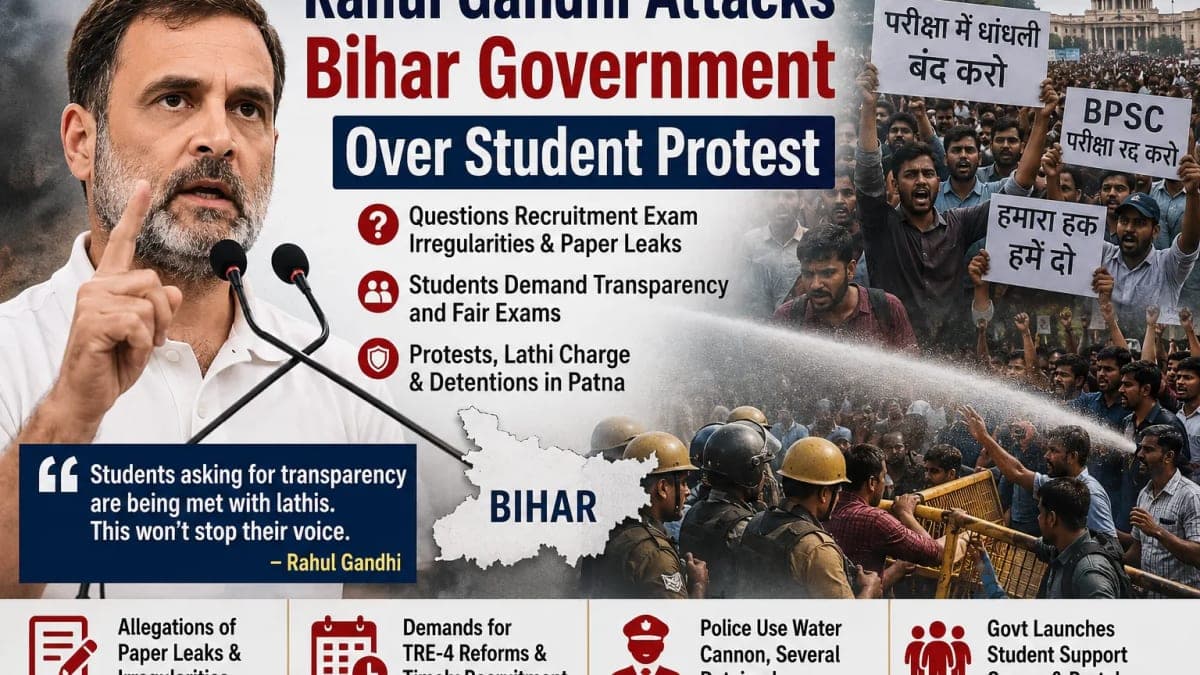
Gandhi questioned why concerns about alleged irregularities in recruitment examinations and allegations of paper leaks had not been adequately addressed. He argued that young people demanding transparency and fairness should receive answers from the authorities rather than face coercive police measures.
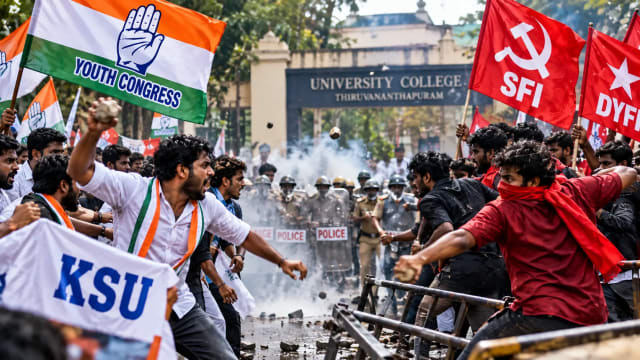
His comments came after fresh tensions in Patna, where hundreds of protesters marched from Gandhi Maidan towards Chief Minister Samrat Choudhary's residence on August 25. Protesters broke through barricades, leading to confrontations with security personnel. Police used water cannons, and several demonstrators were detained.
What Rahul Gandhi Said About the Government
In his criticism, Gandhi focused on three broad issues: alleged irregularities in recruitment examinations, allegations of paper leaks, and continuing concerns over delays and transparency in recruitment.
He accused the state government of relying on police action instead of addressing the questions being raised by students. Gandhi also alleged that protesters in Siwan had faced firing involving an AK-47. This was an allegation made by Gandhi and should not be presented as an independently established fact without further official verification.
His larger argument was that the use of force would not end demands for accountability from Bihar's students and job aspirants.
Why Are Students Protesting in Bihar?
The current agitation involves several recruitment and examination-related issues rather than a single dispute.
One of the central concerns is the proposed fourth Teacher Recruitment Examination, or TRE-4. Protesters have sought changes including a single-stage examination, removal of negative marking and stronger domicile-based preference in recruitment.
Students have also continued to challenge the handling of the 70th BPSC preliminary examination, with some demanding its cancellation over alleged administrative irregularities and a paper leak.
The Bihar Public Service Commission has rejected allegations surrounding the examination and has defended aspects of its recruitment and evaluation processes. On negative marking, the commission has argued that the system discourages candidates from simply guessing answers.
That distinction is important: protesters and opposition politicians have raised serious allegations, but several of those claims remain disputed by the commission and authorities.
Patna Protest Brings Recruitment Dispute Back Into Focus
The latest confrontation followed a continuing sit-in at Gardanibagh, where multiple student organisations and groups have been raising demands concerning competitive examinations and public-sector recruitment.
During the August 25 march, demonstrators moved towards restricted areas after breaking through barricades. Police deployed water cannons, while reports indicated that several protesters were detained and some police personnel were injured during the confrontation.
The episode quickly became political, giving opposition parties an opportunity to question the government's handling of youth concerns.
Government Announces Student Grievance Initiative
Alongside the controversy, the Bihar government has announced measures aimed at creating a formal channel for student complaints.
Chief Minister Samrat Choudhary announced a monthly Vidyarthi Sahyog Shivir, or Student Support Camp, intended to allow students to raise complaints and suggestions before officials. A student-support portal and helpline were also announced as part of the initiative.
The government has presented these measures as a way to ensure grievances can be addressed in a structured and time-bound manner.
Whether they ease the current confrontation will depend largely on how effectively specific examination and recruitment demands are handled.
Why the Bihar Student Protest Matters
The dispute extends beyond the technical rules of individual examinations.
Government recruitment carries enormous significance for young job seekers, particularly in states where public-sector examinations attract very large numbers of applicants. Delays, changes in examination formats or doubts about transparency can therefore become politically sensitive very quickly.
The protests also highlight the importance of institutional credibility. Competitive examinations depend on candidates believing that the rules are predictable, evaluation is fair and vacancies are filled through transparent procedures.
Even allegations of leaks or irregularities can damage that confidence if authorities fail to communicate clearly and investigate complaints convincingly.
Political Stakes Rise for Bihar Government
Rahul Gandhi's intervention has pushed the controversy further into national politics.
For the opposition, the protests provide an opportunity to connect unemployment, recruitment delays and examination transparency with a broader argument about the government's treatment of young people.
For the Bihar government, however, the challenge is more complex. Authorities have a responsibility to maintain public order when demonstrations cross barricades or enter restricted areas. At the same time, excessive or disproportionate force can deepen public anger and shift attention away from the original administrative dispute.
That makes both dialogue and credible enforcement important.
Balanced Analysis: Accountability and Public Order Both Matter
The political debate surrounding the protests contains two separate questions that should not be blurred together.
The first is whether recruitment examinations have been administered transparently and whether allegations of irregularities deserve additional investigation or corrective action. Those questions require evidence, institutional scrutiny and clear responses from the BPSC and the government.
The second concerns the management of protests. Students have the right to raise grievances and peacefully demonstrate, while the administration has a responsibility to maintain security and prevent violence or unlawful entry into restricted areas.
Political leaders may interpret police actions differently, but allegations should be distinguished from verified facts.
The most durable solution is therefore unlikely to come from political accusations alone. Transparent examination procedures, timely recruitment, credible investigation of complaints and structured dialogue between officials and candidates would address the underlying causes of the agitation.
What Happens Next?
Attention will now be focused on whether the Bihar government and BPSC make further concessions or clarifications concerning TRE-4, recruitment rules and other examination-related demands.
The effectiveness of the newly announced student grievance mechanisms will also be closely watched.
For protesters, the central demand remains accountability. For the government, the challenge is to demonstrate that grievances can be addressed without allowing public demonstrations to spiral into confrontation.
As Rahul Gandhi and other political leaders amplify the issue, Bihar's recruitment dispute is increasingly becoming a broader debate about jobs, examination credibility, youth expectations and government accountability.
This article is based on reporting published by The Economic Times.