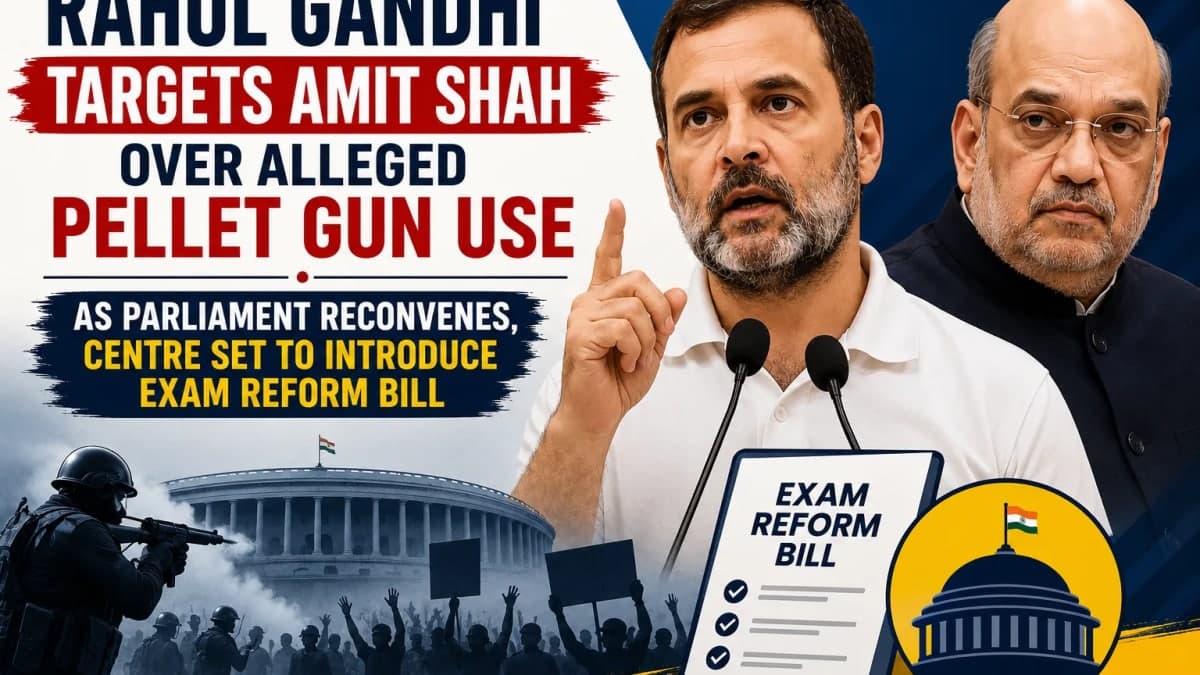
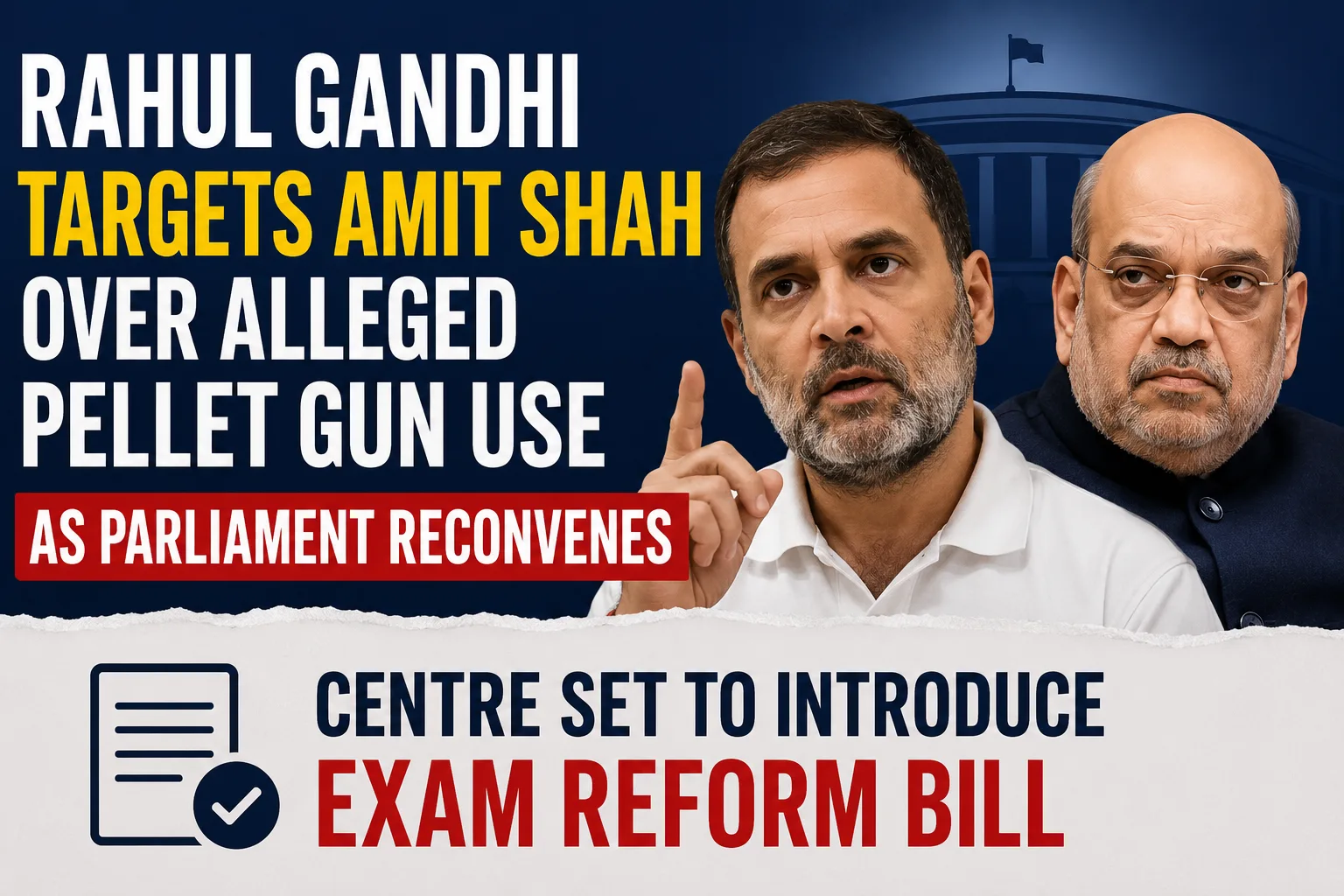
Rahul Gandhi Sharpens Attack on Amit Shah as Parliament Session Resumes
The resumption of Parliament's Monsoon Session is expected to witness fresh political confrontation, with Congress leader Rahul Gandhi raising questions over the police action during the CJP-led march linked to the NEET paper leak protests.
Rahul Gandhi has accused the government of failing to adequately explain the force used against demonstrators during the July 20 protest in New Delhi. In a letter addressed to Union Home Minister Amit Shah, he sought accountability over allegations that pellet guns and other forms of force were used against student protesters.
Rahul Gandhi's Main Allegations
Rahul Gandhi has urged the Home Ministry to clarify:
Whether the use of pellet guns or other force was authorised during the protest.
Who approved the deployment of personnel in plain clothes during the police action.
Whether accountability will be fixed if excessive force was used against peaceful demonstrators.
He argued that peaceful protest is a democratic right and called for greater transparency regarding the events surrounding the CJP march.
Government Preparing Anti-Paper Leak Bill
Alongside the political confrontation, the government is expected to move the Public Examinations (Prevention of Unfair Means) Amendment Bill, 2026 in the Lok Sabha.
According to reports, the proposed legislation seeks to significantly strengthen the legal framework against examination fraud by increasing prison terms and financial penalties for individuals, organised groups, and service providers found guilty of paper leak offences. The proposed amendments are intended to reinforce confidence in competitive examinations following widespread concerns over recent leaks.
Background: From Student Protest to National Political Issue
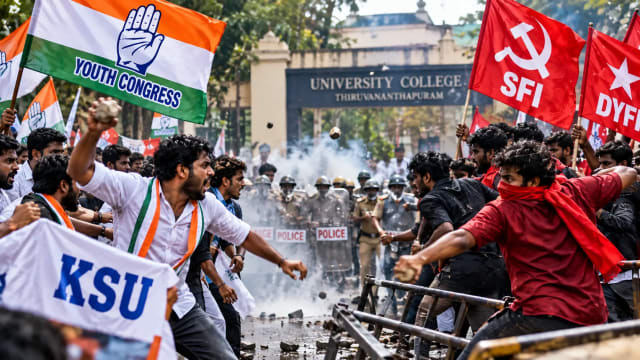
The controversy began after allegations surrounding the NEET paper leak triggered protests across the country. Student groups and the CJP organised demonstrations demanding accountability, examination reforms, and stronger safeguards against future leaks.
The July 20 "Sansad Chalo" march near Parliament became a turning point after clashes between protesters and security personnel. Opposition parties have continued to question the handling of the protest, while the government has defended its broader commitment to examination reforms.
Police Response
Delhi Police has denied using pellet guns during the protest. Reports also indicate that the CRPF, under whose jurisdiction the Rapid Action Force operates, has not publicly confirmed the allegations regarding pellet gun deployment. The differing accounts have become a major point of contention between the Opposition and the government.
Why the Issue Matters
The debate extends beyond a single protest. It touches on two significant national concerns:
The credibility and security of India's public examination system.
The balance between maintaining law and order and protecting the democratic right to peaceful protest.
As Parliament reconvenes, both examination reforms and the handling of the student demonstrations are expected to dominate discussions.
Balanced Analysis
The Opposition argues that questions surrounding the police response deserve an independent explanation and greater accountability, particularly if students were injured during the demonstrations. The government, on the other hand, is focusing on legislative reforms aimed at preventing future examination leaks while maintaining that law enforcement acted within its responsibilities.
With both sides expected to press their positions inside Parliament, the coming debates are likely to shape not only education policy but also the broader political narrative around public protests and institutional accountability.