Rahul Gandhi Ends Dharna After FIR Is Registered
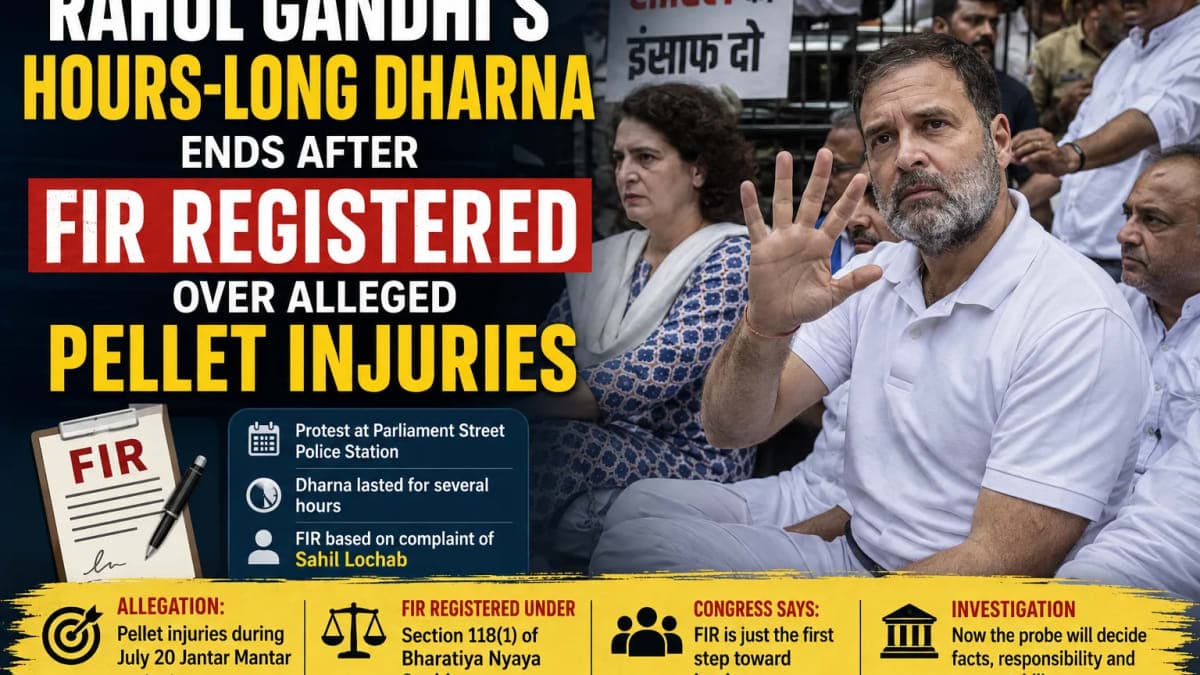
A prolonged protest led by Congress leader Rahul Gandhi at Parliament Street police station ended after Delhi Police registered an FIR based on a complaint concerning alleged pellet injuries suffered by a young protester.
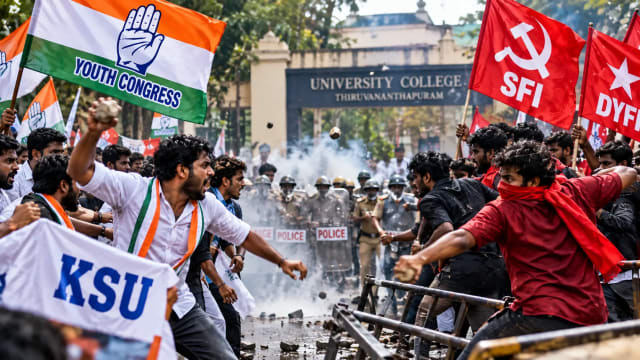
The case relates to Sahil Lochab, a 19-year-old student who alleged that he was struck by pellets during a protest held at Jantar Mantar on July 20. Reports say Lochab suffered injuries to his eye and other parts of his body and subsequently underwent medical treatment.
Gandhi had gone to the police seeking formal registration of the complaint. After the issue remained unresolved, he began a dharna and maintained that he would continue pressing for an FIR.
The standoff eventually ended when police registered the case. Reports differ over the precise duration of the demonstration, describing it variously as lasting more than five, six or seven hours.
What Happened to Sahil Lochab?
The controversy dates back to the July 20 demonstration at Jantar Mantar.
Lochab alleged that he was hit by metal pellets during the protest and suffered serious injuries, including damage to his eye. According to reports, he and his family had sought registration of a police case before Gandhi's intervention.
The allegation that pellets were fired during crowd-control operations has subsequently become a politically sensitive issue, raising questions about what force was used, who was responsible and whether established procedures were followed.
Those questions remain matters for investigation. Registration of an FIR formally records the allegations and allows them to be investigated; it does not itself establish criminal responsibility.
Senior Congress Leaders Join the Protest
The confrontation attracted senior Congress figures as the day progressed.
Priyanka Gandhi Vadra joined Rahul Gandhi, while other senior Congress leaders and party workers were also present around the police station. Discussions were held with senior police officials before the FIR was ultimately registered.
The gathering turned what began as an individual complaint into a significant political confrontation over accountability and the treatment of protesters.
What Does the FIR Say?
According to The Tribune, the FIR was registered under Section 118(1) of the Bharatiya Nyaya Sanhita, a provision concerning voluntarily causing hurt or grievous hurt through dangerous weapons or means.
India Today reported that the FIR was registered against an unknown person on the basis of Lochab's complaint.
The investigation will therefore be important in determining the circumstances in which the injuries occurred and whether any individual or agency bears legal responsibility.
Rahul Gandhi Calls FIR a First Step
Following the registration of the case, Gandhi described the development as only the beginning of the process of securing justice.
Congress leaders argued that the FIR demonstrated the impact of sustained pressure and questioned why Lochab's complaint had not resulted in a case earlier.
For the Congress, the episode is likely to become part of a broader political argument about civil liberties, policing and citizens' ability to seek accountability from state institutions.
Political Criticism of Rahul Gandhi
The episode has also generated criticism from the BJP.
BJP leader Ravi Shankar Prasad accused Gandhi of pursuing confrontational politics and argued that the matter was already subject to investigation. His criticism reflected the competing political narratives surrounding the protest: Congress portrayed the dharna as necessary to secure action for an injured citizen, while BJP criticism questioned the manner in which Gandhi sought to pressure the police.
These competing claims should be distinguished from the investigation itself, which will ultimately have to establish the facts surrounding the alleged pellet firing.
Why the Case Matters
The significance of the controversy extends beyond a single FIR.
At its core is a question about how authorities respond when demonstrators allege serious injuries during crowd-control operations. Any use of potentially dangerous force at a public demonstration inevitably raises questions about necessity, proportionality and accountability.
The episode also highlights the political influence that can accompany high-profile intervention. Gandhi's involvement brought national attention to a complaint that Lochab and his family said they had been pursuing for weeks.
At the same time, political pressure cannot substitute for an impartial investigation. Determining exactly how Lochab was injured, what equipment was used and who—if anyone—acted unlawfully requires evidence rather than political assertions from either side.
Balanced Analysis
The registration of the FIR is significant because it creates a formal route for investigating Lochab's allegations. For Congress, the outcome supports its argument that sustained pressure was necessary to get the complaint formally recorded.
However, an FIR should not be confused with a finding of guilt. The allegation of pellet use, the circumstances surrounding the injuries and responsibility for them still require investigation.
The wider concern is institutional. Citizens should ideally be able to have legitimate complaints handled according to established law without requiring intervention from nationally prominent politicians. At the same time, political leaders have the right to question authorities and highlight cases they believe demonstrate failures of accountability.
The credibility of the process will therefore depend less on which political side claims victory and more on whether the investigation establishes the facts transparently and fairly.
This article is based on reporting published by TOI.