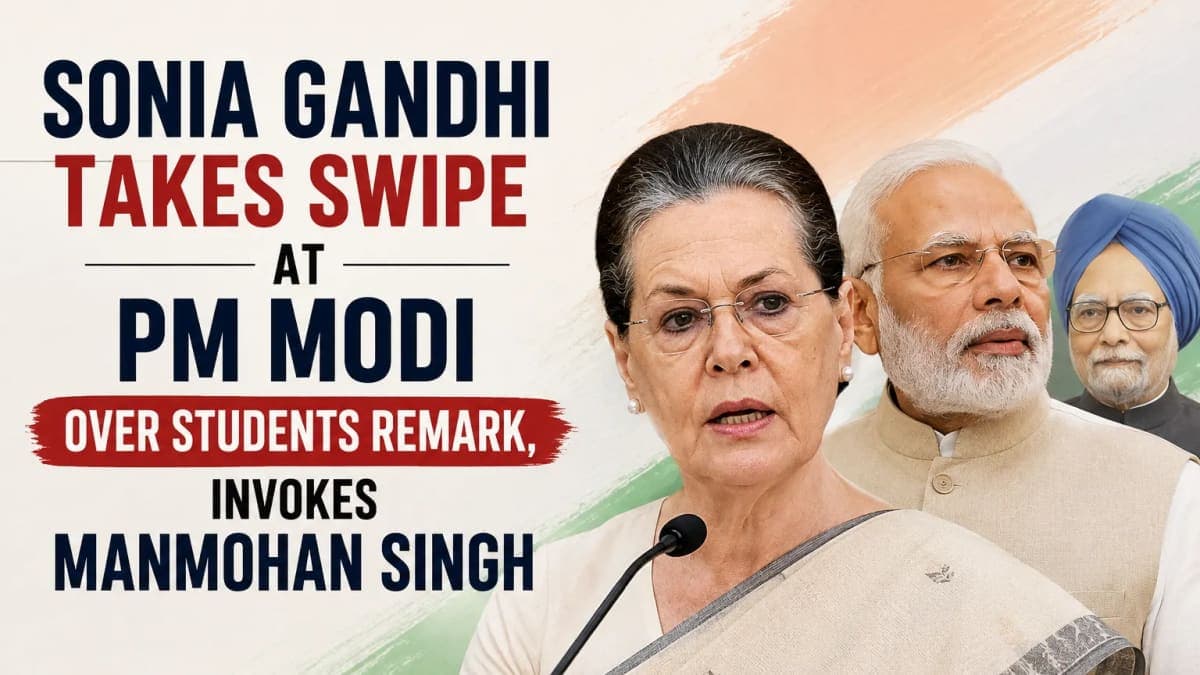
New Delhi: Senior Congress leader Sonia Gandhi has targeted Prime Minister Narendra Modi in a sharply worded political intervention, using his recent comments about forgiving students to revive the debate over allegations made against former Prime Minister Dr Manmohan Singh.
Gandhi’s remarks connect two politically distinct episodes: the recent controversy involving protesting students and an older dispute surrounding coal block allocations during the United Progressive Alliance (UPA) government.
Referring to Modi’s comments about forgiving students who had allegedly made offensive remarks against him, Gandhi suggested that the Prime Minister could also reflect on the political accusations and criticism directed at Manmohan Singh in the past.
Her intervention comes amid renewed political discussion over Singh following a recent Supreme Court development connected to the coal block allocation case.
Manmohan Singh Back in Political Focus
The coal allocation controversy was one of the most significant political issues during the final years of the UPA government.
Manmohan Singh, who served as prime minister from 2004 to 2014, faced intense political criticism during that period as the opposition questioned the government's handling of coal block allocations and demanded accountability.
Congress, however, consistently defended Singh's personal integrity and argued that political opponents were unfairly attempting to associate him personally with allegations surrounding decisions taken during the UPA era.
Recent legal developments have now given Congress an opportunity to revisit that argument and defend the former prime minister's record.
What Did Sonia Gandhi Say About PM Modi?
Sonia Gandhi used Modi's reported comments about forgiving students as the basis for a political jab.
Her argument was essentially that if the Prime Minister was willing to speak about forgiveness in the context of students who had criticised or attacked him, he could also reconsider the nature of the political campaign that had been conducted against Manmohan Singh.
The remark is significant because it attempts to turn Modi's own language of forgiveness into a broader question about political accountability and rhetoric.
Rather than treating the student controversy and the Manmohan Singh issue separately, Gandhi brought them together to make a larger political point about how political opponents are treated.
Student Protests Add Another Political Dimension
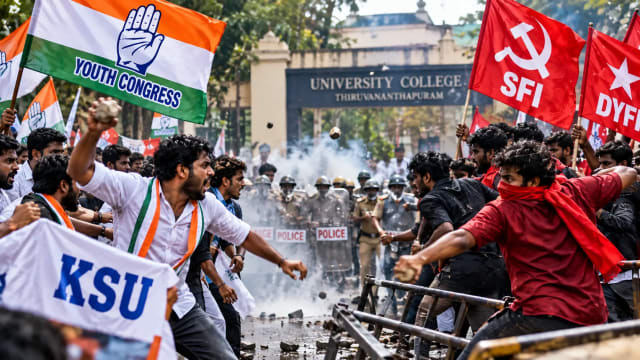
The controversy also comes against the backdrop of student demonstrations and growing political exchanges between the government and opposition.
Modi's remarks about forgiving students drew responses from Congress leaders, who argued that the focus should instead remain on the grievances raised by students and the government's responsibility to address them.
Rahul Gandhi has also criticised the government's approach, arguing that distressed students require answers and accountability rather than forgiveness from political leaders.
Sonia Gandhi's latest comments broaden that argument by connecting the current controversy with an older chapter of Congress-BJP political rivalry.
Why Manmohan Singh's Legacy Matters to Congress
Manmohan Singh remains an important figure in Congress's political narrative.
A respected economist before entering the country's highest political offices, Singh served as finance minister during India's landmark economic reforms in the early 1990s before becoming prime minister in 2004.
Congress frequently highlights his economic credentials, restrained political style and reputation for personal integrity.
However, Singh's second term as prime minister was overshadowed by controversies involving his government, including questions over coal block allocations.
The BJP, then in opposition, used these controversies to challenge the UPA government's record on corruption, transparency and governance.
As a result, any major legal development connected to those cases inevitably carries political significance beyond the courtroom.
Legal Findings and Political Accountability Are Different
The renewed debate also requires an important distinction between legal proceedings and political arguments.
Courts determine cases according to the evidence, applicable law and specific legal questions before them. Political accountability, by contrast, can involve wider debates over government decisions, administrative processes and leadership responsibility.
Congress may therefore interpret recent legal developments as supporting its longstanding defence of Manmohan Singh, while political opponents can still argue over the broader record of the UPA government.
A judicial outcome in a particular proceeding does not automatically resolve every political disagreement associated with the period.
Why Sonia Gandhi's Statement Matters
Sonia Gandhi's remarks demonstrate how political controversies from the UPA era continue to influence present-day political battles.
By connecting Modi's comments about students with the treatment of Manmohan Singh, Congress is attempting to combine a current political controversy with its defence of the former prime minister's legacy.
The strategy also allows the party to shift attention toward the language used in political campaigns and raise questions about whether accusations made during highly charged electoral periods remain justified when viewed years later.
For the BJP, however, criticism of the UPA years historically extended beyond any one individual and focused on the overall functioning, transparency and accountability of the government.
The latest exchange is therefore unlikely to settle the debate. Instead, it highlights how past governance controversies continue to shape the political narratives of both India's ruling party and the principal opposition.
Balanced Analysis
Sonia Gandhi's statement can be viewed as part of Congress's broader effort to defend Manmohan Singh's political legacy while simultaneously challenging the Modi government over current student-related controversies.
The reference to forgiveness gives the criticism rhetorical force, but the political and legal dimensions should be considered separately.
Congress can legitimately point to favourable legal developments when defending Singh, while critics may continue debating the administrative and political decisions made during the UPA period.
Ultimately, the episode demonstrates how legal developments involving historical controversies can quickly acquire new political meaning, particularly when they involve former prime ministers and issues that once played a major role in national elections.
This article is based on reporting published by Moneycontrol News.