Supreme Court Orders Independent Probe Into Protest Violence
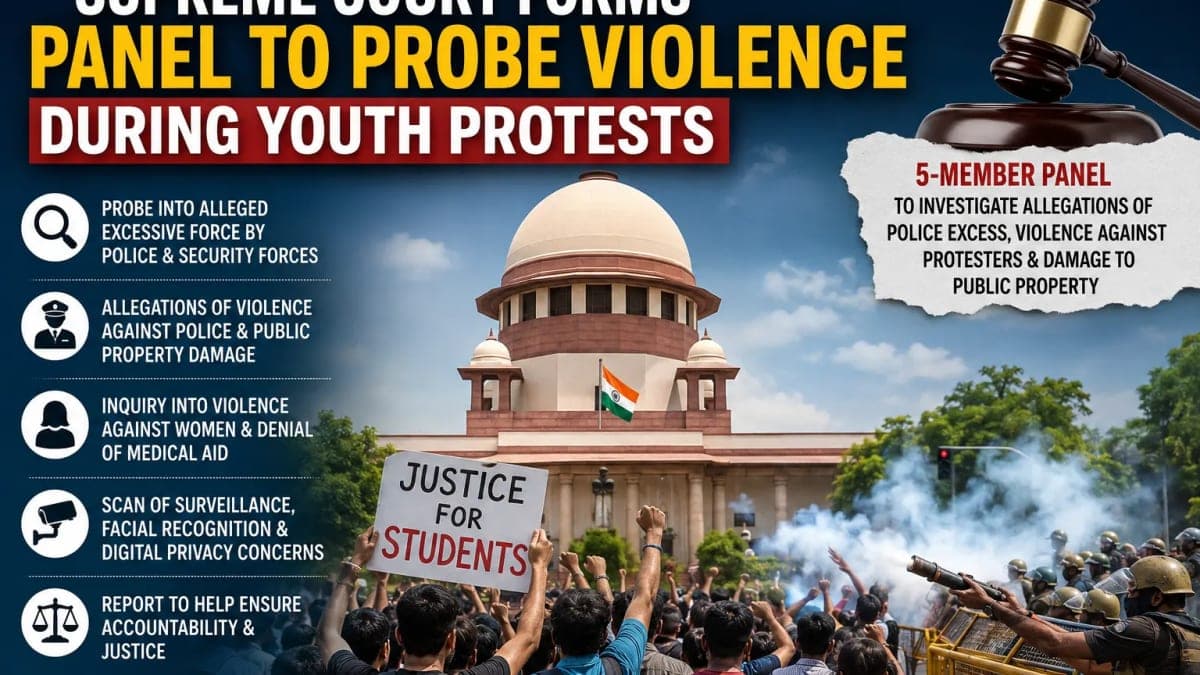
New Delhi, August 21, 2026: The Supreme Court has taken a significant step toward establishing accountability over the violence that accompanied recent youth protests, setting up an independent five-member committee to investigate allegations against both security forces and demonstrators.
The committee is headed by former Supreme Court judge Justice R. Subhash Reddy. Its other members are former Punjab and Haryana High Court Chief Justice Ravi Shankar Jha, former Delhi High Court judge Justice Shalinder Kaur, former CBI Director Rishi Kumar Shukla and retired Meghalaya Director General of Police L.R. Bishnoi.
The panel has been given a broad mandate covering allegations that police, paramilitary forces and other security personnel used excessive force during demonstrations. It will also examine accusations of violence against police officers and damage to public property, allowing the inquiry to consider the conduct of both sides rather than focusing exclusively on the authorities.
What Triggered the Youth Protests?
The demonstrations grew out of anger over the leak of question papers for a national medical entrance examination. The controversy affected millions of aspiring students and developed into a wider crisis over the credibility of India's examination system.
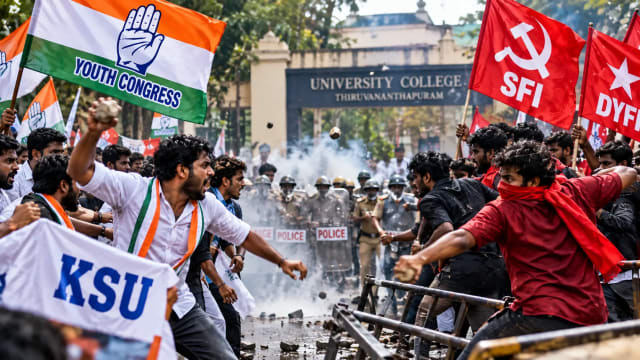
Large demonstrations took place in New Delhi and spread to other cities. Tensions escalated when protesters attempting to march towards Parliament encountered police barricades, with security forces using measures including tear gas and baton charges. The prolonged agitation ultimately contributed to the resignation of Education Minister Dharmendra Pradhan and pushed examination reforms higher on the government's agenda.
Allegations of Excessive Police Force Under Scrutiny
One of the committee's central responsibilities will be examining claims that crowd-control measures went beyond what was necessary.
Allegations raised during the protests include the use of pellet guns, electric batons, lathi charges and tear gas. The panel will also investigate allegations concerning violence, harassment or sexual misconduct against women protesters, along with questions about whether injured demonstrators received adequate medical assistance.
The controversy intensified after videos showing confrontations between demonstrators and security personnel circulated online. In a separate incident in Bihar, authorities suspended a policeman after he fired an AK-47 into the air while dispersing student protesters. Police officials acknowledged that the weapon had been used improperly.
Violence Against Police Will Also Be Examined
The inquiry will not be limited to allegations against law-enforcement agencies.
Authorities have maintained that sections of the protests became violent and that security personnel were injured during the unrest. The committee will therefore also investigate allegations of attacks on police officers, stone-pelting and destruction of public property.
This two-sided mandate is important because it gives the committee responsibility for determining whether force used by authorities was proportionate while also assessing whether individual protesters crossed the boundary between peaceful demonstration and criminal violence.
Surveillance and Privacy Emerge as Major Issues
The case has also expanded beyond physical clashes into questions about technology, surveillance and constitutional rights.
Earlier, the Supreme Court directed authorities to preserve surveillance material connected with the protests, including footage from CCTV cameras, drones and body cameras. It also ordered preservation of protesters’ personal and digital data and restricted coercive action while allegations were being examined.
Questions involving facial-recognition technology, surveillance, privacy and protections under Article 21 of the Constitution are ultimately matters that the Supreme Court itself is expected to consider rather than leave entirely to the enquiry committee.
Why the Supreme Court's Intervention Matters
The creation of an independent panel is significant because the controversy involves two fundamental democratic concerns: the right of citizens to protest peacefully and the responsibility of the state to maintain public order.
Police are legally responsible for controlling situations that become violent and protecting people and property. At the same time, crowd-control powers are expected to be exercised proportionately, particularly when demonstrations involve students and other young people exercising constitutional freedoms.
An independent inquiry can therefore help separate verified facts from competing political claims. Its findings may clarify whether particular police actions were justified, whether protesters committed serious offences, and whether institutional safeguards need strengthening.
Possible Impact on Cases Against Student Protesters
The legal consequences could extend beyond the inquiry itself.
The Supreme Court has indicated that it may consider using its extraordinary powers under Article 142 to address FIRs filed against student protesters, while distinguishing ordinary students from individuals with serious criminal backgrounds. The court has highlighted the potentially lasting consequences criminal proceedings can have on young people's education and future opportunities.
That issue makes the proceedings especially consequential: the eventual outcome could influence not only accountability for the clashes but also how authorities handle criminal cases arising from large student demonstrations.
Balanced Analysis
The committee faces a difficult task because allegations surrounding mass protests often involve sharply conflicting versions of the same events.
Student groups and petitioners have alleged disproportionate police action, while authorities have pointed to injuries suffered by security personnel and violent conduct by some demonstrators. A credible investigation will therefore require examination of video footage, medical evidence, police records, witness testimony and the circumstances surrounding individual confrontations.
The inquiry's broader importance lies in establishing where legitimate crowd control ends and excessive state force begins—and, equally, where constitutionally protected protest turns into punishable violence.
If the committee can establish those distinctions transparently, its work could provide guidance well beyond this particular controversy, especially as technology-driven surveillance increasingly becomes part of policing major demonstrations.
Conclusion
The Supreme Court's decision to establish a five-member independent committee moves the controversy from competing allegations toward a formal process of evidence-based investigation.
For the students involved, the findings could affect pending criminal proceedings, compensation and accountability for alleged abuse. For law-enforcement agencies, the inquiry could clarify standards governing the proportionate use of force during mass demonstrations.
More broadly, the case could become an important reference point in India's continuing debate over peaceful protest, public order, police accountability, privacy and the constitutional protections available to citizens participating in demonstrations.
This article is based on reporting published by Reuters.