Tejashwi Yadav Detained During RJD's Lok Bhavan March
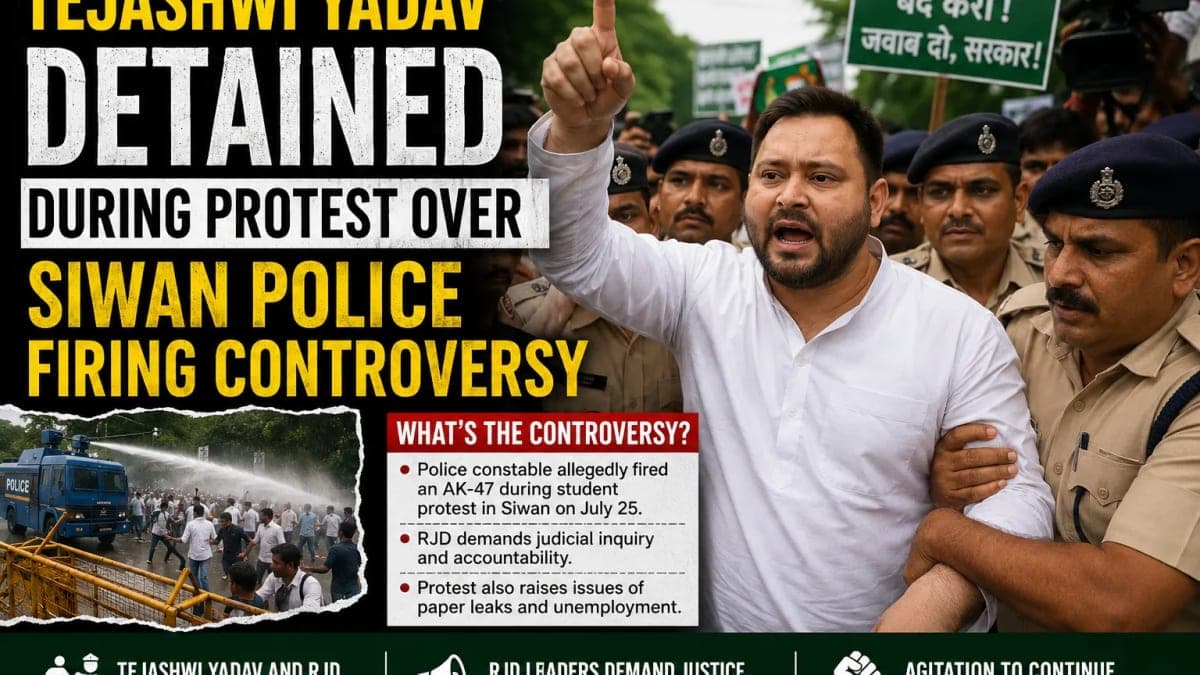
Political tensions intensified in Bihar on Wednesday as Tejashwi Yadav was detained while leading RJD leaders, workers and supporters on a protest march in Patna.
The march began from JP Golambar and was headed towards Lok Bhavan, where RJD representatives intended to raise their concerns over issues affecting students and youth. Police stopped the protesters during the demonstration and used water cannons as the crowd attempted to move forward. Yadav was subsequently taken away in a police vehicle near Patna's Income Tax office.
The protest centred heavily on the controversy surrounding police action during a student demonstration in Siwan in July, where a police constable was accused of firing an AK-47 rifle. The episode has since developed into a major political dispute over accountability and the appropriate use of force against protesters.
What Happened in the Siwan Firing Controversy?
The controversy dates back to a student protest in Siwan on July 25. A police constable was accused of firing an AK-47 during the unrest, prompting questions about why such a weapon was used during a demonstration involving students. The constable was subsequently suspended.
Tejashwi Yadav has argued that action against an individual police officer does not fully answer the central question of who authorised the firing. He has demanded an impartial or judicial investigation to establish responsibility at higher levels.
The Bihar government, however, has defended the circumstances surrounding the constable's actions. In a submission reported in connection with the matter, the state maintained that the policeman fired after becoming trapped and surrounded by protesters, presenting the firing as an act taken under threatening circumstances.
That distinction is important: while the opposition is focusing on accountability and proportionality of police force, the government's position stresses the circumstances confronting personnel on the ground.
Water Cannons Used During Patna Protest
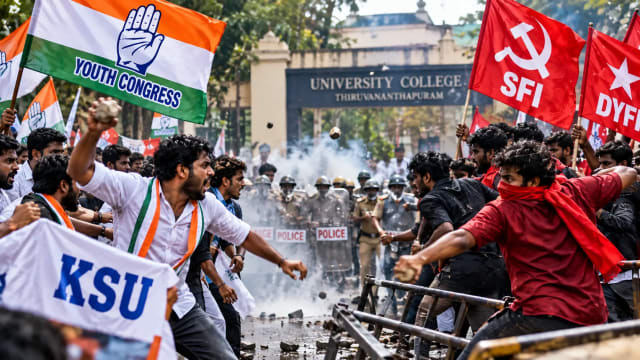
Wednesday's protest itself became confrontational as police attempted to prevent demonstrators from advancing. Water cannons were deployed, and Tejashwi Yadav and other RJD participants were detained.
Yadav maintained that the agitation would continue until the concerns of students were addressed. He linked the Siwan controversy with recurring allegations of examination paper leaks, unemployment and demands for greater transparency in recruitment and examination systems.
For the RJD, therefore, the march was designed to expand the dispute beyond a single policing incident and position it within a wider debate about the future of Bihar's students and job-seeking youth.
Opposition Demands Accountability
The RJD has repeatedly sought an investigation into who authorised the firing in Siwan. Earlier this month, Yadav met Bihar DGP Vinay Kumar and submitted a memorandum demanding an impartial inquiry into the episode. He argued that disciplinary action against lower-ranking personnel alone would not establish institutional responsibility.
The August 19 march represented an escalation of that campaign by taking the issue directly onto the streets of Patna.
The political argument now has two separate dimensions: whether the force used during the original Siwan protest was justified under the circumstances, and whether the government has provided sufficient transparency about the chain of command and subsequent investigation.
Why This Protest Matters
The controversy carries significance beyond the detention of a prominent opposition leader.
Student examinations, recruitment processes and employment opportunities have become politically sensitive subjects in Bihar. By combining the Siwan firing controversy with allegations of paper leaks and unemployment, the RJD is attempting to turn several youth-related grievances into a broader political campaign.
At the same time, the government and police face the challenge of maintaining public order while demonstrating that force used during demonstrations is lawful, necessary and proportionate.
The detention of Yadav is also likely to keep the controversy politically active. Instead of ending with disciplinary action against the constable involved in the Siwan episode, the dispute has developed into a wider confrontation between the opposition and the Bihar government.
Balanced Analysis
From the opposition's perspective, the alleged firing of an assault rifle during a student demonstration raises legitimate questions about police procedures, accountability and proportionality. A transparent investigation could help establish exactly what happened, whether established protocols were followed and whether responsibility extends beyond the personnel directly involved.
The government's account, however, introduces another consideration: police officers can encounter rapidly deteriorating situations during violent or chaotic demonstrations. Determining whether the firing was an unjustified escalation or a response to an immediate threat requires evidence about the circumstances at the scene rather than political claims alone.
Wednesday's events show that the Siwan controversy has now become part of a larger political battle over students, examinations, jobs and governance in Bihar. How authorities respond to demands for greater scrutiny could determine whether the issue gradually subsides or continues to fuel opposition protests.
This article is based on reporting published by NDTV.