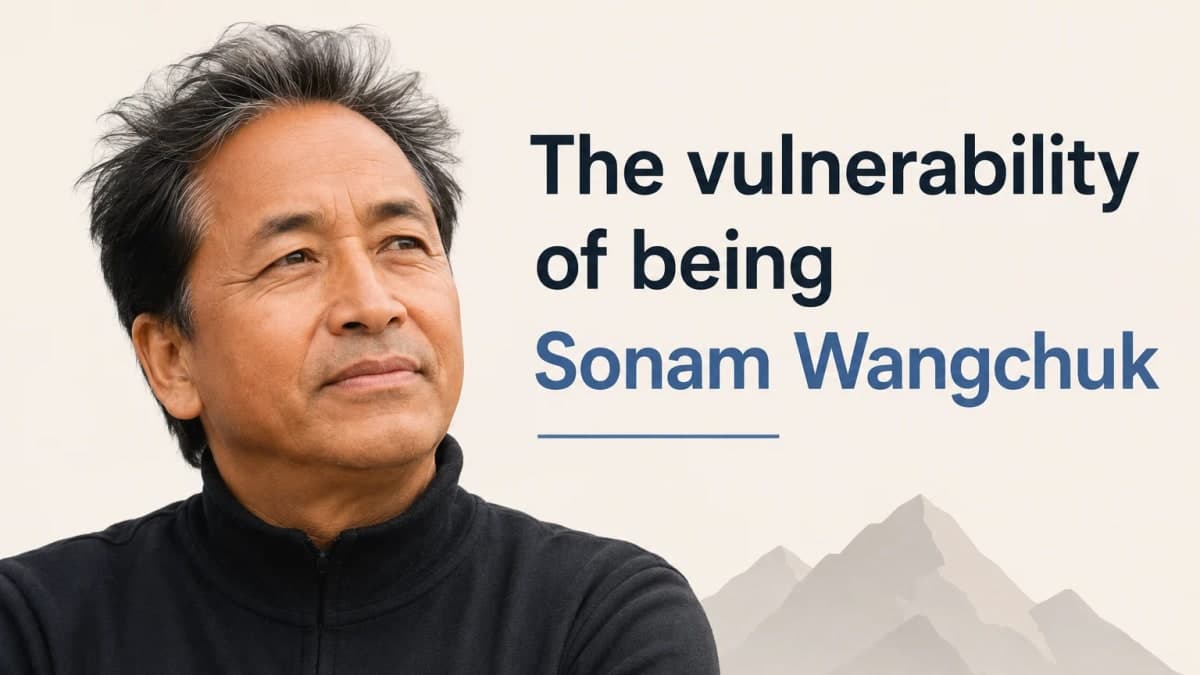
Sonam Wangchuk's journey from engineer and education innovator to one of India's most recognized public advocates has brought both admiration and significant personal challenges. While his work has earned national and international attention, his growing public profile has also exposed him to criticism, political debates, and heightened public expectations.
Widely known for promoting experiential learning, sustainable technologies, and environmentally conscious innovation, Wangchuk has consistently used his platform to raise awareness about issues affecting the Himalayan region. His advocacy has extended beyond education to include discussions on climate change, ecological conservation, water security, and regional development.
As his public role expanded, so did the scrutiny surrounding his statements and campaigns. Public figures who engage with complex policy issues often find themselves at the center of differing opinions, with supporters and critics interpreting their views through varying social and political perspectives.
One of the recurring themes in Wangchuk's public life has been the balance between activism and personal vulnerability. Individuals who speak on sensitive public issues frequently face increased media attention, online criticism, and pressure to respond to evolving debates while remaining focused on their original objectives.
Supporters view Wangchuk as an advocate for sustainable development and environmental protection, while critics may disagree with some of his positions or methods. Such differences are common in democratic societies, where public policy discussions involve diverse viewpoints and competing priorities.
Beyond advocacy, Wangchuk continues to be associated with innovation in education, renewable energy, passive solar architecture, and community-based solutions for remote mountain regions. His work has inspired educational institutions, environmental groups, and young innovators interested in developing practical solutions for local challenges.
The discussion surrounding Wangchuk also reflects the broader reality faced by many public figures: increased visibility often brings increased responsibility and greater public examination. Every statement, campaign, or initiative can attract significant public discussion, especially in the digital era where information spreads rapidly.
Observers note that constructive public dialogue benefits when differing viewpoints are discussed respectfully and supported by evidence. As conversations continue around environmental conservation, sustainable development, and regional policy, voices from multiple stakeholders—including experts, policymakers, local communities, and civil society—remain important.
Regardless of differing opinions, Sonam Wangchuk's work has contributed to ongoing conversations about education, sustainability, and environmental awareness in India. His experience illustrates how public advocacy can create opportunities for meaningful dialogue while also exposing individuals to the pressures that accompany national prominence.