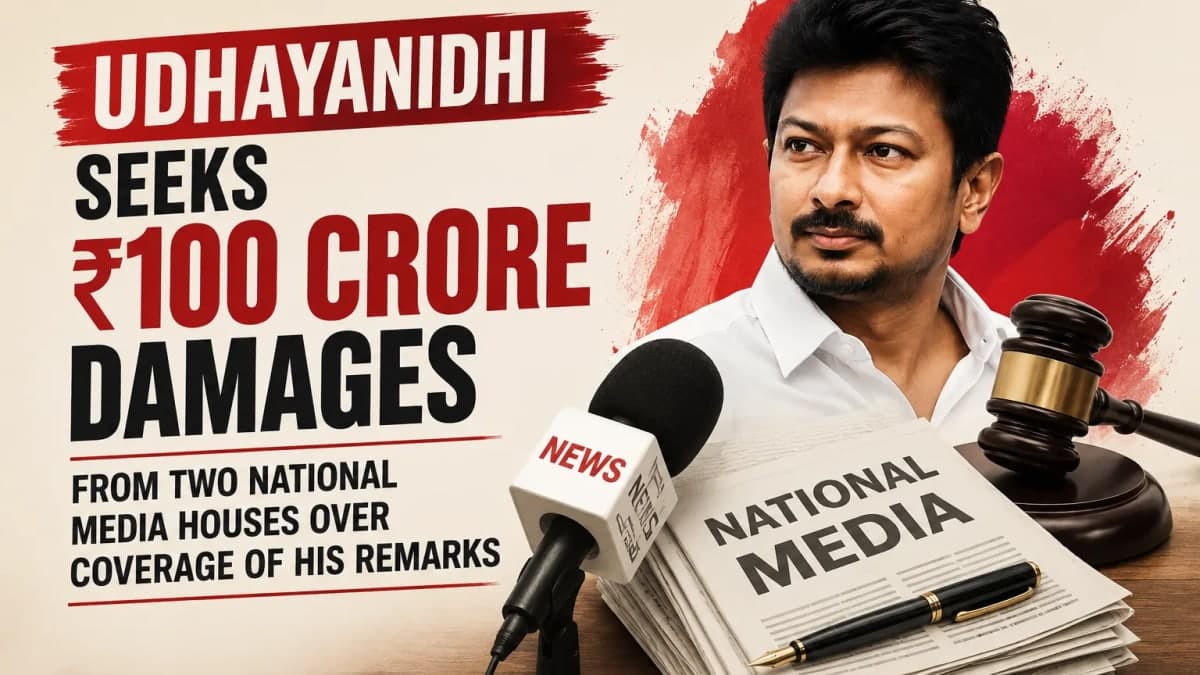
Udhayanidhi Seeks ₹100 Crore in Damages
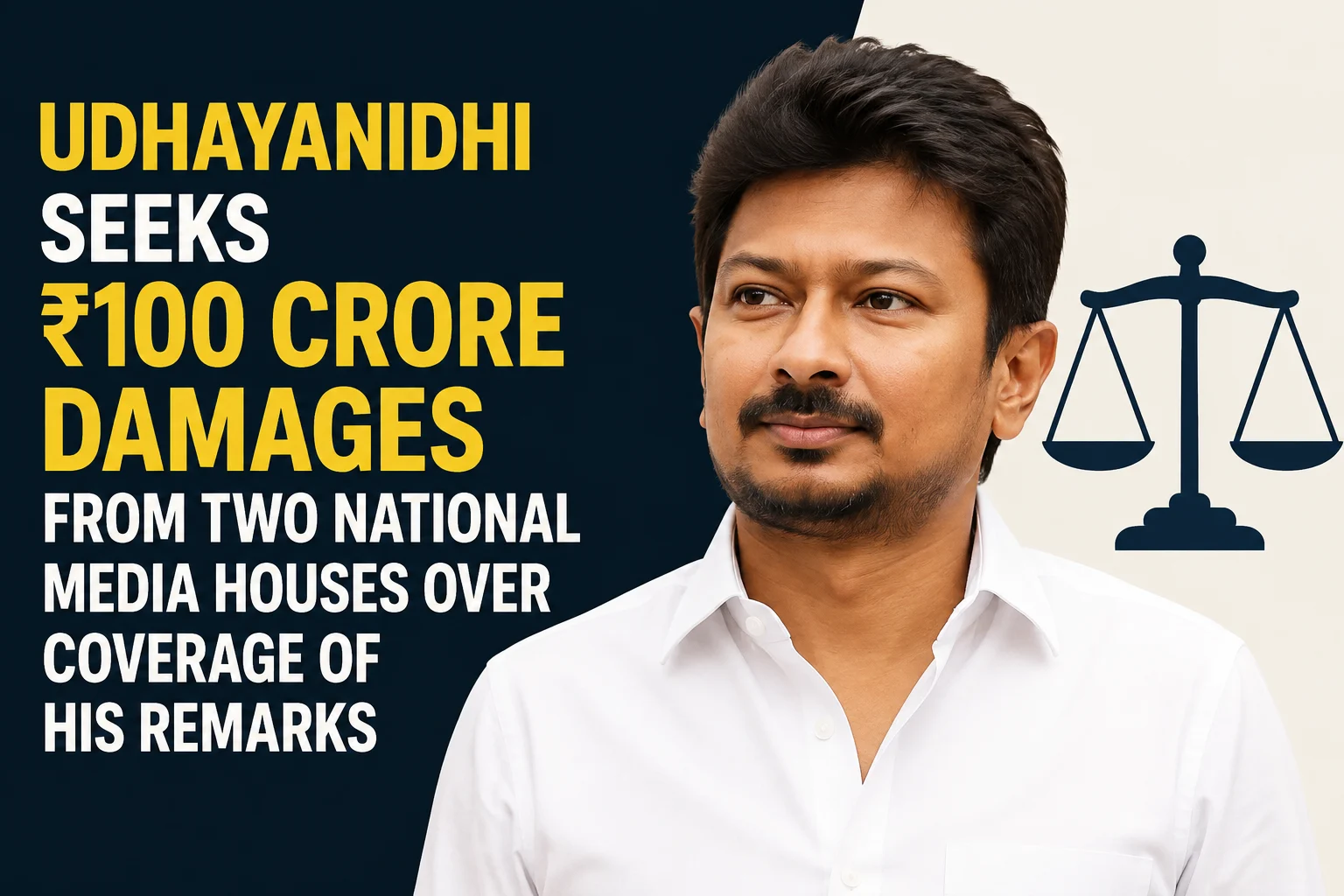
Udhayanidhi has sought damages amounting to ₹100 crore from two national media houses over their coverage of remarks attributed to him, turning a dispute over media reporting into a significant legal confrontation.
The demand centres on the manner in which the two organisations reported his comments. By seeking substantial damages, Udhayanidhi has signalled that he considers the disputed coverage serious enough to warrant legal action and financial compensation.
The development puts both the original remarks and the way they were presented to audiences under renewed scrutiny.
Dispute Shifts From Political Debate to Legal Arena
Remarks made by prominent political figures frequently generate intense public discussion, particularly when they concern sensitive or controversial subjects. Television, digital platforms and social media can rapidly amplify such statements, while headlines and short excerpts often become the main way audiences encounter them.
The ₹100 crore damages claim shifts the matter beyond political disagreement. The focus is now also on whether the disputed reports represented Udhayanidhi's remarks fairly and accurately.
At this stage, a demand for damages should not itself be interpreted as proof that the media organisations acted unlawfully. Any legal determination would depend on the specific reporting, the context of the original remarks, the arguments presented by the parties and the applicable law.
Why the ₹100 Crore Claim Matters
The scale of the damages sought makes the dispute particularly notable. A ₹100 crore demand involving national media organisations is likely to attract attention not only because of the political figure involved but also because of broader questions surrounding reputation and press freedom.
Public figures are routinely subjected to extensive scrutiny, and news organisations have an important role in reporting statements made by political leaders. At the same time, media outlets are expected to distinguish accurately between what was actually said, the context in which it was said and interpretations of those remarks.
Disputes arise when one side believes that reporting has crossed the line from legitimate coverage or criticism into a damaging misrepresentation.
Questions Over Context and Media Responsibility
The controversy highlights the importance of context in political reporting.
In an increasingly fast-moving news environment, individual phrases can quickly become headlines, social-media posts and television talking points. Removing surrounding context can potentially change how audiences understand a statement, while media organisations may argue that concise reporting is necessary when communicating complicated developments.
Determining whether coverage was misleading therefore requires examining more than a headline in isolation. The original remarks, their context and the complete reporting surrounding them can all be relevant.
Press Freedom and Reputation Both at Stake
The case also touches on two competing principles in a democracy: protecting an individual's reputation and preserving the media's ability to report freely on public figures.
Political leaders generally face a high level of public and journalistic scrutiny because their statements can influence public debate and policy. Robust reporting and criticism are consequently essential parts of political journalism.
However, freedom of the press does not eliminate expectations of accuracy and responsible presentation. When individuals believe reports have materially misrepresented them, legal mechanisms provide a route for challenging that coverage.
The challenge is maintaining a balance in which legitimate journalism is protected without removing accountability for demonstrably inaccurate or damaging reporting.
Balanced Analysis
The ₹100 crore damages demand should be viewed as one stage in a dispute rather than a final judgment on the conduct of either side.
Udhayanidhi's action indicates that he strongly contests the way his remarks were covered and believes the reporting caused sufficient harm to justify substantial compensation.
The media organisations, meanwhile, are entitled to defend their reporting and explain the editorial and factual basis for their coverage. Their position and any formal response would be important for evaluating the dispute fully.
Ultimately, if the disagreement proceeds through the legal system, the outcome will depend on evidence and legal arguments rather than the size of the damages demanded.
Wider Significance
Beyond the immediate parties, the dispute illustrates the growing tension surrounding political communication in an era when statements can spread nationwide within minutes.
For politicians, it reinforces the reality that public comments can receive extensive scrutiny and interpretation. For media organisations, it highlights the importance of accurate attribution, careful headlines and sufficient context when reporting contentious remarks.
The ₹100 crore demand ensures that the controversy is no longer solely about what was said. It is also about how political statements are reported, interpreted and presented to the public—and where the boundaries of media responsibility should be drawn.
This article is based on reporting published by TNIE online desk.