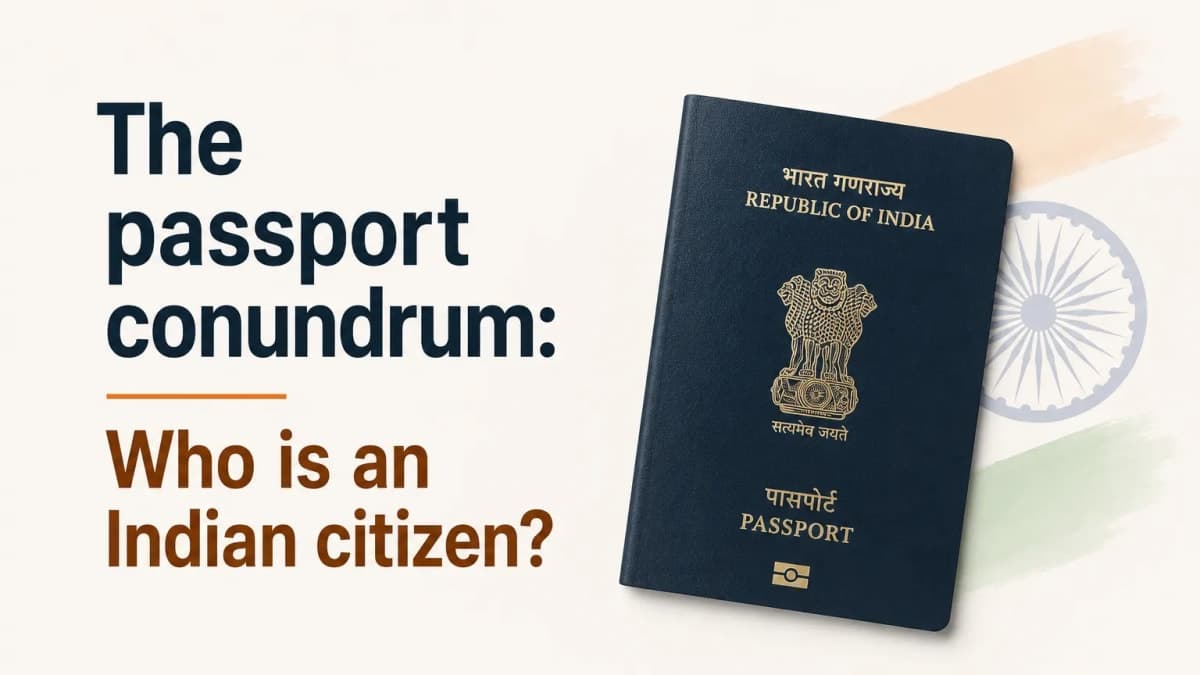
The issue of who qualifies as an Indian citizen has once again become part of public discussion, bringing renewed attention to the relationship between citizenship and passport eligibility. Although the topic often arises in the context of legal cases or administrative decisions, the broader question is governed by the Constitution of India, the Citizenship Act, 1955, and related laws and regulations.
An Indian passport is issued only to individuals who are recognized as Indian citizens under the law. It is primarily a travel document that certifies the holder's nationality and enables international travel. Holding a passport does not itself create citizenship; rather, citizenship is the legal basis that makes a person eligible to receive one.
Indian citizenship can generally be acquired through birth, descent, registration, naturalization, or the incorporation of territory, subject to the conditions laid down in the Citizenship Act and amendments made over time. The eligibility criteria have evolved through legislative changes, making the legal position dependent on the circumstances of each individual case.
Citizenship is different from residency, long-term stay, or possession of identity documents. A person may legally reside in India or possess government-issued identification for specific purposes without necessarily being an Indian citizen. Similarly, Overseas Citizen of India (OCI) cardholders enjoy certain privileges but are not considered full Indian citizens and are not entitled to an Indian passport.
Questions about citizenship sometimes emerge when passport applications are examined, documents are verified, or legal proceedings involve nationality-related issues. In such situations, the final determination is made according to applicable laws and the evidence presented before the competent authorities.
Legal experts emphasize that citizenship matters are highly fact-specific and should be assessed based on statutory provisions rather than public speculation. Administrative authorities and courts may examine birth records, family history, previous nationality, immigration status, and other legally relevant documents while deciding individual cases.
The discussion also highlights the importance of maintaining accurate civil records and identity documentation, which can help simplify verification processes and reduce disputes related to nationality or passport eligibility.
For the general public, the key principle remains clear: eligibility for an Indian passport depends on lawful Indian citizenship as recognized under existing legislation. Any dispute concerning citizenship is resolved through established legal and administrative procedures rather than public opinion.