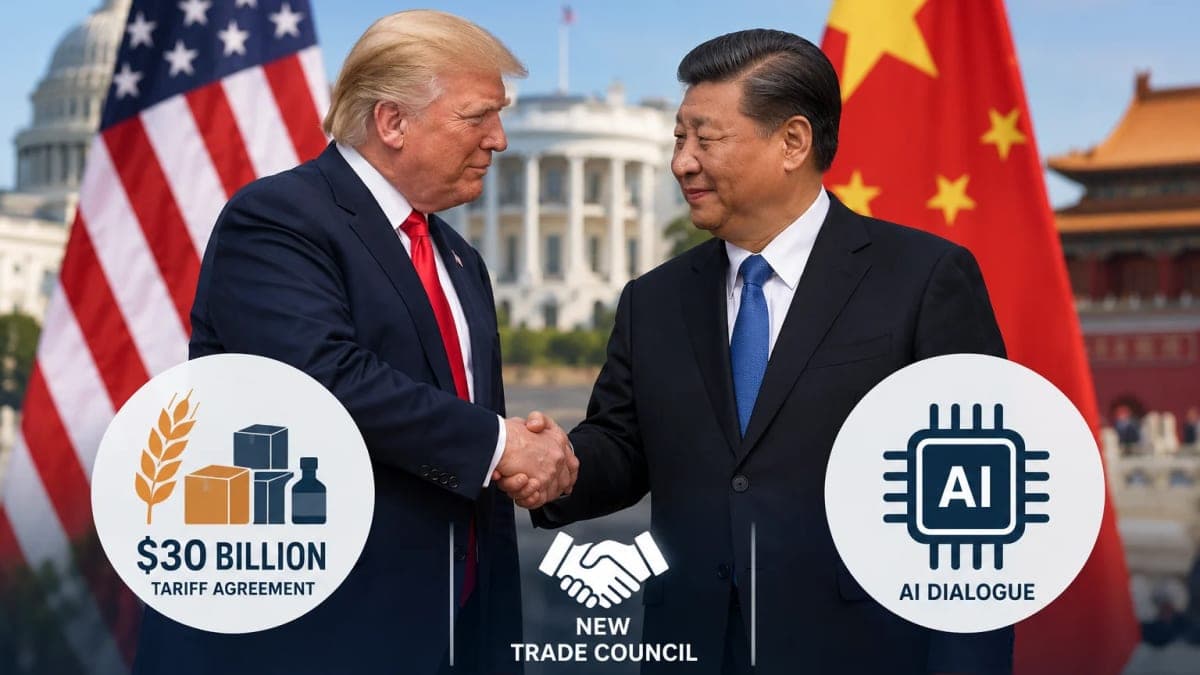
WASHINGTON, September 27, 2026: The United States and China have announced a new package of trade and technology measures following Chinese President Xi Jinping’s three-day state visit to the United States, including more favorable tariff treatment covering $30 billion of non-sensitive goods in each direction and a formal dialogue on artificial intelligence.
The agreements emerged from Xi’s September 23-25 visit and talks with US President Donald Trump at the White House. According to China’s Foreign Ministry, the two governments reached an eight-point consensus covering trade, artificial intelligence and other areas of bilateral cooperation.
The White House separately confirmed that the two countries had reached consensus on recommendations for more favorable tariff treatment for $30 billion of non-sensitive goods in each direction under the US-China Board of Trade.
The development represents a concrete, though limited, easing of trade barriers between the world’s two largest economies after years of tariffs, counter-tariffs and other restrictions.
Which goods are covered by the tariff arrangement?
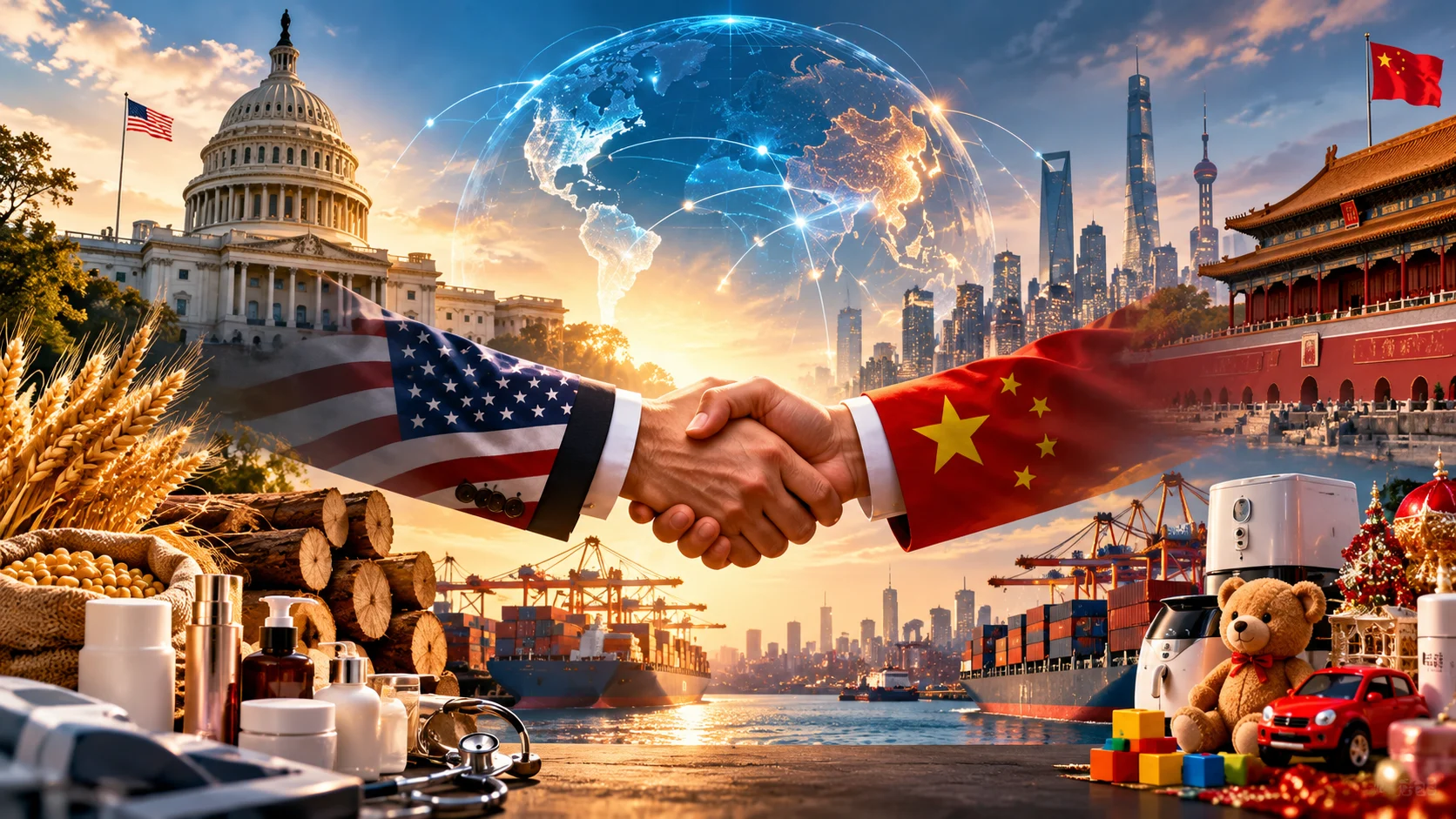
According to the White House, the tariff recommendations cover US exports to China including agricultural products, fish and seafood, logs and wood products, cosmetics and medical devices.
Chinese exports covered by the arrangement include goods such as small household appliances, toys, home decorations and sporting goods, Reuters reported.
The measures therefore target categories of non-sensitive trade rather than resolving the wider range of economic disputes between Washington and Beijing.
The White House also said the Board of Trade had launched a working group to address agricultural market-access barriers.
China’s Foreign Ministry described the agreement as a “$30 billion” reciprocal tariff-reduction arrangement and said both governments had agreed to implement the outcomes of their recent economic and trade consultations.
New trade mechanism gives Washington and Beijing a channel for talks
Beyond the tariff changes, Washington and Beijing are moving forward with institutional mechanisms intended to keep economic negotiations active.
China’s Foreign Ministry said the two countries agreed to establish and advance a trade council mechanism while carrying forward outcomes from their earlier economic and trade discussions in Kuala Lumpur.
The White House described the mechanism as the US-China Board of Trade, alongside a separate Board of Investment. According to the administration, both boards were chartered during the May 2026 US-China summit in Beijing.
The latest announcement also follows an agreement to extend the existing US-China trade truce by two months.
US Treasury Secretary Scott Bessent said the extension, which pushed back a truce that had been due to expire on November 10, gives both governments more time to pursue a potentially broader trade agreement, Reuters reported.
That distinction is important: the latest tariff arrangement addresses selected categories of trade, while negotiations over the wider US-China economic relationship remain ongoing.
Why have the US and China imposed tariffs on each other?
The tariff conflict has roots stretching back years.
The United States began imposing major additional tariffs on Chinese imports in 2018 after a Section 301 investigation focused on Chinese practices involving intellectual property, technology transfer and related trade issues.
Congressional Research Service records show that the initial tariff confrontation quickly expanded. US tariffs under Section 301 and Chinese retaliatory duties ultimately affected a large share of bilateral trade.
Washington argued that tariffs could pressure Beijing to change practices it considered harmful to US businesses and intellectual property. China responded with tariffs of its own and has repeatedly opposed US trade restrictions.
The economic effects are not limited to governments. Congressional Research Service analysis has noted that US tariffs can increase costs for American companies and consumers purchasing Chinese imports, while Chinese retaliatory tariffs can make US exports more expensive and less competitive in China.
The imbalance in bilateral trade has also shaped the way the dispute has developed. Because China sells substantially more goods to the United States than it purchases from it, Beijing has at times relied on measures beyond conventional tariffs, including export controls and market restrictions.
Trump and Xi meet at the White House
Xi and Trump held talks at the White House on September 24 as part of the Chinese president’s state visit.
China’s Foreign Ministry said Xi called for a relationship in which cooperation remains central, competition is kept within appropriate limits and disagreements are managed.
Trump, according to the Chinese readout of the meeting, said the latest consultations between the two countries’ economic and trade teams had produced new outcomes and called for continued dialogue toward further agreements.
Xi’s visit ran from September 23 through September 25. China’s Foreign Ministry described it as his first state visit to Washington in 11 years.
The visit also included a White House state dinner attended by prominent business and technology executives. Reuters had reported that executives including Alphabet CEO Sundar Pichai, OpenAI CEO Sam Altman and Nvidia CEO Jensen Huang were among the expected guests.
US and China establish formal AI dialogue
Artificial intelligence emerged as another significant area of the talks.
China’s Foreign Ministry said the two countries agreed to establish a US-China AI dialogue to exchange views on both the risks and benefits associated with the technology.
The next dialogue is scheduled for November 2026.
The two governments also agreed to establish a communication channel for AI-related incidents, potentially creating a direct mechanism for officials to communicate when significant AI safety or security issues arise.
The agreement does not eliminate the broader technological competition between the two countries. Instead, it creates a formal avenue for discussing areas where AI development could generate shared risks.
During his meeting with Trump, Xi said both countries possess strong AI capabilities and argued that they could cooperate while continuing to compete. He also said AI should remain under human control, according to China’s Foreign Ministry.
Trump likewise said the United States and China should maintain dialogue and strengthen cooperation on AI, according to the Chinese government's account of the meeting.
Why is the term ‘super intelligence’ appearing in the discussions?
One unusual detail emerging from the summit involved terminology.
A US readout used the phrase “super intelligence” rather than “artificial intelligence.” Asked about the wording, China’s Foreign Ministry said Beijing respected the US choice of terminology and supported further exchanges as the technology develops.
The terminology should not, however, be interpreted as a separate bilateral technology framework based on the announcements so far. The substantive agreement announced by China remains a dialogue concerning AI risks and benefits and a communication mechanism for AI-related incidents.
APEC and G20 cooperation also included in agreements
Trade and artificial intelligence were part of a wider set of understandings announced after Xi’s visit.
Trump and Xi agreed that the two countries would support each other in hosting major international gatherings, including the Asia-Pacific Economic Cooperation leaders’ meeting and the Group of 20 summit.
China’s Foreign Ministry said the two presidents intend to attend meetings hosted by the other country.
The two governments also said that no country or organization should impose transit fees on international waterways, according to China’s official summary of the eight-point consensus.
What the agreement means — and what remains unresolved
The Washington meetings produced specific mechanisms for reducing tariffs on selected non-sensitive goods, continuing trade negotiations and discussing AI risks.
However, the announcements do not amount to a comprehensive settlement of the economic and strategic disputes between the United States and China.
Tariffs and other trade restrictions built up over years remain part of the relationship, while the latest trade truce has been extended rather than replaced by a comprehensive trade accord.
The significance of the latest agreements therefore lies partly in the creation and continuation of formal channels: the Board of Trade, ongoing economic negotiations, an AI dialogue and an AI-incident communication channel.
The next scheduled AI discussions in November and subsequent economic negotiations will provide a clearer indication of whether the agreements reached during Xi’s visit lead to broader policy changes or remain targeted measures designed to manage competition between Washington and Beijing.


