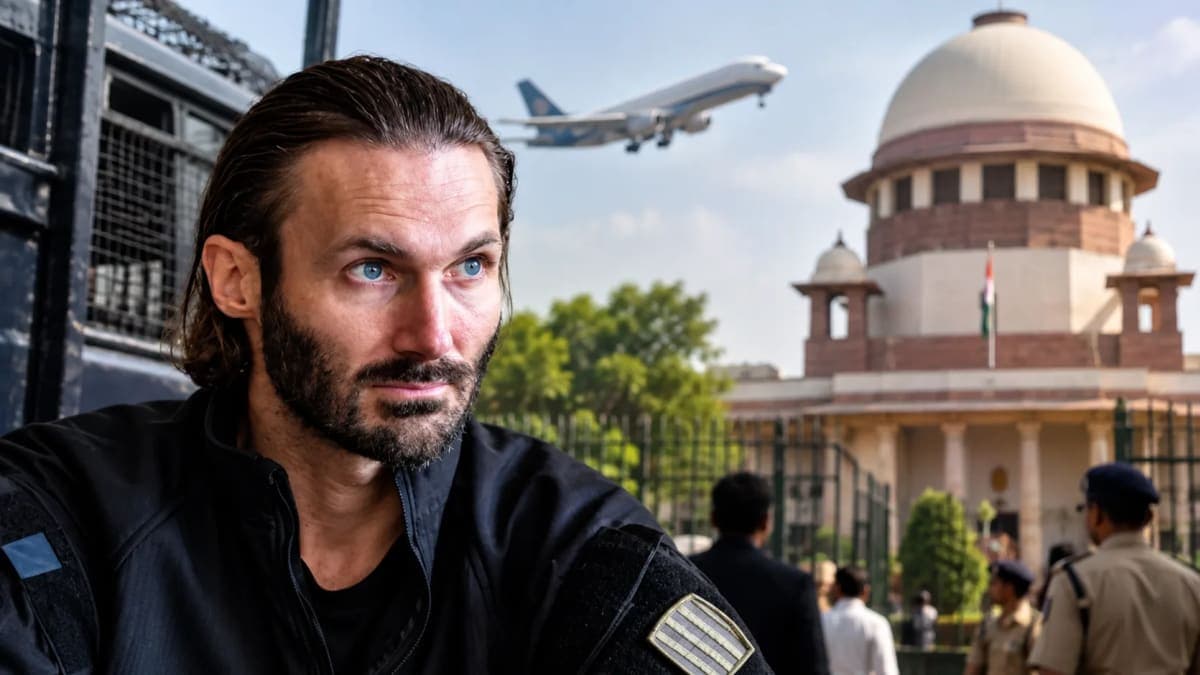
Congress escalates attack over VanDyke case
The Congress has stepped up its criticism of the Centre over the handling of the case involving American national Matthew Aaron VanDyke, after a special NIA court permitted him and six Ukrainian nationals to temporarily leave India and return to their respective countries.
The September 24 order by Special NIA Judge Prashant Sharma allowed the seven foreign nationals to travel to the United States and Ukraine for one month to meet their families, subject to conditions. The court noted that the accused had expressed willingness to join the investigation whenever required by the National Investigation Agency.
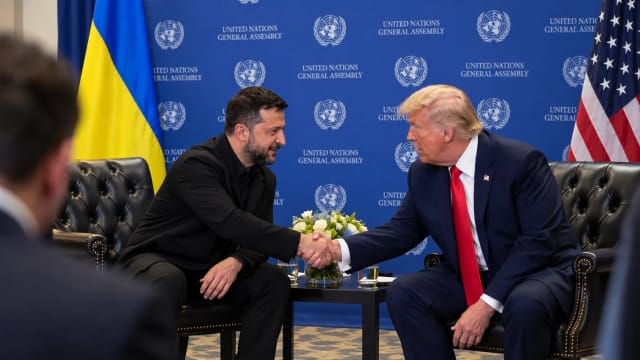
The development prompted Congress leaders to allege that pressure from the United States had played a role in the outcome. The allegation has not been established by the court order, and the government has disputed the broader suggestion that normal US diplomatic engagement amounts to improper intervention.
Jairam Ramesh alleges US pressure
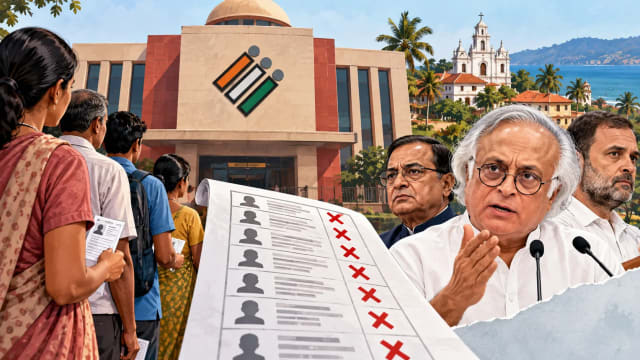
Congress general secretary Jairam Ramesh targeted Prime Minister Narendra Modi following the development.
In a post on X, Ramesh said:
“Our compromised PM does it again.”
Ramesh alleged that US pressure had influenced the handling of the case and asked what India had received in return. He also questioned how the foreign nationals had initially obtained visas and been able to travel through India towards Myanmar.
These statements represent Congress's political allegations, rather than findings made by the court or established facts about the government's motives.
Pawan Khera joins Congress attack
Congress leader Pawan Khera also criticised the Centre, focusing on the allegations that VanDyke travelled into Mizoram without the required permit and crossed into Myanmar.
Khera contrasted VanDyke's treatment with the treatment of some Indian nationals deported from the United States and used the controversy to accuse the Prime Minister of being under pressure from Washington.
Again, the assertion that the Prime Minister or government acted under US pressure is a Congress claim. The available court order concerns the legal grounds for permitting the accused to travel and does not establish political interference by Washington.
What is the case against Matthew VanDyke?
VanDyke and six Ukrainian nationals were arrested by the NIA on March 13, 2026.
According to the NIA's allegations, the seven travelled to Guwahati and Mizoram after entering India on valid travel documents, but did not possess the mandatory protected/restricted-area permits for their subsequent movement.
The agency alleged that they crossed the India-Myanmar border through unauthorised routes and travelled to Victoria Camp in Myanmar. The NIA has alleged that a pre-arranged programme there involved training Myanmar-based ethnic armed groups in areas including drone warfare, drone operations, assembly and jamming technology. These remain allegations connected to an ongoing investigation, not findings of guilt.
Earlier in the case, Ukraine disputed allegations against its six nationals and said there were no established facts proving that they had engaged in unlawful activities in India or Myanmar.
Why did VanDyke get default bail?
A key part of the controversy concerns what happened when the NIA filed its chargesheet.
VanDyke had originally been booked in a case involving Section 18 of the Unlawful Activities (Prevention) Act (UAPA). He was arrested on March 13, meaning the 180-day period relevant to completing the investigation expired on September 8.
The NIA filed a chargesheet on September 8 under Sections 21 and 23 of the Immigration and Foreigners Act, 2025, while its investigation into alleged UAPA offences remained pending.
On September 18, Special NIA Judge Prashant Sharma granted VanDyke default bail. The court characterised the chargesheet as “piecemeal” and held that an investigating agency could not use an incomplete chargesheet to deprive an accused of the statutory right to default bail.
The six Ukrainian co-accused subsequently received default bail as well.
This distinction matters: default bail is a statutory procedural right arising when an investigation is not completed within the prescribed period; it is not the same as a judicial finding that the allegations are false or that the accused are innocent.
Court permits seven foreigners to leave India for one month
After the bail decisions, the accused sought release of their passports and permission to travel home.
On September 24, the special court accepted the applications and allowed them to travel abroad for one month, subject to conditions and formalities.
Judge Sharma observed that the right to travel abroad is an extension of rights protected under Article 21 and that competing considerations must be balanced. The court also noted the accused had agreed to cooperate with the NIA when required.
According to the order reported by The Indian Express, the NIA did not tell the court that the physical presence of VanDyke and his co-accused would be required in the immediate future to complete the investigation.
Were the UAPA allegations dropped?
This is where the political argument requires an important distinction.
The September 8 chargesheet did not invoke UAPA provisions, and instead covered offences under the Immigration and Foreigners Act. However, that does not necessarily mean the UAPA investigation itself has been closed.
The government's position, reported earlier this month, is that the NIA's investigation into the alleged UAPA offences remains pending and that the immigration chargesheet should not be interpreted as termination of the terror-related investigation.
The Indian Express also reported from the court proceedings that the NIA prosecutor said investigation into UAPA offences had been kept pending for further investigation.
Therefore, saying that the government or NIA has definitively “dropped the terror case” would go beyond what the currently available record establishes.
Government disputes inference of unusual US intervention
Congress has connected developments in the case with diplomatic contacts between US and Indian officials and alleged that Washington exerted pressure.
The government's previously reported response presents a different interpretation. It said that US officials raising the case of an American citizen detained abroad was consistent with ordinary diplomatic and consular practice, noting that India similarly raises issues concerning Indian citizens detained overseas.
It also maintained that such diplomatic contact should not by itself be regarded as evidence of unusual interference in the investigation.
No evidence cited in the available court reporting establishes that US pressure caused the bail decision or the September 24 travel order.
Legal development and political dispute are separate issues
The VanDyke controversy now involves two distinct questions.
The legal issue concerns the statutory investigation deadline, the NIA's chargesheet, default bail and the court's subsequent decision to permit temporary international travel.
The political dispute concerns Congress's allegation that US pressure affected how the government handled the case. That allegation is contested by the government's account and has not been established by the court decisions reported so far.
The NIA's continuing investigation will therefore be important in determining whether further charges are eventually pursued under the UAPA.
Sources
The principal sources for this report are The Indian Express, which reported the September 18 default-bail ruling and September 24 travel order; India Today, which reported the Congress response; and earlier reporting on the government's position regarding the continuing UAPA investigation.