Washington acknowledges India’s warning over Russia sanctions law
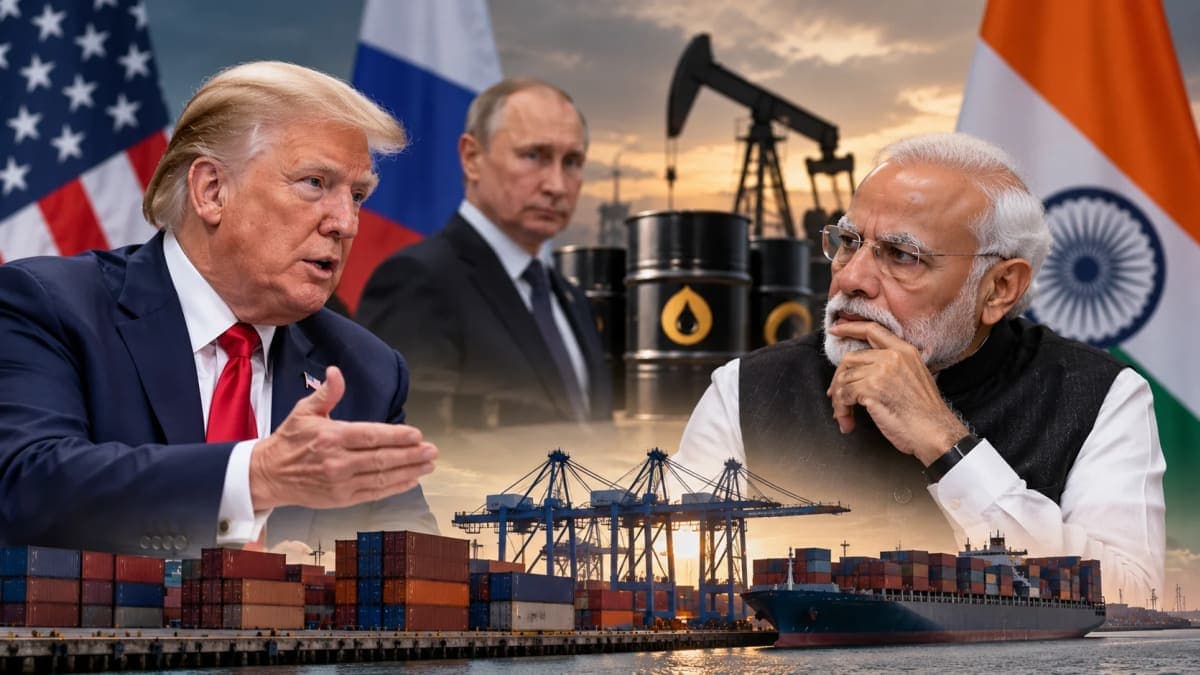
The United States has sought to play down diplomatic friction with India over Washington’s new Russia-focused sanctions legislation, saying it understands why New Delhi publicly raised concerns about measures that could expose major purchasers of Russian energy to steep US tariffs.
A senior US State Department official said Washington had taken note of India’s response to the Sanctioning Russia and Iran Act, after New Delhi warned that implementation of the legislation could have implications for India-US relations as well as the wider global energy market.
The US official suggested that India’s response was understandable given the domestic political and economic stakes involved.
“Like there’s no sort of hard feelings on any of that kind of activity,”
the official said, according to Hindustan Times.
The comment is significant because it indicates that Washington is publicly separating India’s objections to the legislation from the broader strategic relationship between the two countries.
What did the US official say about India?
The State Department official acknowledged that members of the US Congress had taken a particularly tough public position and specifically referred to India during debate over Russian energy purchases.
The official said it was therefore natural for the Indian government to respond, adding that both governments have their own domestic constituencies to consider.
That framing appears aimed at containing the diplomatic fallout rather than dismissing India’s objections.
It does not, however, mean that Washington has withdrawn the possibility of trade measures against countries purchasing Russian energy.
What exactly does the Russia sanctions legislation do?
The Lindsey O. Graham Sanctioning Russia and Iran Act of 2026 significantly expands the tools available to the US administration to target Russia and countries that maintain substantial energy trade with Moscow.
The US House passed the legislation on September 16 by 262-159, after the Senate approved it on August 7 by 86-11.
Crucially for India, the legislation provides authority to impose tariffs of up to 100% on goods from countries that are among the largest purchasers of Russian petroleum or natural gas, subject to the law’s provisions and executive implementation.
This distinction matters: the legislation creates the legal authority for steep tariffs; it should not be interpreted as meaning that a blanket 100% tariff has automatically been imposed on all Indian goods.
Why is India concerned?
India remains an important purchaser of Russian crude, making the legislation particularly relevant to New Delhi.
After the US House approved the bill, India warned about its potential implications for bilateral relations and international energy markets. New Delhi has consistently defended its energy purchasing decisions in terms of national requirements, affordability and energy security.
The concern extends beyond diplomacy.
If the US administration were to apply high tariffs to Indian products under the law, export-oriented sectors could face significantly higher barriers in the American market.
The Confederation of Indian Textile Industry, for example, has warned that additional tariffs would be difficult for the country’s MSME-heavy textile and apparel industry to absorb, particularly because the United States is such an important destination for the sector.
The precise economic impact, however, would depend on whether the administration actually invokes the tariff authority, the rate selected and which Indian products are covered.
Jaishankar raised the issue directly with Marco Rubio
India has not limited its concerns to public statements.
External Affairs Minister S Jaishankar said on September 23 that he had reiterated India’s concerns over the Sanctioning Russia and Iran Act during discussions with US Secretary of State Marco Rubio.
Jaishankar said the two also discussed developments in the Gulf and Ukraine. Reuters independently reported the exchange.
This places the dispute within direct India-US diplomatic engagement rather than leaving it solely as a public disagreement over tariffs.
Why Russian oil remains important for India
The sanctions dispute comes against a complicated global energy backdrop.
India has relied heavily on imported crude and has significantly increased its purchases of Russian oil since Moscow’s invasion of Ukraine transformed global energy trade.
More recently, supply disruptions linked to conflict in the Middle East have added another dimension to India’s energy calculations. Indian refiners have sought prompt Russian crude cargoes amid concerns over regional supply availability, according to reporting based on industry sources.
For Washington, however, continued purchases of Russian energy raise a different concern: the US and its partners have sought to reduce the revenues available to Moscow amid the Ukraine war.
That leaves India and the United States approaching the same oil trade from different policy priorities—New Delhi emphasising energy security and Washington seeking additional economic pressure on Russia.
‘No hard feelings’ does not remove the tariff question
The State Department official’s comments lower the rhetorical temperature, but they do not settle the substantive dispute.
Washington’s message is essentially that it understands why India objected publicly. The legislation and the powers it provides the US administration nevertheless remain relevant to Indian exporters and the broader economic relationship.
That makes the distinction between diplomatic tone and trade policy important.
The “no hard feelings” comment suggests Washington does not want India’s criticism by itself to become a larger bilateral confrontation. Whether the sanctions legislation eventually produces new tariffs is a separate question that will depend on how the US administration implements its authority.
What happens next?
Attention will now turn to how the Trump administration uses the powers created by the legislation and whether major Russian energy purchasers such as India face additional trade measures.
For New Delhi, the challenge is to protect access to affordable energy while limiting damage to one of its most important economic and strategic relationships.
For Washington, the policy calculation involves increasing pressure on Russia without allowing secondary measures against Russian energy buyers to create wider diplomatic and trade costs.
The latest US response therefore signals an effort to manage the disagreement—but it does not eliminate the underlying conflict between India’s energy interests and Washington’s Russia sanctions strategy.