Congress Questions Timing of Special Camps
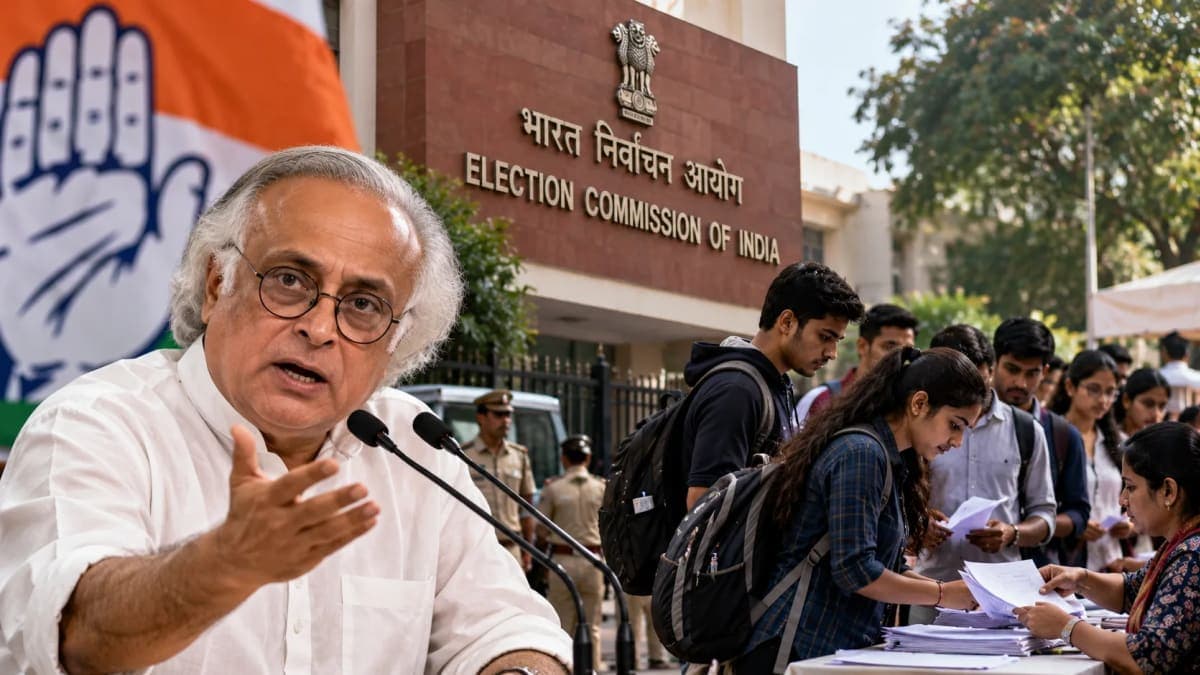
A fresh political confrontation has emerged over the enrolment of young voters as Congress questioned the Election Commission’s decision to organise special registration camps in Delhi.
Congress general secretary Jairam Ramesh on Saturday characterised the move as a “panic reaction”, alleging that the Election Commission had earlier created obstacles for first-time and young voters and was now attempting to increase their enrolment through special camps. The allegation is a Congress claim; available reporting does not establish that the camps were ordered because of political pressure or “panic”.
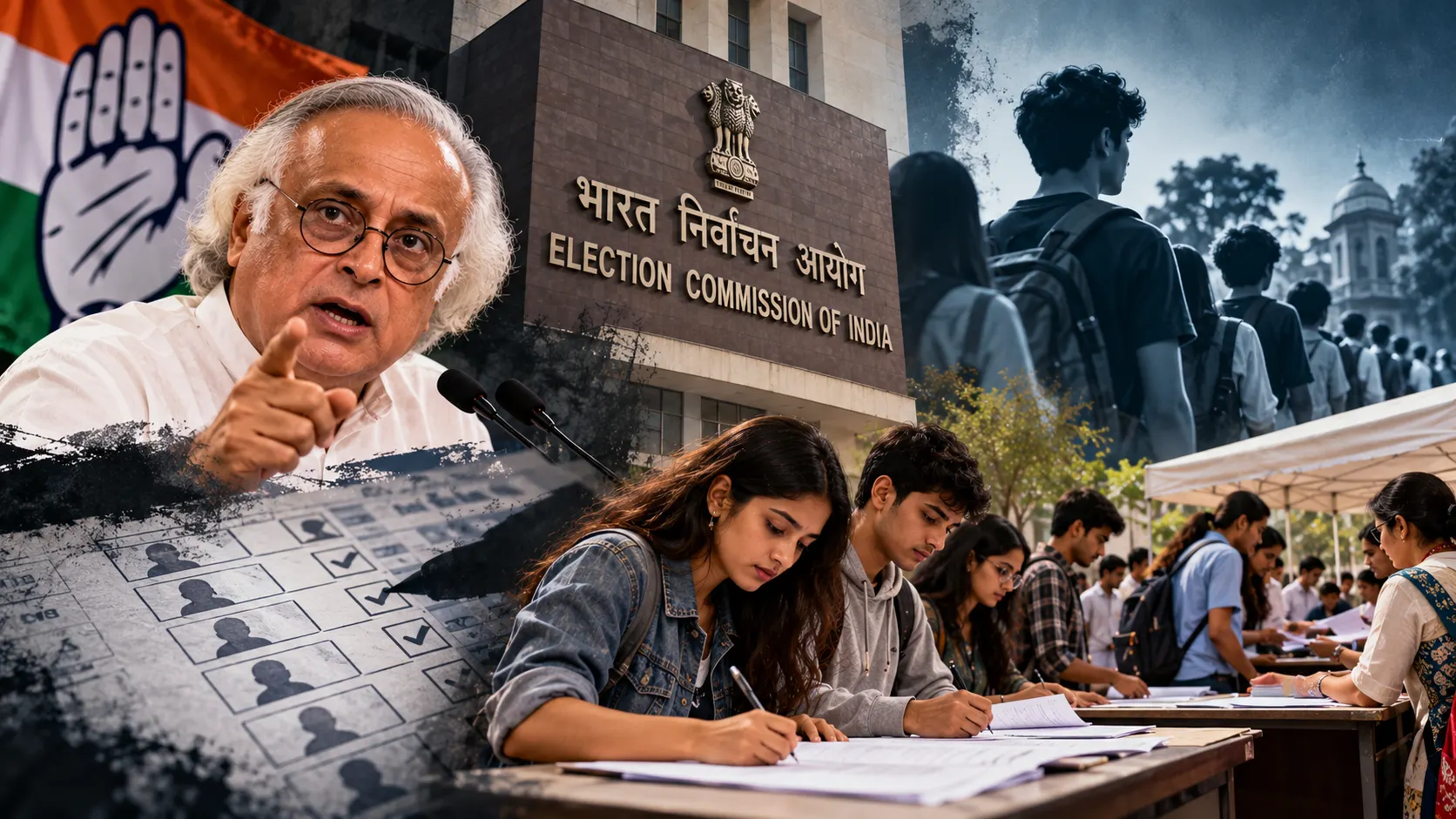
The Delhi election authorities have directed special camps to be organised at colleges, universities and other educational institutions on September 29 and 30, focusing on young electors aged 18 to 25 during the ongoing Special Intensive Revision (SIR) 2026. The camps are scheduled to operate from 9 am to 3 pm, according to reports citing election authorities.
What Exactly Has the Election Commission Announced?
There are two related enrolment initiatives in Delhi.
According to ANI reporting carried by The Economic Times, special camps are being held across Delhi on September 27 for eligible citizens whose names are not included in the draft electoral roll. In addition, educational institutions will host the September 29–30 camps specifically targeting young electors aged 18–25.
Eligible citizens can use Form 6, the statutory application for inclusion of a name in the electoral roll.
The Economic Times report said about 1.21 lakh Form 6 applications had already been received in Delhi. The claims-and-objections period was scheduled to remain open until September 30.
These details are important because the existence of special camps itself does not demonstrate the political motive alleged by Congress. The documented purpose of the exercise is voter enrolment during the ongoing revision.
What Jairam Ramesh Has Alleged
Ramesh's criticism goes beyond the camps themselves.
He alleged that a new mandatory section in Form 6 asking about the inclusion of a voter's parents or grandparents in a previous SIR created an additional hurdle for first-time Gen Z voters.
Ramesh described the change as “completely illegal”. That is his political and legal allegation, not an established judicial finding.
The Congress has also argued that the Election Commission's approach to electoral-roll revisions has made it harder for newly eligible voters to enter the rolls.
The Election Commission, however, has defended its institutional processes amid the wider controversy, saying differing views within the Commission are part of normal deliberations and that its decisions have legal sanction and follow established statutory procedures.
The Dispute Is Bigger Than the Delhi Camps
The latest exchange comes amid a broader dispute over the way India's electoral rolls are being revised.
A report cited by India Today said that no Special Summary Revision, or SSR, had been carried out after the 2024 cycle and that there had been disagreement within the Election Commission over the exercise. Congress seized on the report to allege that newly eligible young voters were being kept off electoral rolls.
SSR and SIR, however, should not be treated as interchangeable processes.
A Special Summary Revision is a routine mechanism for updating electoral rolls, including the addition of newly eligible electors. A Special Intensive Revision is a more extensive verification exercise.
Congress has attempted to connect the absence of a subsequent SSR with its allegations about Gen Z enrolment. The allegation that the process was deliberately stopped to suppress young voters has not been established by the available evidence.
Congress Targets CEC Gyanesh Kumar
The controversy has increasingly centred on Chief Election Commissioner Gyanesh Kumar.
On Friday, Ramesh contrasted the present situation with the 1988 constitutional amendment that lowered India's voting age from 21 to 18. He accused the Modi government and the CEC of undermining youth participation.
Congress has claimed that the government fears politically dissatisfied young voters. Again, this is a partisan allegation; the reporting reviewed does not establish that the Prime Minister directed the Election Commission to prevent Gen Z enrolment.
Congress protests over the wider SIR controversy were also held in several parts of India on September 25, with the party demanding action against the CEC.
Form 6 Has Become a Key Point of Contention
Form 6 sits at the centre of the latest dispute because it is the application used by eligible citizens seeking inclusion in an electoral roll.
The Economic Times reported on September 26 that Congress accused the CEC of unlawfully altering Form 6 and asked the Supreme Court to hold him accountable. Election Commission officials, according to the report, have disputed the suggestion that there were major changes to the voter-registration process.
That makes it important to distinguish three separate questions: whether procedural changes were made, whether those changes were legally permissible, and whether they actually prevented a measurable number of young people from registering.
The political statements currently go further than what has been conclusively established on the latter two questions.
Why the Gen Z Issue Has Become Politically Significant
Young voters are an important part of India's expanding electorate, making registration of newly eligible 18-year-olds politically sensitive.
Congress is attempting to frame the electoral-roll controversy as a youth-participation issue, while the Election Commission's latest camps are explicitly intended to maximise enrolment among young electors.
That produces an unusual situation: both sides publicly emphasise increasing youth participation, while disagreeing sharply over whether the registration and revision process has facilitated or obstructed it.
The September 29–30 camps should therefore be understood as a confirmed administrative measure. Congress's description of them as evidence that the EC has “panicked” remains a political interpretation.
What Happens Next?
For Delhi voters, the immediate development is practical rather than political.
Eligible voters omitted from the draft electoral roll can use the enrolment process, while the special September 29–30 camps at colleges and universities are intended to reach the 18–25 age group specifically.
The wider controversy is unlikely to be settled merely by the camps. Questions surrounding Form 6, SSR, SIR and reported disagreements within the Election Commission remain part of an intensifying political and institutional dispute.
For news coverage, the key distinction is straightforward: the special camps and their enrolment objective are documented facts; allegations that the EC deliberately blocked Gen Z voters or organised the camps because it “panicked” are Congress's claims and should be attributed as such.
JantaScope Editorial Note: This article independently separates confirmed Election Commission measures from allegations made by political parties. Claims about intent or wrongdoing have not been presented as established facts unless supported by verified evidence. © 2026 JantaScope. All rights reserved.