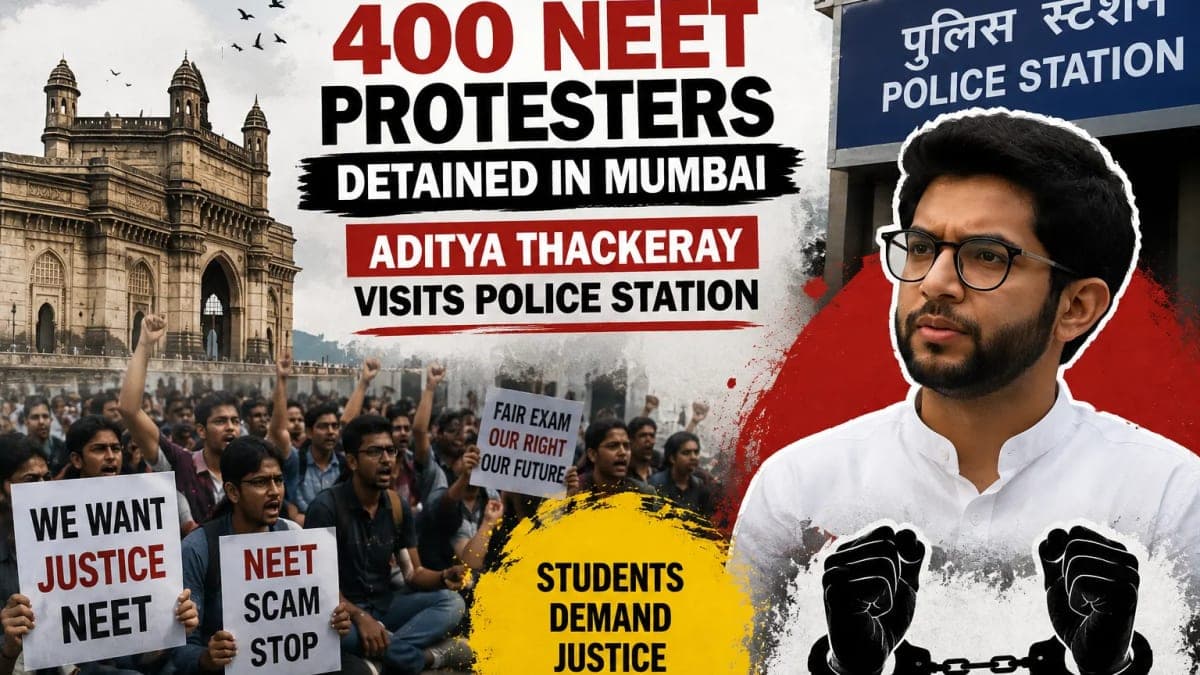
Around 400 NEET Protesters Detained in Mumbai as Political Attention Intensifies
Protest Over NEET Developments Leads to Detentions
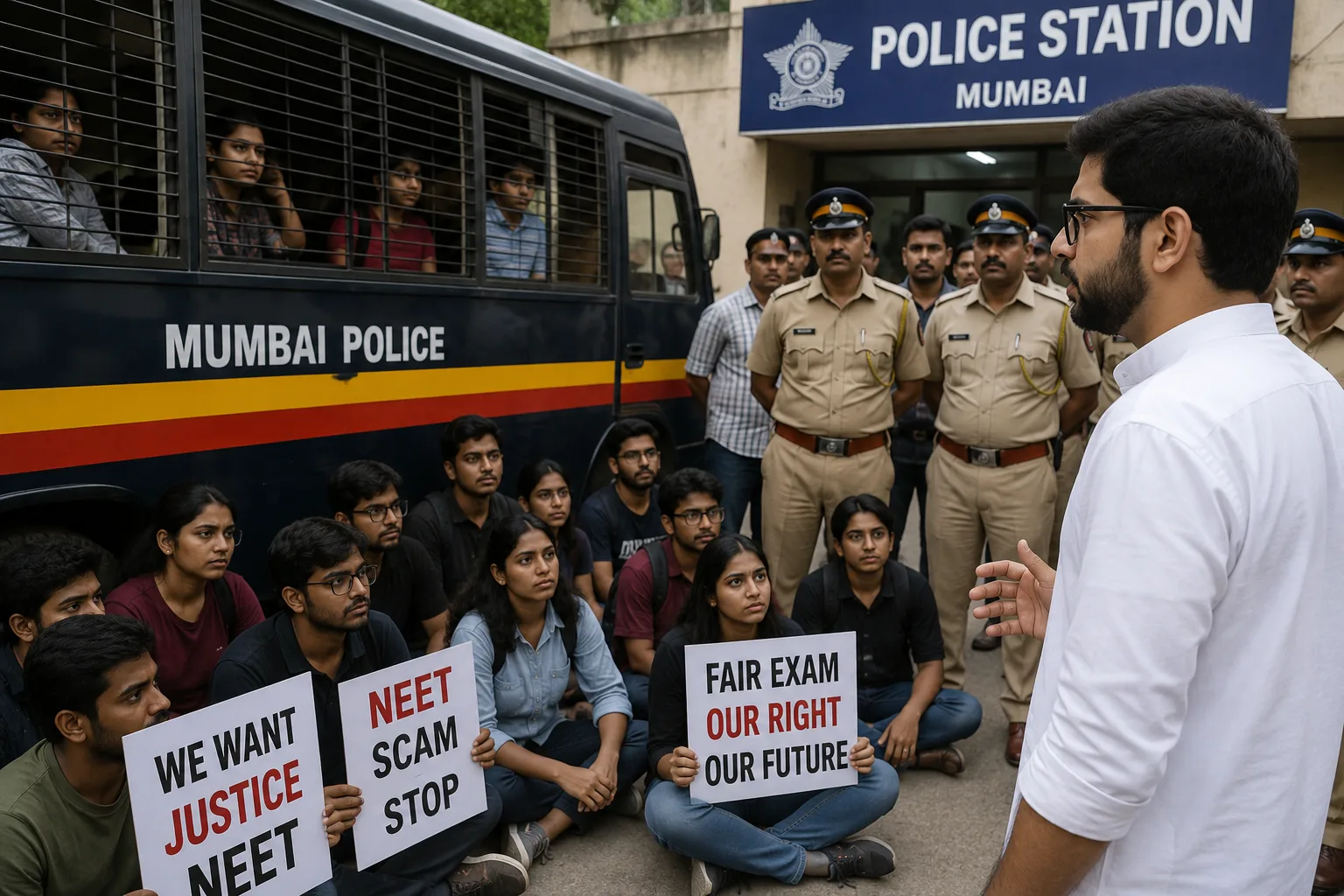
A large demonstration linked to concerns surrounding the National Eligibility cum Entrance Test (NEET) resulted in the detention of approximately 400 protesters in Mumbai. The gathering was part of an ongoing wave of public demonstrations demanding greater transparency and accountability in matters related to competitive examinations.
Authorities detained the protesters after the demonstration, with officials maintaining that the action was taken to preserve public order and ensure that the protest did not disrupt normal civic activities.
Aditya Thackeray Visits Police Station
Following the detentions, Shiv Sena (UBT) leader Aditya Thackeray visited the police station where many of the protesters were reportedly being held. His visit drew political attention to the incident and highlighted growing concern over the treatment of demonstrators participating in examination-related protests.
The visit was viewed by supporters as an expression of solidarity with the detained students and activists, while also placing additional scrutiny on the police response to peaceful public gatherings.
NEET Continues to Trigger Public Debate
The NEET examination has remained a subject of intense public discussion in recent years, with allegations concerning examination management, fairness, and transparency leading to repeated protests in different parts of the country.
Student groups have argued that examination integrity directly affects the future of millions of aspiring medical professionals, making accountability a matter of national importance. Demonstrations have therefore become a prominent feature of the broader debate surrounding education reforms and competitive examinations.
Police Emphasize Law and Order
Police authorities have consistently stated that their responsibility is to maintain law and order during public demonstrations. Detentions during protests are often described as preventive measures aimed at avoiding congestion, maintaining public safety, and preventing any escalation.
Officials have not indicated that the detentions amount to criminal convictions, and such actions are generally subject to established legal procedures.
Political Reactions Reflect Broader Debate
The incident has added another dimension to the political discussion surrounding student protests. Opposition leaders have continued to question the handling of demonstrations linked to examination issues, while authorities maintain that enforcement decisions are guided by public safety considerations rather than political factors.
The episode is likely to remain part of the wider conversation on how governments and law enforcement agencies balance citizens' right to peaceful protest with the need to maintain order in densely populated urban areas.
Why This Incident Matters
The detention of hundreds of protesters underscores how deeply education-related issues resonate with students and families across India. Beyond the immediate incident, it reflects broader concerns about examination governance, public trust in competitive testing systems, and the manner in which democratic protests are managed.
As discussions over NEET continue, incidents like these are expected to shape both public opinion and future policy conversations regarding educational reforms and civil liberties.