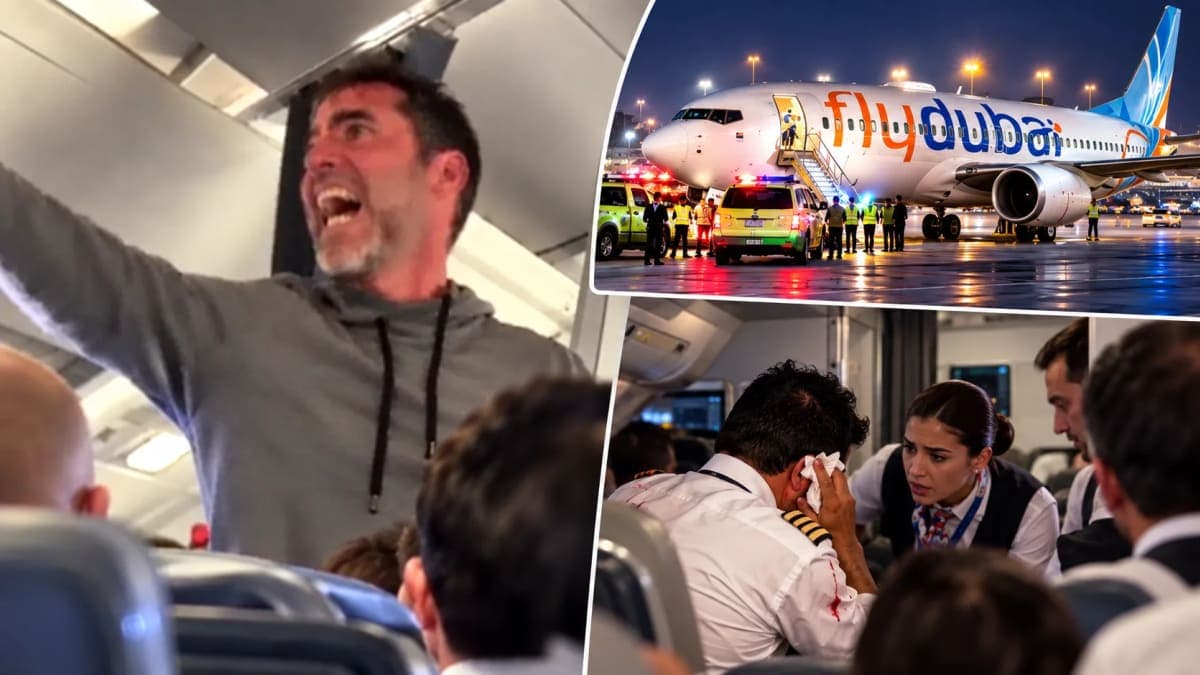
New videos have provided a closer look at the confusion and emergency response aboard flydubai Flight FZ1073 after a violent confrontation inside the cockpit disrupted the Dubai-to-Tel Aviv journey on September 30, 2026.
The footage, reported by multiple news organisations after being broadcast by Israeli media, captures passengers and crew gathering near the cockpit, calling for assistance and attempting to understand what had happened. Voices can be heard asking whether another pilot is available, while others repeatedly tell passengers to sit down as the situation unfolds.
The recordings emerged after authorities and the airline confirmed that the flight experienced a serious onboard incident and subsequently landed safely at Tabuk Airport in Saudi Arabia.
Captain Smit Machchhar Injured in Cockpit Confrontation
Captain Smit Machchhar, an Indian national, was injured during the cockpit confrontation.
Israeli officials have said Machchhar was stabbed by the co-pilot and, despite his injuries, managed to open the cockpit door, allowing others aboard the aircraft to intervene. Passengers and crew then helped bring the situation under control.
Flydubai's initial public statement was more cautious. The airline confirmed that Flight FZ1073, travelling from Dubai International Airport to Ben Gurion International Airport, experienced an incident while en route and landed safely in Tabuk. It said all passengers were safe and accounted for and that it was cooperating with the relevant authorities.
The airline has said the causes and motives surrounding the incident are matters for the official investigation.
Videos Show Confusion Near the Cockpit
The newly circulated footage provides a passenger-level view of the aftermath.
People can be heard calling for medical assistance and asking whether another pilot is aboard. In one sequence reported from the footage, someone asks about an additional pilot and receives confirmation that one is available. Other voices instruct people to sit down as passengers gather near the front of the cabin.
The videos also reportedly show the injured captain receiving assistance after the confrontation.
These recordings provide important eyewitness evidence of the response inside the cabin, but statements shouted by passengers during an emergency should not by themselves be treated as definitive evidence about the attacker's motive or intentions.
Aircraft Made Rapid Descent Before Diverting to Saudi Arabia
Flight-tracking data cited by Reuters and other outlets indicated that the aircraft descended rapidly from approximately 33,000 feet to about 17,000 feet during the emergency. The Boeing 737 MAX 8 was subsequently brought under control and diverted to Tabuk in northwestern Saudi Arabia.
Flydubai said its on-duty crew regained control and safely landed the aircraft. Passengers were later transported onward toward their destination.
The episode involved 174 passengers, according to reporting citing Israeli officials. No passenger fatalities were reported.
What Is Known About the Investigation?
The motive remains one of the most important unresolved elements.
Israeli Prime Minister Benjamin Netanyahu has publicly described the episode as an apparent attempt by the co-pilot to bring down the aircraft. Israeli officials have also raised questions about possible radicalisation. However, early reporting stressed that the full circumstances and motive had not yet been conclusively established.
The UAE has opened an investigation intended to establish the circumstances, motive and whether the incident had any connection to terrorism or prior planning.
That distinction is important: political statements and preliminary investigative claims can provide information about what authorities are examining, but they should not be presented as final findings before the investigation is completed.
Flydubai itself urged against premature speculation while authorities establish the facts.
Why the Flydubai Incident Matters for Aviation Security
The incident raises broader questions about how airlines prepare for an emergency originating inside a secured cockpit.
Modern aviation security is heavily designed around preventing unauthorised access to the flight deck. An incident involving flight crew themselves creates a different challenge because pilots necessarily have access to aircraft controls and safety equipment.
The UAE General Civil Aviation Authority treats in-flight crew incapacitation, loss-of-control events and unlawful interference affecting aircraft safety as serious occurrences requiring aviation-safety attention.
The FZ1073 investigation could therefore become important not only for determining individual responsibility but also for examining whether existing crew screening, cockpit procedures and emergency-response protocols require changes.
Balanced Analysis: Videos Add Evidence, but Key Questions Remain
The newly released footage strengthens the public record of what passengers and crew experienced after the cockpit confrontation. It shows an aircraft cabin in emergency mode: people seeking medical help, looking for qualified pilots and trying to restore order.
However, video footage from the cabin cannot independently answer the central investigative questions.
Authorities still need to establish precisely what occurred inside the cockpit, what triggered the confrontation, what actions each pilot took, how the aircraft entered its rapid descent and what motive—if any—lay behind the attack.
Flight-data and cockpit-voice recordings, crew and passenger testimony, medical evidence and the official investigation will be more important for establishing those conclusions than early speculation circulating online.
Until those findings are released, claims about terrorism, political motivation or outside involvement should remain clearly attributed to the officials or individuals making them rather than reported as settled fact.
What Happens Next?
Investigators are expected to continue reconstructing the sequence of events surrounding Flight FZ1073.
For flydubai and aviation regulators, the findings could influence future discussions about cockpit security, crew vetting and procedures for situations in which one flight-deck crew member becomes incapacitated or poses a threat.
For passengers aboard FZ1073, however, the most immediate outcome is already clear: despite a violent cockpit emergency and a dramatic loss of altitude, the aircraft reached the ground safely and its passengers survived.