New Details Emerge About Flydubai Co-Pilot
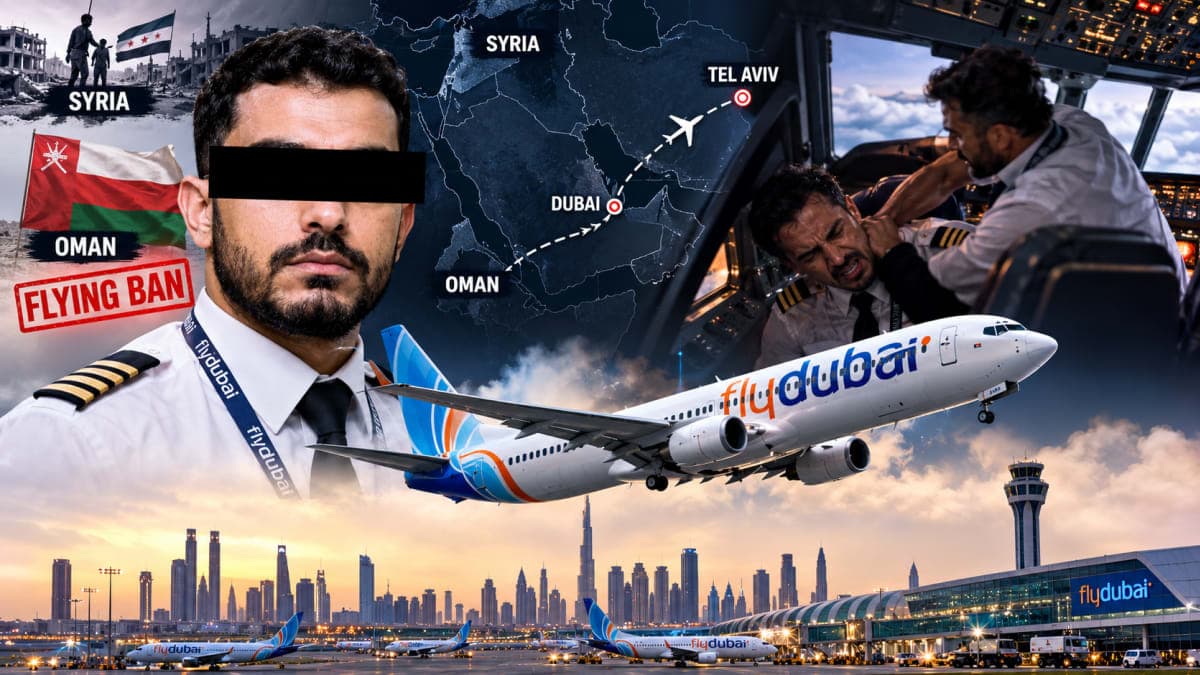
New information is emerging about the co-pilot accused of attacking the captain of a flydubai passenger jet travelling from Dubai to Tel Aviv, deepening questions about aviation security and how the suspect was cleared to fly.
Regional media have identified the Omani co-pilot as Hamam Al-Hammami, but as of October 3, the UAE has not publicly confirmed his identity. Hindustan Times also noted that it could not independently verify several details circulating about his background.
The distinction is important because the investigation is still active, and claims about the suspect's ideology, intentions and previous activities have not all been established publicly by investigators.
Reports Say Oman Had Barred Him From Flying
One of the most consequential claims concerns the co-pilot's earlier aviation career.
A person familiar with the matter told the Associated Press that the co-pilot had previously been barred from flying in his native Oman because of concerns that he had adopted extremist views. He was subsequently employed by UAE-based flydubai.
Other reports, citing people familiar with his background, say he had worked or trained with Oman Air before the restriction was imposed.
What remains unclear is whether information about those security concerns was formally communicated to authorities or airlines outside Oman. That question could become central to the investigation into how he later obtained a flying position with flydubai.
Reports Point to Time Spent in Syria
Separate reports say the co-pilot spent considerable periods outside Oman, including time in Syria, before later travelling to the UAE.
According to accounts summarized by Hindustan Times, ABC News and The Wall Street Journal reported concerns that he had been exposed to extremist ideas during this period. These remain reported allegations rather than findings publicly established by the UAE-led investigation.
His reported presence in Syria by itself does not establish involvement with an extremist organisation or prove the motive behind the incident.
That distinction is especially important while authorities continue investigating his history and possible associations.
Online Activity Also Under Scrutiny
The suspect's reported online activity has become another focus.
Hindustan Times, citing CNN, reported that a LinkedIn account associated with Al-Hammami contained two posts uploaded after the flight incident. One reportedly included imagery connected to former al-Qaeda leader Ayman al-Zawahiri and Humam Khalil Abu-Mulal al-Balawi, who carried out a deadly 2009 bombing.
Investigators will need to determine the authenticity, timing and significance of any online material when assessing the suspect's background.
Social-media activity can form part of an investigation, but it does not by itself establish precisely why an individual acted.
What Happened Aboard Flight FZ1073?
The incident occurred on September 30 aboard flydubai Flight FZ1073, travelling from Dubai to Tel Aviv.
According to Reuters, the confrontation began when the co-pilot attacked Captain Smit Machchhar, an Indian national, inside the cockpit. During the struggle, the aircraft plunged approximately 14,000 feet in less than 30 seconds.
Despite being injured, Machchhar managed to unlock the cockpit door and seek assistance. Passengers and crew then helped overpower the co-pilot. A reserve flydubai flight crew travelling aboard the aircraft subsequently landed it safely at Tabuk in northwestern Saudi Arabia.
The passengers later continued their journey to Israel.
Was It a Terror Attack? Investigation Has Not Reached a Public Conclusion
Israeli officials have characterized the episode as an apparent deliberate attempt to crash the aircraft.
Israeli Prime Minister Benjamin Netanyahu has also said that the suspect had undergone Islamist radicalization. However, publicly available evidence has not yet established a definitive motive, and the UAE-led investigation is continuing.
Reuters reported that Israeli investigators are expected to participate alongside Emirati authorities in examining both what happened aboard the aircraft and the suspect's background and motives.
The co-pilot was initially detained in Saudi Arabia after the emergency landing and was subsequently transferred to the United Arab Emirates.
For that reason, descriptions such as “terrorist attack,” “suicide attempt” or claims about a specific organisation should currently be attributed to the officials or sources making them rather than presented as settled investigative conclusions.
Questions Over Aviation Vetting
The reports about an earlier flying restriction in Oman create a broader aviation-security question.
If investigators confirm that another aviation authority had already identified the co-pilot as a security risk, attention is likely to turn to whether that information was available to flydubai or UAE aviation authorities when he was hired.
At present, there is no publicly established answer to that question.
It is also not yet clear how extensive the background checks were before he began flying for flydubai or whether existing international systems would have required Oman to share such information.
Those details will matter in determining whether the incident exposed a failure in vetting, information-sharing, airline procedures or some combination of factors.
Captain Smit Machchhar’s Actions Draw Praise
Captain Machchhar's response during the emergency has received widespread attention.
Reuters reported that Machchhar later spoke with Indian Prime Minister Narendra Modi and described his effort to open the cockpit door after being attacked so that people outside could intervene.
His actions, combined with the intervention of passengers, crew members and the reserve pilots, prevented the rapidly deteriorating situation from ending in a larger disaster.
The episode also illustrates why aviation emergencies can depend on several layers of response rather than the actions of one individual alone.
Why the Co-Pilot’s Background Matters
The significance of the latest reporting goes beyond the personal history of one pilot.
Commercial aviation relies on extensive screening because pilots receive privileged access to aircraft systems and secure cockpit areas. If a pilot previously restricted from flying for security reasons was subsequently able to work for another international airline, investigators will likely examine whether relevant information failed to move between jurisdictions.
But the investigation still needs to establish several basic facts—including the suspect's precise motive, whether he acted alone, what flydubai knew about his history and whether authorities had shared earlier concerns.
Until those questions are answered, the emerging background information provides important leads rather than a complete explanation of what happened aboard FZ1073.
What Happens Next?
The UAE is leading the investigation, with Israeli investigators expected to participate in examining the suspect's motives and background.
Investigators are likely to examine his employment history, earlier security assessments, digital activity, travel history and events inside the cockpit.
The central unresolved question remains straightforward: why did the co-pilot allegedly attack Captain Machchhar and attempt to interfere with the aircraft?
Reports about Syria and an earlier Oman flying restriction add important context, but a definitive explanation will depend on the findings of the official investigation.