From Everyday Routine to Rare Free Time
Starting a job can bring financial independence, professional growth and a new sense of routine. But for one woman, it also changed the way she views something far less tangible: free time.
Kuljot Kaur recently shared a video on Instagram reflecting on activities that once seemed completely ordinary when she was unemployed but now feel much harder to fit into her schedule after entering the workforce.
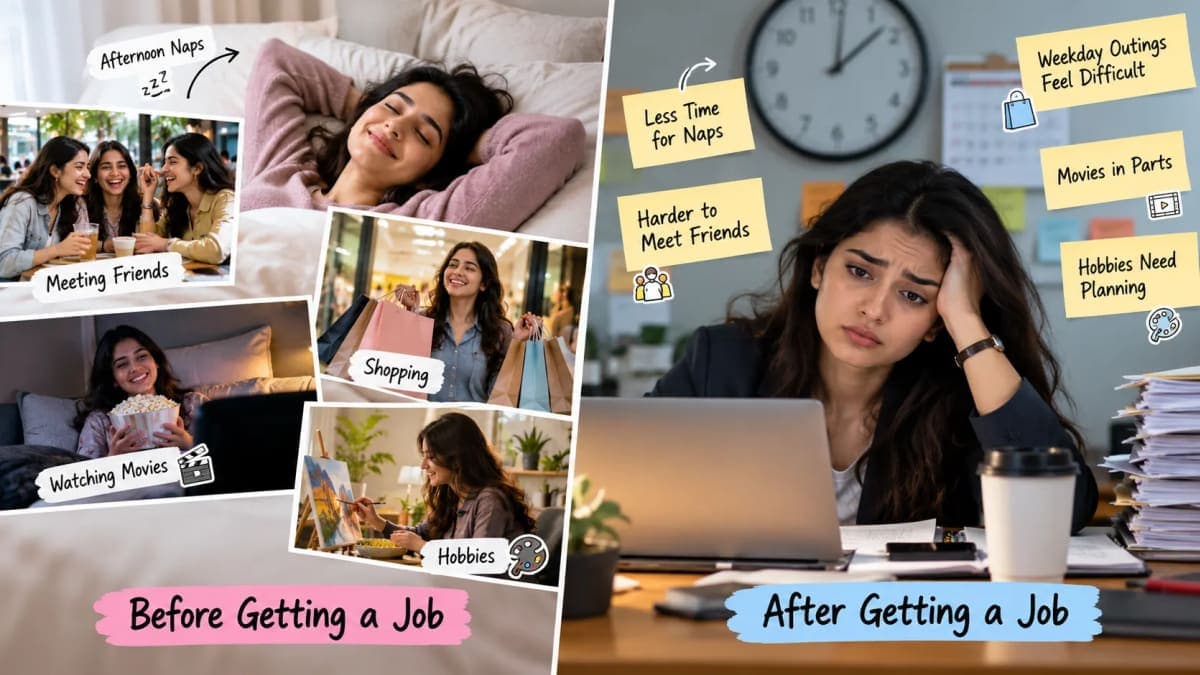
Her list included afternoon naps, spending time with friends, weekday shopping, watching an entire movie at once and making time for hobbies.
The video has attracted attention because it turns a familiar discussion about work-life balance into a collection of small, everyday examples.
Afternoon Naps Become a Rare Pleasure
One of the first changes Kaur highlighted was losing the freedom to take an afternoon nap.
Before working, sleeping during the afternoon was simply part of the flexibility available in her day. After starting a job, she said, that flexibility largely disappeared.
Her observation reflects the central theme of the video: employment did not necessarily make these activities impossible, but it made unrestricted personal time feel considerably more valuable.
Meeting Friends and Weekday Outings Get Harder
Kaur also described changes in her social routine.
She recalled being able to meet friends and go shopping during weekdays before becoming employed. With work now occupying much of the week, even weekends can feel less available for socialising because they may become time for rest and recovery.
She similarly described feeling exhausted after the workday, contrasting that with the greater freedom she previously had in the evenings.
The experience highlights an important distinction in discussions about work-life balance: having hours outside work does not always mean having the energy to use those hours in the same way.
Even Watching a Movie Feels Different
Another example involved something as simple as watching a film.
Kaur said she previously had enough time to complete movies in one sitting. Since starting work, she often divides them across multiple viewing sessions because she needs to prepare for another working day.
The observation may sound humorous, but it illustrates how employment can reshape leisure in small ways. Activities do not necessarily disappear; instead, they may have to be fitted around fixed schedules and other responsibilities.
Hobbies Also Compete for Time
Kaur said hobbies were another area affected by her new routine.
When she had more unstructured time, she did not have to deliberately create space for personal interests. With a job occupying a large portion of the day, hobbies now require more conscious planning.
That distinction helped the video connect with social media users who said they recognised similar changes in their own lives.
Why the Video Is Resonating
The popularity of Kaur’s observations is less about any single activity and more about the broader question of how people value time after entering full-time employment.
A salary can provide greater financial freedom, while a structured working schedule can reduce flexibility. Those two realities can exist at the same time.
For some workers, employment creates opportunities that would otherwise be unavailable. At the same time, commuting, fixed hours, deadlines and general fatigue can influence how much time and energy remain for friends, entertainment and personal interests.
Individual experiences can vary significantly depending on working hours, commute length, workplace flexibility, remote-work options and personal responsibilities.
A Lighthearted Video With a Familiar Work-Life Question
Kaur’s post does not establish that employment affects everyone in the same way. Instead, it presents her personal experience of moving from unemployment into a working routine.
That personal perspective appears to be what made the video relatable.
Things that once required little planning — an afternoon nap, a spontaneous outing, meeting a friend or spending uninterrupted time on a hobby — can feel more valuable when free time becomes limited.
The viral conversation therefore points to a simple paradox of working life: earning money can expand what people are able to afford, while a demanding schedule can make the time needed to enjoy everyday pleasures feel scarce.