हिंदी में पढ़ें —JantaScope हिंदी
Finance

Banking Stocks Under Pressure After Nifty Bank’s Sharp Two-Day Fall

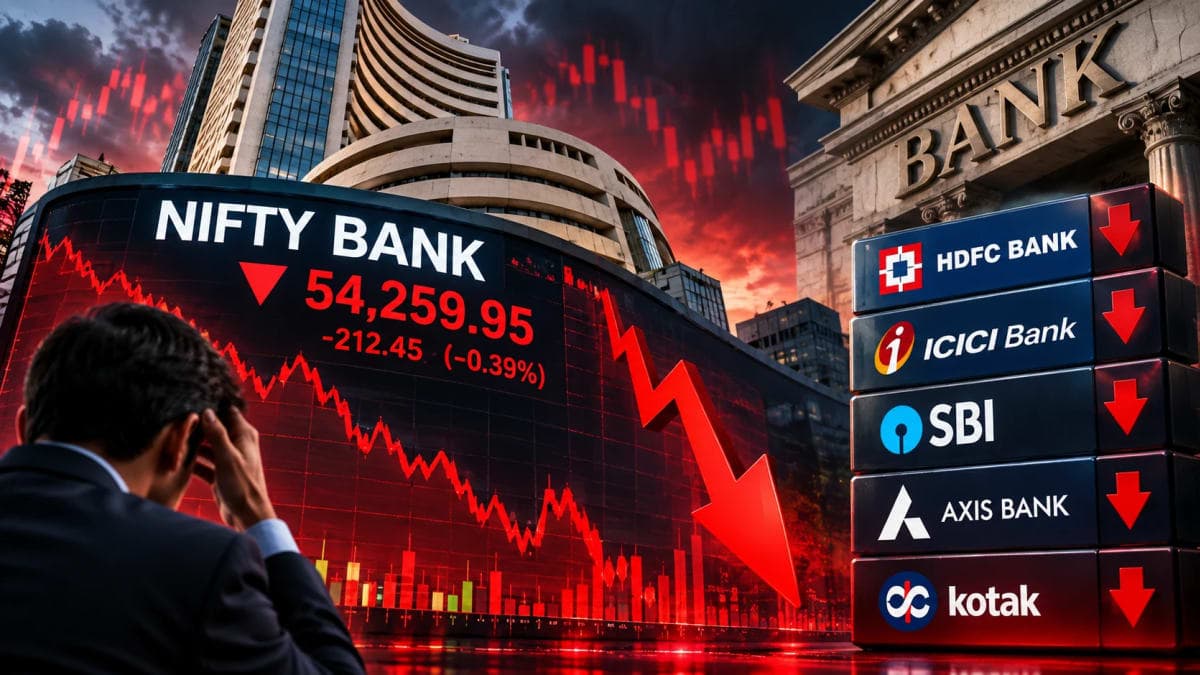
Indian banking shares came under selling pressure as the Nifty Bank index suffered a steep two-session decline, briefly falling below the 54,000 level. Rising bond yields, interest-rate concerns and weak broader market sentiment weighed on financial stocks.

Banking Stocks Under Pressure After Nifty Bank’s Sharp Two-Day Fall

By Jeet Nirmal

Source: The Economic Times, Moneycontrol and market data

Nifty Bank Slides Sharply

Indian banking stocks faced a difficult start to the week as the Nifty Bank index lost nearly 1,800 points at its lowest point over two trading sessions.

On September 29, the index slipped to an intraday low of 53,785.70, falling below 54,000 for the first time since early June. It later recovered part of the losses and finished at 54,259.95, down 0.39% for the session.

The decline came alongside broader weakness in Indian equities, with financial stocks becoming an important source of pressure on benchmark indices.

What Put Banking Stocks Under Pressure?

One major concern was the possibility of tighter monetary conditions. Expectations that the Reserve Bank of India may need to keep rates elevated—or potentially tighten policy further—have increased investor caution toward rate-sensitive banking shares.

Higher bond yields also contributed to the nervousness. Rising yields can influence banks through funding costs, treasury portfolios and expectations around future interest rates.

External pressures added to the cautious mood. Elevated crude oil prices and high US Treasury yields have weighed on Indian markets, while foreign investor selling has remained another challenge for domestic equities.

Major Banks Feel the Impact

Heavyweight private-sector banks were among the stocks affected during the selloff. HDFC Bank, for example, fell around 1.5% during Tuesday's morning trade and contributed to weakness in the broader market.

The pressure was not limited to a single lender, reflecting broader investor caution toward the banking sector rather than an isolated company-specific development.

Why the Fall Matters

Banking stocks carry significant weight in India's benchmark equity indices. Sharp movements in large lenders can therefore have an outsized impact on the Nifty 50 and overall market sentiment.

The fall below 54,000 also attracted attention because it represented a break below a closely watched index level, although the subsequent recovery showed that buying interest emerged at lower prices.

Balanced Outlook

The recent decline highlights growing sensitivity among investors to interest rates, bond yields, crude oil prices and foreign capital flows.

However, a two-day market decline alone does not establish a longer-term deterioration in the banking sector. Future performance will also depend on RBI policy signals, credit growth, deposit trends, asset quality and individual banks' earnings.

For now, volatility in banking shares is likely to remain closely linked to both domestic monetary-policy expectations and changing global financial conditions.

Related

More stories

US Gives Tariff Relief to Select Indian Speciality Drugs as 100% Pharma Duty Takes Effect

The United States has granted zero-tariff treatment to specified speciality medicines and associated pharmaceutical ingredients originating from India and 19 other eligible jurisdictions. The relief comes as Washington extends a 100% tariff on certain patented pharmaceutical products to additional companies from September 29, 2026. The exemption is targeted rather than industry-wide, covering categories including orphan drugs, nuclear medicines, plasma-derived therapies, fertility treatments.

Finance

US Gives Tariff Relief to Select Indian Speciality Drugs as 100% Pharma Duty Takes Effect

Sensex Slides Around 700 Points, Nifty Falls Below 22,600 as Oil and Bond Yields Rattle Markets

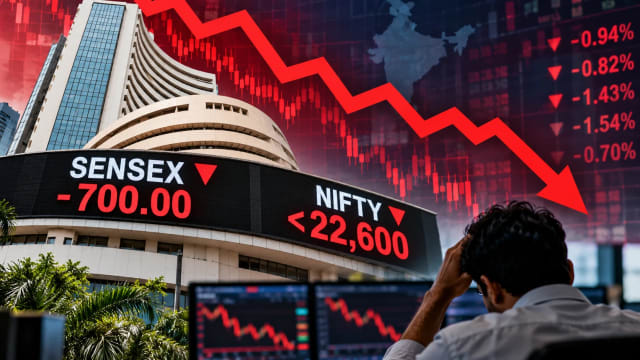
Indian equities extended their decline on Tuesday, September 29, 2026, with the Sensex sliding around 700 points during early trade and the Nifty 50 slipping below the 22,600 level. Rising crude oil prices, elevated U.S. Treasury yields and broad-based selling weighed on investor sentiment.

Finance

Sensex Slides Around 700 Points, Nifty Falls Below 22,600 as Oil and Bond Yields Rattle Markets

Supreme Court Questions UPI MDR: Centre Asked to Explain 0.4% Charge on Merchant Payments Above ₹2,000

The Supreme Court on September 28 sought an explanation from the Centre over the legal and policy basis for the new Merchant Discount Rate on specified UPI merchant payments above ₹2,000. The Court declined to stay the framework, which is scheduled to take effect on October 15, 2026. Person-to-person transfers and merchant payments up to ₹2,000 remain outside the charge.

Finance

Supreme Court Questions UPI MDR: Centre Asked to Explain 0.4% Charge on Merchant Payments Above ₹2,000

Rupee Approaches ₹96/$ as Oil Hits $108; Why High Crude Prices Are Putting India’s Currency Under Pressure

The Indian rupee weakened to 95.9825 per US dollar on September 28, 2026, its weakest level in more than a week, as Brent crude climbed to around $108.2 a barrel amid geopolitical uncertainty. Dollar selling by state-run banks, likely on behalf of the Reserve Bank of India, helped prevent a sharper fall beyond the closely watched ₹96/$ level.

Finance

Rupee Approaches ₹96/$ as Oil Hits $108; Why High Crude Prices Are Putting India’s Currency Under Pressure

Indian stock market suffers sharp Monday sell-off

Indian equities suffered a broad-based sell-off on September 28, with the Sensex falling more than 1,100 points and the Nifty closing below 22,800. Rising crude oil prices, elevated US bond yields, foreign investor selling, rupee weakness and uncertainty surrounding the US-Iran conflict weighed on sentiment.

Finance

Indian stock market suffers sharp Monday sell-off

NITI Aayog to Review India’s Key Export-Support Schemes as Global Trade Landscape Shifts

NITI Aayog is set to evaluate two of India’s major export-support mechanisms—RoSCTL and RoDTEP—to examine how effectively they improve export competitiveness and their wider impact on investment, employment, productivity, costs and domestic markets.

Finance

NITI Aayog to Review India’s Key Export-Support Schemes as Global Trade Landscape Shifts